The essential takeaways for indoor cyclists
- Most magnetic trainers are wheel-on units with manual resistance, so the setup is simple and affordable.
- They are strongest for base rides, tempo work, cadence drills, and off-season consistency.
- Noise is usually manageable, but the tire, roller, and drivetrain still matter more than the magnet itself.
- They are less convincing than direct-drive smart trainers for ERG mode, app control, and power accuracy.
- In the US, basic models usually sit around $80-$150, while connected indoor options move up fast from there.
How magnetic resistance works on the bike
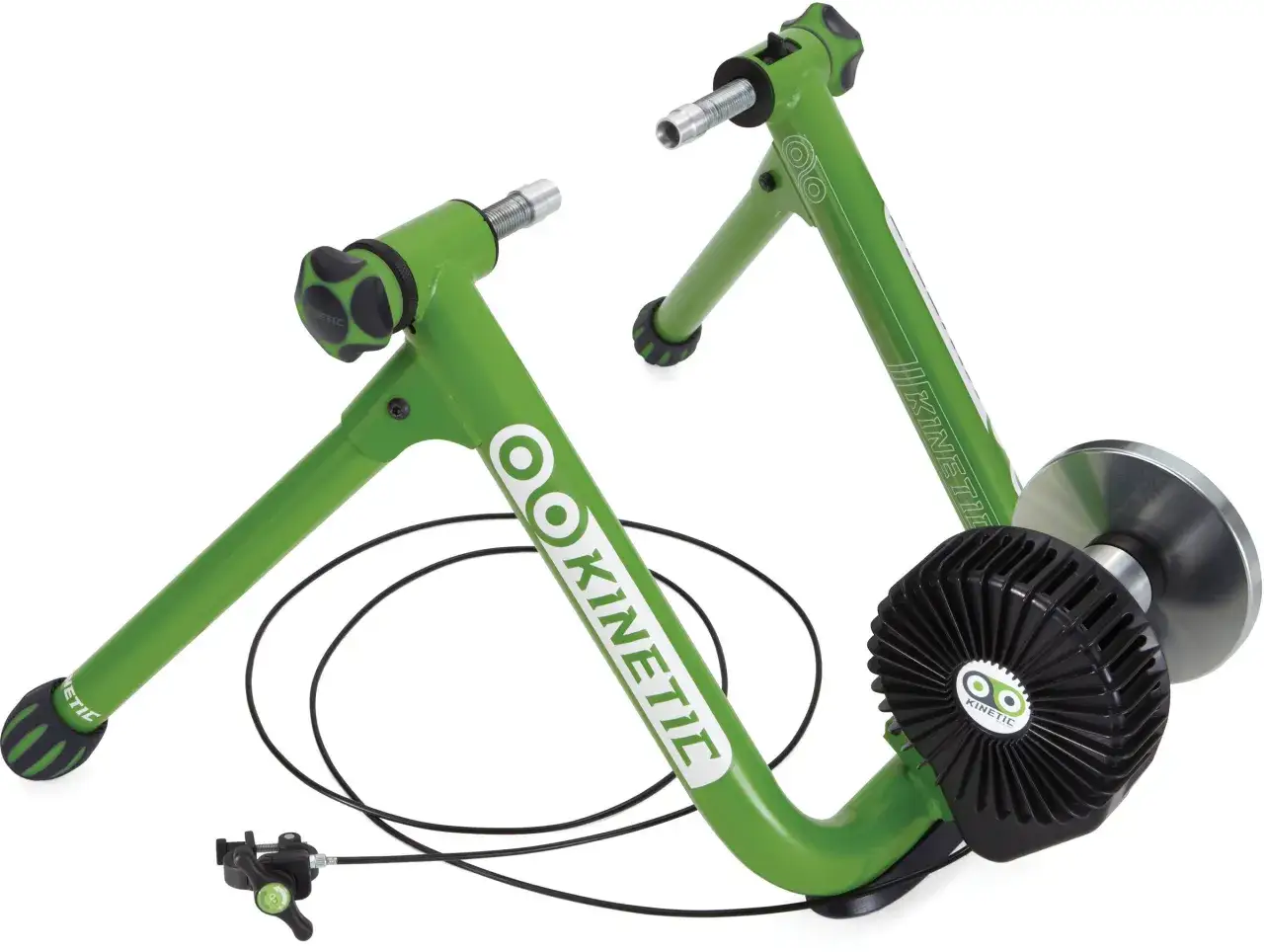
In the simplest version, a roller presses against your rear tire while a magnet creates drag against a flywheel or resistance unit. The closer the magnet sits to the flywheel, the harder the pedal stroke feels. On better models, a handlebar shifter or remote knob lets you change that resistance without getting off the bike.
That is why these trainers feel predictable. There is no complicated ramp-up, and the same setting usually feels the same from ride to ride. I like that for interval work, because repeatability matters more than a fancy ride simulation when the goal is to hold a steady effort. A few rollers also use magnetic resistance, but most buyers are really looking at a wheel-on trainer, not a balance-focused roller system.
The main limitation is equally simple: magnetic drag is not the same thing as road feel. The resistance can feel a little stepped, and the tire-to-roller contact adds some noise and wear. That trade-off is what decides whether a magnetic unit feels like a smart purchase or a false economy.
Where magnetic trainers still make sense
I still recommend them when the priority is to ride consistently rather than chase the most realistic simulation. If you want a trainer that works with a road bike, occupies little space, and does not ask for a large upfront investment, this category still delivers a lot of value.
- Budget indoor training - A basic magnetic unit can get you riding for roughly $80-$150, which is far easier to justify than a high-end smart trainer.
- Simple winter consistency - For base miles, aerobic work, and short weekday sessions, the trainer only needs to be stable and predictable.
- Fast setup - Wheel-on designs usually clamp on quickly, so you are not removing the rear wheel or handling a cassette.
- Compact storage - Many frames fold flat, which matters in a garage, basement, or spare room.
- Clear effort control - Manual resistance is easy to understand when you are using heart rate, perceived exertion, or a separate cadence sensor.
The flip side is just as important. If you care about app-controlled workouts, highly accurate power, or a truly quiet ride for apartment use, I would start comparing against smarter trainer types instead. Once you put it beside fluid, direct-drive, and rollers, the choice gets much clearer.
How magnetic, fluid, direct-drive, and roller trainers differ
Here is the quickest way I break the market down when someone asks for indoor cycling advice.
| Trainer type | Typical US price | Ride feel | Best for | Main compromise |
|---|---|---|---|---|
| Magnetic wheel-on | $80-$150 | Firm, stepped, simple | Budget training and easy setup | Less realism, more tire wear |
| Fluid wheel-on | $120-$250 | Smoother and more progressive | Steady endurance and quieter sessions | Still wheel-on and less precise than direct drive |
| Direct-drive smart | $450-$1,200+ | Most realistic and controlled | ERG workouts, app training, racing | Higher cost and more setup |
| Rollers with magnetic resistance | $250-$400+ | Natural but less anchored | Cadence, balance, bike-handling skill | Harder for hard intervals |
The biggest mistake I see is buying a magnetic unit for a virtual-training lifestyle. If your main use case is Zwift racing, structured power workouts, or automatic ERG mode, the money is usually better spent on a direct-drive trainer. If you simply want reliable indoor miles and a lower barrier to entry, magnetic still earns its place.
What to check before you buy one
The trainer itself is only half the decision. The other half is whether it matches your bike, your room, and your tolerance for sound and tinkering.
- Axle and wheel compatibility - Check quick release versus thru-axle support, plus wheel size. Most brands support common road setups, but not every model fits every frame cleanly.
- Resistance adjustment - A handlebar-mounted remote is far more useful than having to stop and reach down mid-ride.
- Resistance range - Some units have only a few steps, which is fine for steady rides but limiting for harder workouts.
- Data expectations - Basic magnetic trainers usually do not give trustworthy power data on their own. If numbers matter, pair them with a power meter or buy a smart trainer.
- Noise control - A trainer tire, floor mat, and good fan do more for comfort than people expect.
- Stability and load - If you sprint hard or stand a lot, the frame should feel planted, not twitchy.
- Used-condition risk - On a secondhand unit, inspect the roller, tension mechanism, and feet. Worn parts can make the ride jerky even if the frame looks fine.
For a US home setup, I would also budget for the small things that make the trainer usable: a mat for the floor, a trainer-specific tire if needed, a towel, and a strong fan. Those accessories are not glamorous, but they determine whether you actually enjoy the sessions.
The workouts and home setup that make the most of it
The best use of a magnetic trainer is straightforward, structured riding. I would not overcomplicate it. Give the trainer repeatable work, and it will give you enough resistance to build fitness.
- Base endurance - 45 to 90 minutes at an easy aerobic pace when you want volume without weather stress.
- Tempo blocks - 3 x 10 minutes or 2 x 20 minutes at a controlled hard-but-sustainable effort.
- Cadence drills - Short efforts at 100 to 110 rpm to sharpen leg speed and bike feel.
- Low-cadence strength work - Seated efforts around 60 to 70 rpm for climbing-specific muscle endurance.
- Recovery spins - Light pedaling after travel, bad weather, or a heavy outdoor block when you just need to move.
What I would not use it for is precision ERG work unless the trainer is part of a smarter ecosystem. ERG mode means the app holds a target wattage for you, and that only works well when the trainer can change resistance automatically and predictably. A manual magnetic unit can still support structured training, but it asks you to control the effort yourself.
If I were building a practical US garage or apartment setup, I would keep it lean: a magnetic trainer, a decent fan, a mat, and a tire that can handle indoor use. Add a cadence sensor if you want better feedback, then let the rest of the workout come from the timer and your discipline. That combination will not impress anyone on paper, but it is often the cheapest path to consistent indoor cycling that actually gets used.