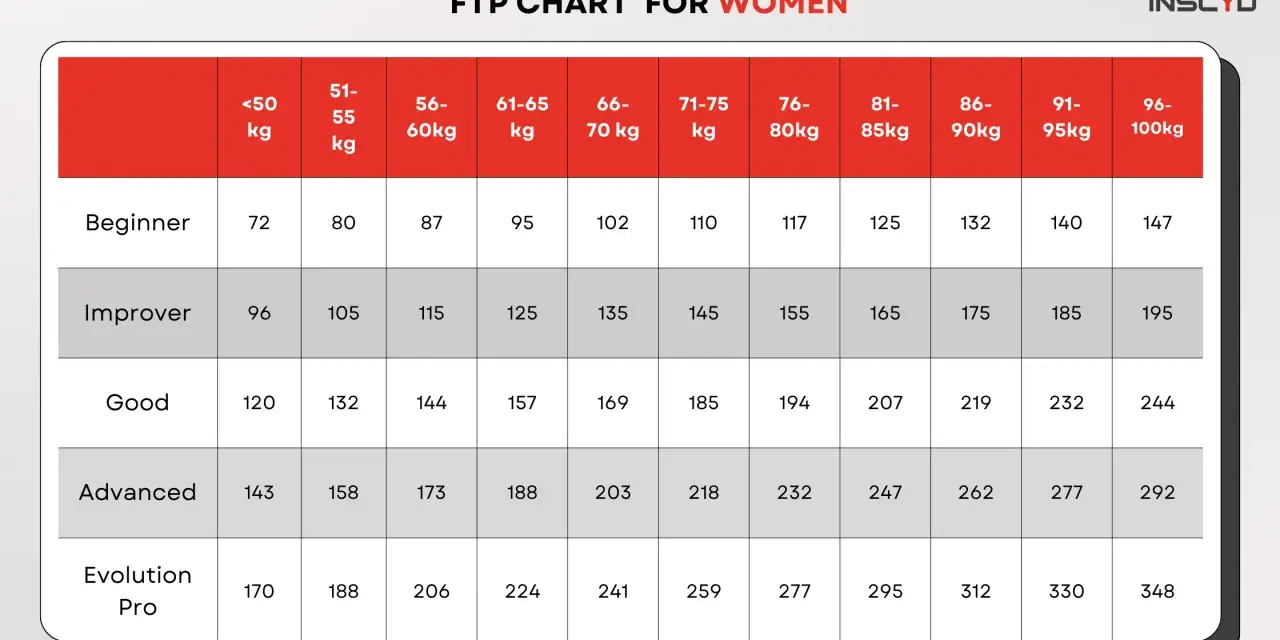
FTP on Zwift only becomes useful when you compare it with rider weight, training history, and age. A 250-watt threshold can be ordinary for one rider and excellent for another, so the real question is not just how many watts you produce, but what those watts mean in context. In this guide, I break down FTP by age on Zwift, show how to read the number properly, and explain how to improve it without chasing misleading comparisons.
The numbers that matter most for Zwift riders
- Zwift defines FTP as the power you can sustain for roughly an hour, and it uses that number to scale workouts.
- There is no official age-by-age average from Zwift, so the most useful answer is a practical benchmark range.
- FTP usually peaks in the late 20s to mid-30s, then declines gradually rather than suddenly.
- W/kg matters more than raw watts because body weight changes how impressive a number really is.
- Testing when you are rested, cooled, and fed can change the result more than people expect.
- Consistent training slows age-related decline far more than most riders assume.
What ftp means on Zwift
FTP, or Functional Threshold Power, is the highest power you can hold for about an hour. On Zwift, that number is the anchor for workouts, training plans, and pacing decisions, which is why it matters more than a one-off speed number. I treat it as a working estimate of current fitness, not a permanent label.
That distinction matters indoors. Power can shift with fatigue, cooling, trainer setup, and test familiarity, so the number only becomes useful when the conditions are reasonably consistent. If you want a benchmark that tells you something real, you need to compare like with like. That is why age bands only make sense when you separate raw watts from watts per kilogram.
Practical ftp ranges by age
Zwift does not publish an official age table, so the chart below is the most honest way to answer the question. I am using active recreational riders and committed Zwifters, not elite racers. W/kg comes first, because raw watts alone can be misleading.
| Age band | Typical FTP range | Approx. FTP at 70 kg | What it usually means |
|---|---|---|---|
| 18-24 | 2.5-3.8 W/kg | 175-266 W | Fast adaptation is still common if training is consistent |
| 25-34 | 2.6-4.0 W/kg | 182-280 W | Peak years for many riders with structured indoor training |
| 35-44 | 2.4-3.7 W/kg | 168-259 W | Consistency can offset a lot of age-related loss |
| 45-54 | 2.2-3.3 W/kg | 154-231 W | Endurance can stay strong, but recovery becomes more important |
| 55-64 | 1.9-2.9 W/kg | 133-203 W | Smarter structure matters more than adding more hard sessions |
| 65+ | 1.7-2.6 W/kg | 119-182 W | Fitness can remain very respectable with steady training |
A quick conversion makes the point even clearer. At 2.5 W/kg, a 60 kg rider is at 150 W, a 75 kg rider is at 188 W, and a 90 kg rider is at 225 W. At 3.0 W/kg, those same riders are at 180 W, 225 W, and 270 W. Same relative fitness, very different raw numbers.
| W/kg | 60 kg rider | 75 kg rider | 90 kg rider |
|---|---|---|---|
| 2.5 | 150 W | 188 W | 225 W |
| 3.0 | 180 W | 225 W | 270 W |
| 3.5 | 210 W | 263 W | 315 W |
If you ride mostly for fitness, the lower half of each age band may be perfectly normal. If you race often, you will care more about the upper half. Once you see the numbers this way, the bigger question becomes why they change at all.
Why age changes ftp less than training does
Most riders reach peak endurance performance somewhere between 25 and 35. After that, threshold power usually falls gradually, but the pace of decline is shaped by training volume, recovery, body composition, and how long you have been riding seriously. The age effect is real, but it is not the only force in the room.
One reason I push back against overly gloomy age talk is that trained athletes age differently from sedentary adults. In endurance sports, regular training can cut the rate of decline dramatically, which is why a 50-year-old Zwifter with consistent habits can look nothing like a casual rider of the same age. VO2max, the body’s ceiling for aerobic work, tends to fall with age, but training slows that slide far more than most people expect.
In practice, I see more difference between a structured 55-year-old and an unstructured 35-year-old than between two riders five years apart. That is the part worth remembering when you look at your own result.
How to test ftp so your comparison is fair
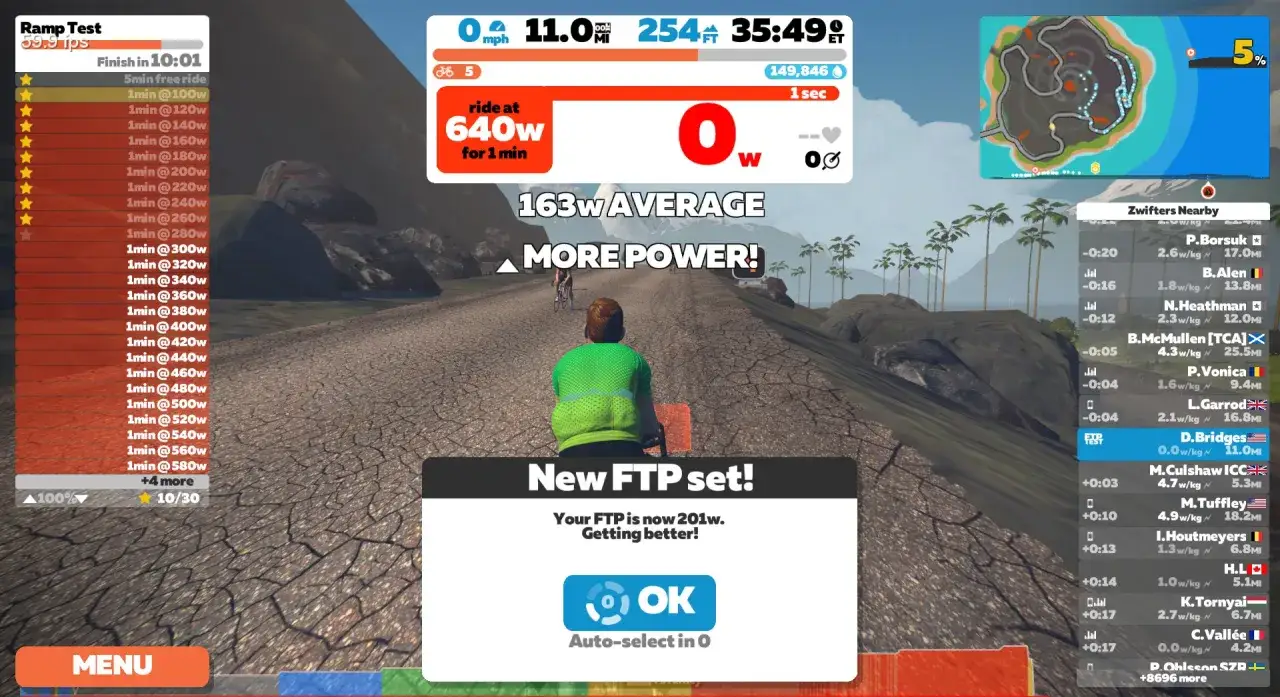
Zwift gives you two main ways to test. The classic 20-minute test estimates FTP as 95% of your average power, while the ramp test estimates it from your best one-minute power using a multiplier. Both can work, but neither is magic. The right test is the one you can repeat under similar conditions.
- Test when you are rested, not the day after a hard interval session.
- Use the same trainer, bike setup, and fan whenever possible.
- Fuel normally before the effort and do not start depleted.
- Pick the same time of day if you want cleaner comparisons.
- Retest every 6 to 8 weeks, not after every good or bad ride.
Some riders score a little differently on the ramp test than on the 20-minute test, and that is normal because the protocols stress different strengths. A strong diesel rider may pace the longer test better, while a rider with good punch may shine on the ramp. I do not read too much into one odd result if the protocol changed or the day was messy.
If a test comes in low, I usually look first at fatigue, poor cooling, or pacing mistakes. The number only becomes useful when the method stays stable, and that leads directly to how you improve it.
How to raise ftp at any age on Zwift
The most effective pattern is still simple: one threshold session, one harder aerobic session, and enough easy volume to absorb the work. On Zwift, that often means over-unders, 2x20 efforts, sweet spot blocks, and a few endurance rides each week. For riders over 40, I want the hard work to be precise rather than frequent.
Here is the structure I would use most often:
- Threshold work, such as 2x20 minutes at 90-95% of FTP, to make sustained efforts feel more controlled.
- Over-unders, where you alternate slightly above and slightly below threshold, to improve lactate handling.
- Sweet spot, roughly 88-94% of FTP, which gives a lot of stimulus without the fatigue cost of full threshold work.
- VO2 intervals, usually around 110-120% of FTP for 3-5 minutes at a time, to lift the aerobic ceiling.
- Endurance rides, to keep aerobic volume high enough that threshold gains actually stick.
Sweet spot deserves one clean definition: it is the narrow band just below threshold where the work is hard enough to drive adaptation but not so hard that recovery collapses. That is why it is such a useful indoor training tool. I would rather see a rider do three consistent sweet spot sessions over two weeks than one hero workout followed by four dead legs.
Fueling matters too. For hard indoor sessions, 30 to 60 g of carbohydrate per hour is a practical starting point, and longer or harder rides may need more if your gut tolerates it. If you are past 40, strength training 2 times per week can also help preserve the muscle and force production that support threshold power.
The biggest mistake I see in older indoor cyclists is trying to train like a younger rider with faster recovery. That usually produces more fatigue, not more FTP. The goal is not to stack the most suffering, it is to stack the right stress.
Common mistakes that distort the number
Indoor cycling magnifies small testing errors. If you compare yourself to other riders without controlling for these, the age discussion gets noisy fast.
- Comparing raw watts instead of watts per kilogram.
- Testing tired, dehydrated, under-fueled, or under-cooled.
- Changing test protocols every time and treating the result as identical.
- Assuming a lower number after 50 is automatically age and not missed training.
- Chasing FTP while ignoring 5-minute power, endurance, and repeatability.
I care about the full profile because FTP is only one slice of cycling fitness. A rider with a slightly lower threshold but better repeatability and better fatigue resistance can be more effective on Zwift than the pure number suggests. That broader view is the only way the age benchmark stays useful.
What I would use as the real benchmark in 2026
If I were setting a benchmark for a Zwift rider today, I would keep it simple. Under 35, expect the biggest gains from consistency and volume. From 35 to 54, protect recovery, keep one quality threshold session, and do not let easy riding disappear. After 55, the game shifts even more toward smart intensity, good fueling, and enough low-stress riding to stay fresh for the work that matters.
- Use age ranges only as a rough frame, not as a scorecard.
- Track your own 6- to 12-week trend instead of comparing one test to someone else’s peak number.
- Judge progress by FTP, repeatability, and how hard group rides feel at the same power.
The most useful answer is not whether you match some universal average. It is whether your FTP is moving in the right direction for your body, your training load, and your age band, because that is the number that will actually improve your Zwift racing and indoor training.