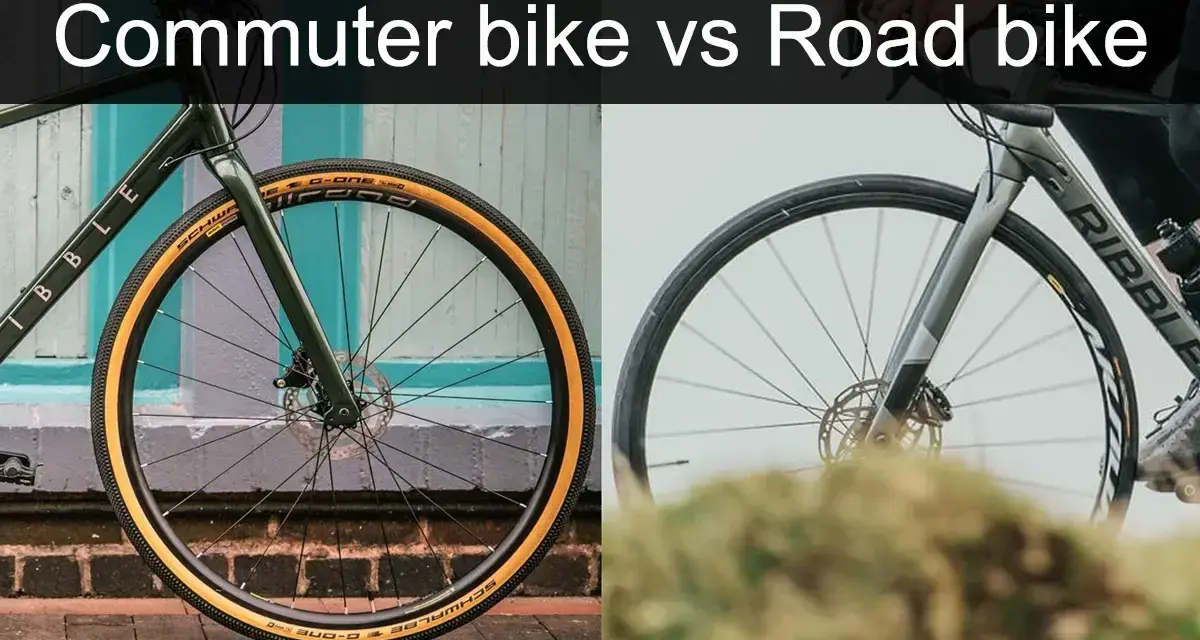
The road bike vs commuter bike decision comes down to how you ride more than how the bike looks in a shop. A road bike rewards smooth pavement, steady speed, and a more efficient body position, while a commuter bike is built around comfort, cargo, and everyday reliability in traffic. In practice, the best choice is the one that makes your normal ride easier to repeat, not just faster on a perfect day.
The fastest way to narrow the choice
- Pick a road bike if your route is mostly smooth pavement, you ride longer distances, and speed matters more than carrying gear.
- Pick a commuter bike if you want a relaxed position, wider tires, and practical features like racks, fenders, and lights.
- Look at the middle ground if your ride mixes city streets, rough asphalt, and weekend fitness riding.
- Budget realistically: about $700 to $1,200 for a basic commuter, $1,200 to $2,100 for a decent aluminum road bike, and $2,500+ if you want premium parts or carbon.
- Do not ignore contact points: tires, saddle, pedals, and handlebar position often matter more than the frame label.
What each bike is built to do
Road bikes are made to move quickly and efficiently on pavement. They usually use drop handlebars, a lower front end, and lighter parts that help you hold speed with less effort. Commuter bikes take the opposite approach: they favor a position that feels calmer in traffic, tires that shrug off rough streets, and mounts or accessories that make daily use easier.| Factor | Road bike | Commuter bike | What it means in practice |
|---|---|---|---|
| Riding position | Lower, stretched, more aerodynamic | Upright or moderately upright | Road bikes feel faster; commuter bikes feel easier to live with in traffic |
| Tires | Usually narrower, often 25 to 32 mm, with modern endurance frames sometimes clearing more | Usually wider, often 32 to 45 mm | Road tires roll quickly; commuter tires usually add comfort and puncture resistance |
| Accessories | Often minimal | Frequently includes or supports racks, fenders, lights, and a kickstand | Commuters are ready for work bags, rain, and grocery runs |
| Handling | Quicker, more responsive | More stable and relaxed | Road bikes feel lively; commuters feel less twitchy at low speeds |
| Maintenance | Often lighter and simpler, but less forgiving in bad weather | Built for utility and daily abuse | A commuter is usually easier to keep usable through grit, rain, and winter salt |
| Best use | Training, fitness rides, longer paved routes | Work trips, errands, mixed city riding | The bike should match the route, not the other way around |
That split sounds clean on paper, but it becomes obvious once you look at the details that matter on a real ride: tire pressure, climbing comfort, stop-and-go handling, and whether you need to carry anything besides yourself. From here, the bigger question is how those differences show up on your actual commute.
How the differences feel on a real commute
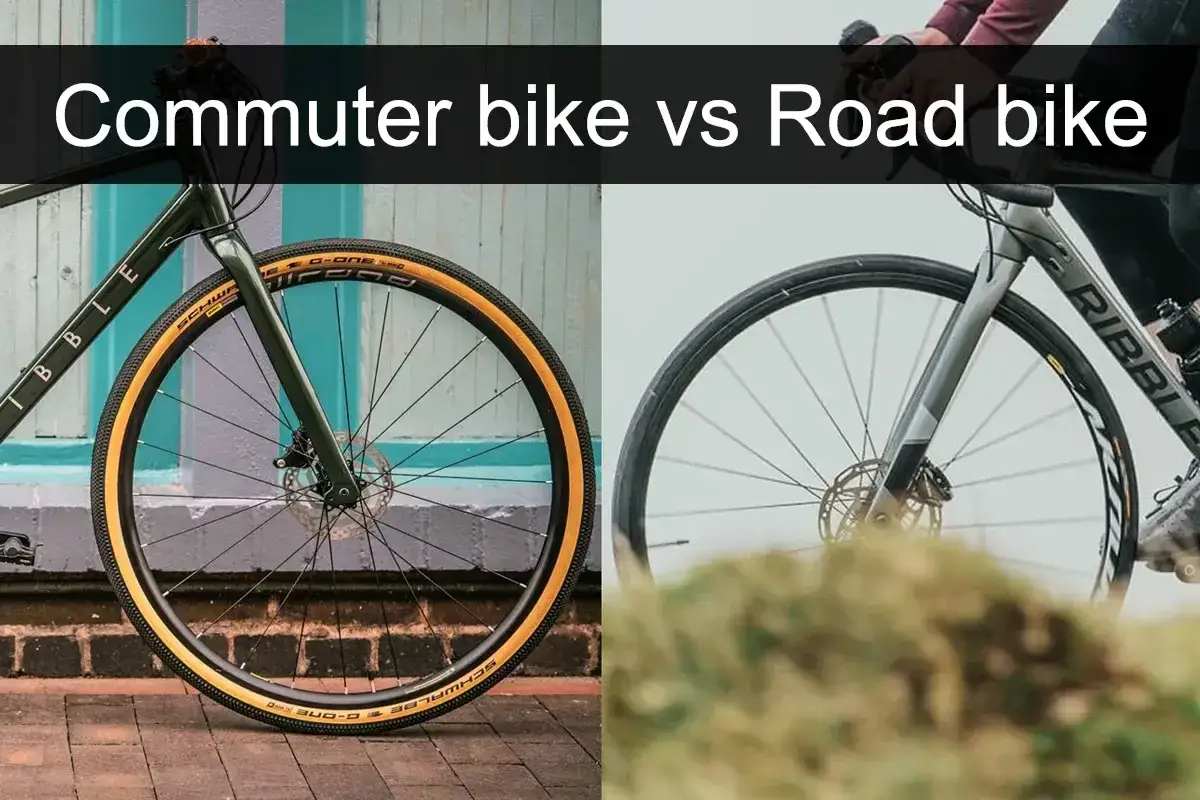
The easiest mistake to make is judging bikes by their best-case scenario. A road bike on a fresh ribbon of asphalt feels quick and sharp; a commuter bike on a flat, smooth route can feel slower than it needs to. The problem is that most US commutes are not best-case rides. They include potholes, painted lanes, curb cuts, weather, and occasional cargo.
- Ride position: On a road bike, I lean forward more and put weight through my hands and core. That helps speed, but it can feel tiring if I am stopped often or wearing a backpack. On a commuter bike, the taller posture makes it easier to scan traffic and look around without strain.
- Tire choice: A road bike with 28 to 32 mm tires can still be fast, but it is less forgiving on broken pavement. A commuter with 35 to 45 mm tires usually feels calmer over cracks, grit, and rough lane markings. Wider tires are not just about comfort; they also reduce the chance that every small imperfection becomes a problem.
- Gearing: Road gearing is often tuned for cadence and speed, so you can hold a smooth rhythm on longer paved rides. Commuters often use a wider gear range, a 1x setup, or even an internal gear hub. An internal gear hub keeps the gears sealed inside the rear hub, which can be convenient in bad weather, but it can add weight and cost.
- Braking and control: Hydraulic disc brakes are now common on both categories. I like them for commuting because wet-weather stopping confidence matters more than shaving grams.
- Cargo and weather: The commuter wins as soon as you need racks, fenders, panniers, or a place for a lock and laptop. A road bike can be adapted, but it usually needs more compromises.
If your route is mostly clean pavement and you travel light, the road bike advantage is real. If your ride is messy, stop-and-go, or tied to errands and work gear, the commuter starts to look more practical with every mile. That is why the route itself matters more than the category name.
When a road bike makes more sense
I would lean road bike when speed and efficiency are the main goal, and commuting is only part of what the bike needs to do. That usually means a route with good pavement, few hard stops, and limited cargo. If the ride is 3 to 8 miles each way and you also want weekend training rides, a road bike can pull double duty without feeling like a compromise.
- Your pavement is good: Smooth asphalt, protected bike lanes, and few surprise potholes make the road bike shine.
- You ride longer distances: Once the commute stretches beyond a few miles, the efficiency of the riding position starts paying back.
- You care about fitness: A road bike turns the commute into a training block, which is useful if you want one bike for both commuting and performance riding.
- You keep the load light: If you only carry a small backpack or a saddle bag, the lack of rack mounts is less of a problem.
When a commuter bike is the smarter choice
A commuter bike makes more sense when the bike has to solve daily problems, not just cover distance quickly. If the route includes rough pavement, frequent stops, rainy mornings, winter grit, or a laptop that has to arrive intact, I want a bike that stays stable and practical under pressure.
- You ride in all weather: Fenders matter more than most people expect. They keep spray off your clothes and reduce the grime that builds up on the drivetrain.
- You carry work gear: A rear rack and panniers are far more comfortable than a backpack for repeated commutes.
- Your streets are rough: Wider tires, slightly softer pressure, and a sturdier setup make broken pavement less annoying.
- You want low fuss: A commuter with rack and fender mounts, puncture-resistant tires, and simpler gearing tends to be easier to live with day after day.
- You park in public: If the bike will sit outside a lot, a less expensive and more durable commuter can be the saner choice.
I also think commuters are underrated for riders who do a lot of short trips. A short ride is where a bike’s convenience features matter most, because you feel every small annoyance every single day. If the bike has to work with your routine rather than your training plan, the commuter category usually wins.
How to choose one bike that can do both
Most riders do not fit neatly into one camp. They want something fast enough for fitness rides, but practical enough for weekday use. That is where the middle ground becomes interesting, and honestly, it is where I would start for many people in the US.
Best crossover categories
- Endurance road bike: Best if you want drop bars, efficient speed, and enough tire clearance for rough pavement. This is the closest thing to a road bike that still behaves well on a commute.
- Fitness bike: Best if you want a flat bar, straightforward control, and a quick feel without the stretched riding position of a road bike.
- All-road or gravel bike: Best if your route includes bad pavement, shoulder debris, or the occasional dirt shortcut. The tradeoff is that it usually feels a little slower than a pure road bike.
Read Also: Cyclocross Bike Sizing Guide - Find Your Perfect Fit
Specs I would prioritize first
- Tire clearance: I would look for at least 32 mm, and 35 to 38 mm is better if your streets are rough.
- Mounts for racks and fenders: These are not glamorous, but they make a huge difference once the bike becomes part of your routine.
- Hydraulic disc brakes: Worth it if you ride in rain or want lighter lever effort.
- Comfortable fit: Stack and reach matter more than brand hype. If the bike fits badly, no accessory will save it.
- Appropriate gearing: A compact road setup or a wide-range commuter drivetrain helps with hills and stoplights.
If you want one practical rule, here it is: choose the bike that can handle your worst normal day, not your best one. Once you do that, the fit and category become much easier to judge. The final piece is knowing which upgrades give the biggest return if you decide to adapt the bike you already like.
The upgrades that change the ride more than the frame
I rarely tell someone to solve a commuting problem by buying a completely different frame first. Tires, contact points, and accessories usually create a bigger improvement for less money. If you already own a decent road bike, a few changes can make it much more commuter-friendly.
- Tires: This is the biggest single upgrade. A tougher 28 to 32 mm tire can cost about $50 to $120 for a set and dramatically improve comfort and flat resistance.
- Fenders: Expect roughly $40 to $150 depending on fit and material. They do not make the bike faster, but they make wet rides much less annoying.
- Lights: A solid rechargeable front and rear set often runs $60 to $200. For daily commuting, visibility is not optional.
- Rack or bag system: A rear rack and pannier setup can land around $60 to $200. It is usually better than a backpack if you commute regularly.
- Pedals and shoes: Flat pedals with good grip are easier for stop-and-go commuting, while clipless pedals make sense if you want efficient road riding and are comfortable using them.
- Handlebar and saddle fit: A slight reach adjustment or a better saddle can change the bike more than another drivetrain tier ever will.
There is one more tradeoff worth saying plainly. A road bike can be adapted into a commuter, but it rarely becomes a true commuter substitute if the frame lacks clearance, mounts, or the right geometry. That is the part many buyers only notice after they have already spent money on accessories.
The choice I would make for your route and routine
If your ride is mostly smooth pavement, you want to move quickly, and you care about weekend fitness as much as weekday transport, I would choose a road bike, preferably an endurance model rather than a race-first machine. If your commute is rough, wet, stop-and-go, or involves cargo, I would choose a commuter bike without hesitation.
If you sit between those two extremes, I would shop for an endurance road bike, a fitness bike, or an all-road model with enough tire clearance to grow into the bike. That middle space is where most real-world riders end up happier, because the bike feels fast enough without being fragile or annoying to use every day. The best bike is the one that still feels like a good idea on a rainy Tuesday, not just on a perfect Saturday ride.