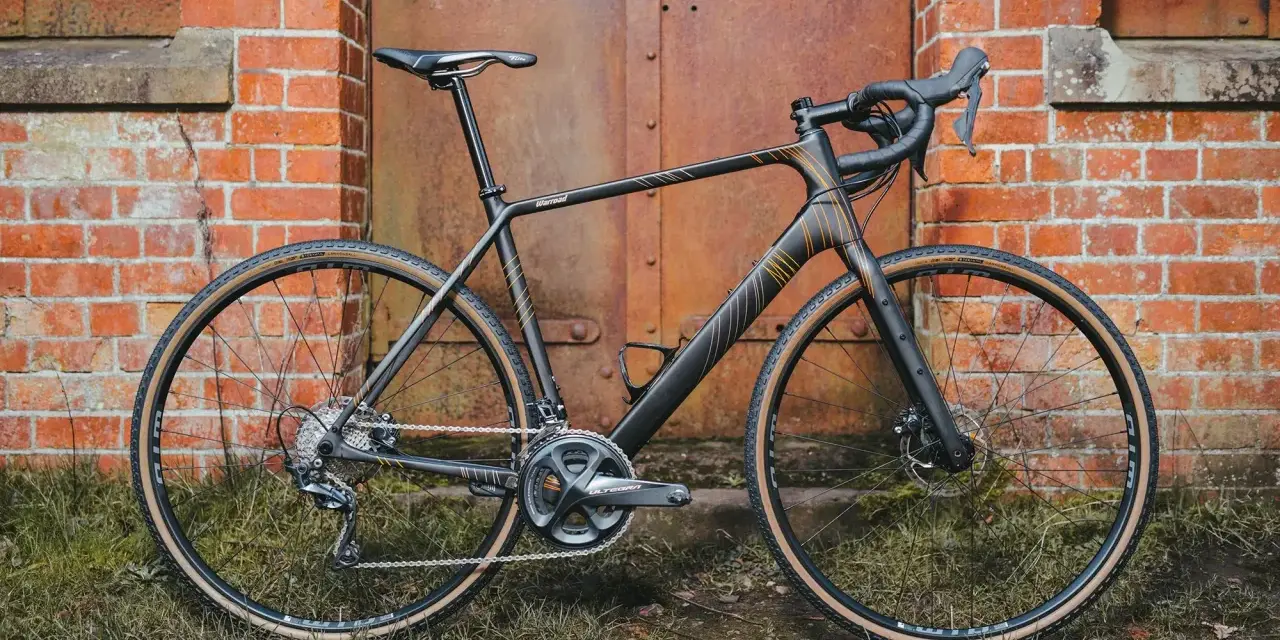
The Salsa Warroad sits in a useful middle ground: faster and more efficient than most gravel bikes, but calmer and more forgiving than a pure road bike when the pavement gets broken up. In this guide I explain what it is actually built for, how its tire and geometry choices affect the ride, where it beats Salsa's other bikes, and when I would pick something else instead.
The Warroad makes sense when you want road speed without giving up rough-surface comfort
- Best use case: mostly pavement with occasional gravel, chip seal, or rough backroads.
- Core fit: endurance road geometry, not aggressive race geometry and not full gravel-bike clearance.
- Tire range: 700c tires from 28-35 mm, or 650b tires around 47 mm.
- Practical bonus: mounts for bottles, fenders, and some cargo setups make it more versatile than a pure road bike.
- Main tradeoff: it gives up big-tire freedom, so it is not the bike I would choose for chunky gravel or heavy bikepacking.
- Current value question: Salsa's U.S. shop shows frameset and complete-bike options, so the right buy depends on whether you want to build or ride immediately.
Where the Warroad fits in Salsa’s lineup
According to Salsa Cycles, the Warroad is their endurance road bike, and that is the right lens for judging it. I would not treat it as a watered-down gravel bike; I would treat it as a road bike that is comfortable enough to keep going when the route includes cracked asphalt, chip seal, hard-packed dirt, or a few miles of smooth gravel. That distinction matters, because the bike is designed to stay efficient on pavement first and broaden its range second.
If I am helping someone choose between Salsa models, I start with one question: how often do you really leave the pavement? If the answer is “only sometimes,” the Warroad belongs on the shortlist. If the answer is “most of the time,” I would move up to a more gravel-oriented platform instead of trying to make this bike do a job it was never meant to do.
In plain terms, the Warroad is for riders who want a quick all-day bike, not a mini-mountain bike with drop bars. That framing makes the rest of the decision much easier, because it tells you what the bike is supposed to be good at before you get lost in component spec sheets. From there, the next thing that matters is how the frame actually feels on the road.
How the frame makes it feel quick without being nervous
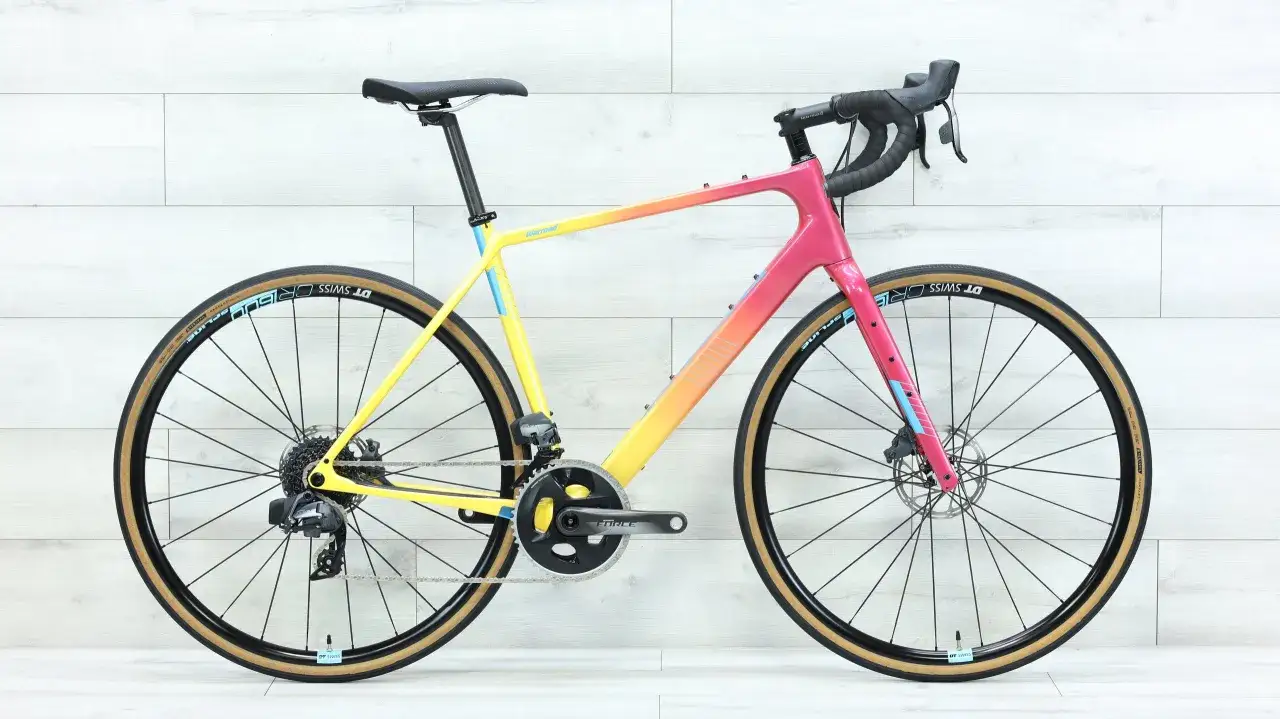
The best part of this bike is the way Salsa balances stability and responsiveness. The frame uses what Salsa calls Class 5 VRS, a rear-end layout meant to add vertical compliance without making the bike feel vague. In practical language, that means the back of the bike can take the edge off rough pavement while still tracking cleanly when you stand up and sprint or settle into a long effort.
The geometry is also telling. A slack head tube angle paired with a long-offset fork increases mechanical trail, which is bike-speak for front-end calm and stability. I care about that number because it usually shows up in the real world as a bike that does not twitch every time the surface gets imperfect. The 415 mm chainstays keep the rear end short enough to feel lively, so the bike does not turn into a couch just because it is comfortable.
That combination is why I think the Warroad makes sense for long rides where pace still matters. It is not built to feel relaxed in a sleepy way; it is built to feel efficient for hours. If you want a frame that disappears under you on century rides, fast commuter loops, or mixed-surface training days, this is the kind of behavior that pays off. The obvious follow-up is whether the frame gives you enough room to tune that feel with tires and cargo choices.
Tire clearance and mounts are what really define its range
This is where the Warroad stops being a general idea and becomes a specific buying decision. Salsa’s current frame specs list 28-35 mm tires on 700c wheels and 47 mm tires on 650b wheels, with a maximum tire outer diameter of 698 mm. That is enough room for comfort and grip, but not enough room to pretend it is a gravel monster.
There are also some practical limits worth knowing before you buy. The frame is compatible with both 1x and 2x drivetrains, but the maximum chainring sizes are modest: 48t for 1x and 52/36t for 2x. Salsa also notes that some front derailleurs can reduce tire clearance, which is the kind of detail people ignore until they try to squeeze in a tire that is technically possible but functionally annoying.
The upside is that the bike still carries real utility. The frame supports racks, fenders, top-tube bags, down-tube accessories, and fork mounts for bottle cages or cargo cages. For me, that makes the Warroad more than a weekend toy. It can handle commuting, light touring, and longer road rides with extra bottles or tools, as long as you stay honest about load and tire size.
| Spec | What it means for the rider |
|---|---|
| 700c 28-35 mm tires | Fast rolling and efficient, with enough comfort for rough pavement and light gravel. |
| 650b 47 mm tires | A useful comfort and grip option, but still not a full gravel-bike clearance target. |
| 1x or 2x compatibility | You can build it as a simple all-road bike or a more traditional road setup. |
| Rack and fender mounts | More versatile for commuting, shoulder-season riding, and light touring. |
| Front-derailleur caveat | Useful reminder that real tire fit depends on the exact build, not just the headline clearance. |
That combination of range and restraint is exactly what separates a good selection choice from a bad compromise. Once you understand it, the smartest comparison is no longer “Can it do gravel?” but “Is it the right Salsa for the kind of gravel I actually ride?”
How it compares with Warbird, Journeyer, and a pure road bike
When I compare bikes for real riders, I try to strip away marketing and ask what the route map looks like. The Warroad sits below a gravel racer and above a traditional road bike in flexibility, while the Journeyer leans even further toward utility. That is why the choice is usually about surface mix, not brand loyalty.
| Bike | Best for | What stands out | What you give up |
|---|---|---|---|
| Warroad | Mostly pavement, endurance rides, fast mixed-surface routes | Road-first feel with enough compliance for rougher connectors | Big tire clearance and true gravel-bike confidence |
| Warbird | Gravel racing, rougher dirt roads, faster off-road riding | More tire room and more off-road bias | A little of the road-bike sharpness the Warroad keeps |
| Journeyer | All-road use, adventure riding, commutes, light touring | Much larger tire clearance and a more do-everything personality | Less of the quick, road-like snap |
| Pure endurance road bike | Clean pavement, fast group rides, long road events | Highest road efficiency and the simplest ride feel | Less forgiveness when the road surface turns ugly |
I would choose the Warroad over the Warbird if the gravel is mostly smooth and the pavement miles matter more. I would choose the Journeyer if I wanted one bike to cover more terrain and carry more stuff. And I would pick a standard endurance road bike if my routes stayed clean enough that tire width and accessory mounts stopped mattering. That leaves one more question: which build actually makes sense for the money.
Which build is the smartest buy right now
At the moment, Salsa’s U.S. shop shows three Warroad options, and the price spread is wide enough that you should choose deliberately rather than just chase the highest spec. The frameset starts at $1,319.99, the Ultegra build sits at $2,759.99, and the Rival eTap AXS build is listed at $4,599.99.
| Build | Price | Best for | My take |
|---|---|---|---|
| Warroad C Frameset | From $1,319.99 | Custom builds, riders with spare parts, fit-first buyers | The cleanest choice if you already know your contact points and wheel setup. |
| Warroad C Ultegra | $2,759.99 | Riders who want a proven road build without spending at the top end | Usually the most sensible out-of-box option if you want to ride more and tinker less. |
| Warroad C Rival eTap AXS | $4,599.99 | Riders who value wireless shifting and a more modern premium build | Great if you want electronic convenience, but the jump in price only makes sense if you care about that upgrade. |
If I were buying one for myself, I would start with the frameset only if I already had a clear fit plan and parts bin. Otherwise, I would lean Ultegra unless I specifically wanted wireless shifting enough to justify the extra cost. In bike selection, paying more is only smart when the extra cost solves a problem you actually have.
Who should pass on it
The Warroad is not the right answer for every mixed-surface rider, and I think that honesty matters more than hype. I would skip it if any of these describe your riding:
- You ride loose, chunky gravel often enough that 40 mm-plus tires would be your first choice.
- You want the bike to double as a loaded touring machine with lots of gear on board.
- You expect mountain-bike-like control on steep, rough descents.
- You want the most aggressive race position and the fastest possible road feel, with no interest in comfort.
Those riders are usually happier on a Warbird, a Journeyer, or a more traditional road bike depending on how much off-pavement time they actually log. The mistake I see most often is people buying for the road they wish they had instead of the road they ride every week. Once you avoid that trap, the final choice gets much clearer.
The buying rule I would use before taking one home
If your rides are mostly pavement, with enough rough edges that you notice them, the Warroad is a strong and very sensible option. It gives you endurance-road speed, real comfort, and just enough mounting flexibility to stay useful without drifting into heavy-adventure territory.
My rule is simple: choose it if you want one bike that feels quick on the road and still behaves on the unglamorous parts of a route. Choose the frameset if you are building around fit, choose Ultegra if you want the best balance of price and practicality, and choose Rival eTap AXS only if wireless shifting is something you will genuinely value every time you ride. If your routes are getting rougher than that, I would move to a more gravel-focused Salsa instead of forcing the Warroad to be something it is not.