The fastest way to narrow the fit
- Start with height and inseam, then confirm standover clearance before you trust the label.
- If you are between sizes, the smaller frame usually feels quicker and the larger one usually feels more relaxed.
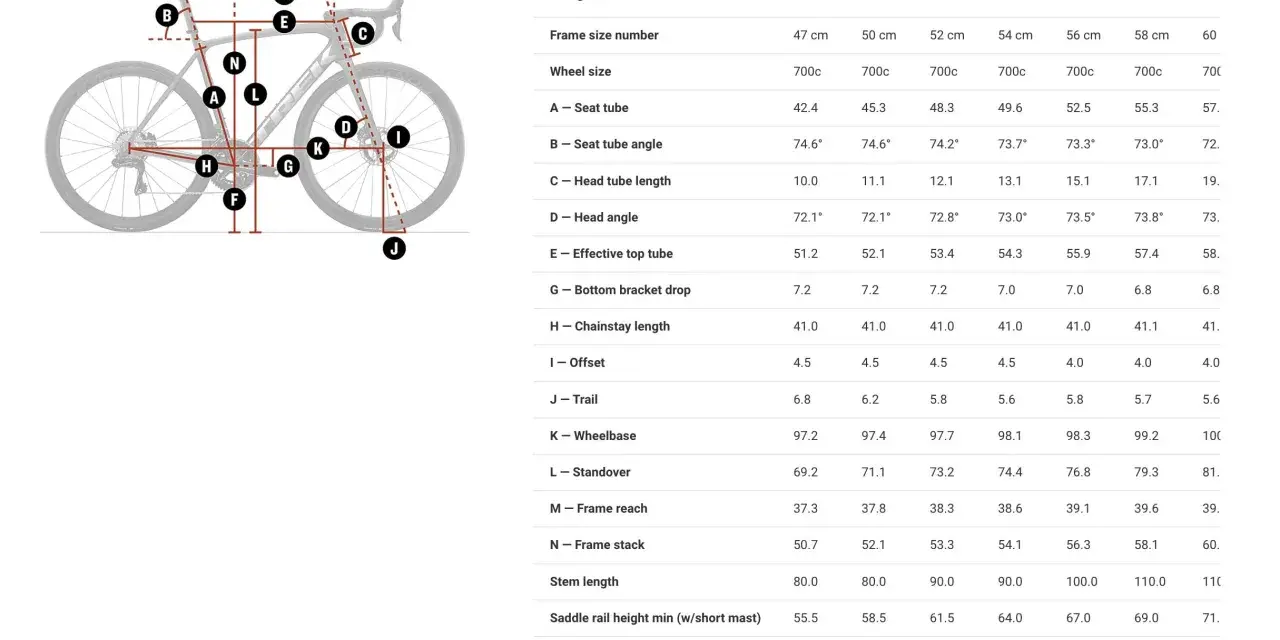
- Frame size is only the first layer; reach and stack often explain why two bikes of the same size feel very different.
- Adult road bikes are sized by frame, not wheel size, so do not confuse the number on the frame with the wheels underneath it.
- Saddle height, stem length, and bar position can fine-tune fit, but they cannot rescue a frame that is clearly too big.
What the numbers on a road bike frame really mean
For adult road bikes, the size label is a frame size, not a wheel size. Most models use standardized wheels such as 700c, so a 54 cm frame and a 56 cm frame can roll on the same wheels while still fitting very differently. I start with height and inseam, but I never stop there: the useful chart is a filter, not a verdict.
That matters because road bikes keep you in a relatively fixed position for long stretches. A frame that is too long can load your shoulders and hands, while one that is too small can feel cramped and nervous. Once you look at sizing this way, the rest of the process becomes much easier to read. The next step is turning those numbers into a practical starting point.
A practical starting-point size chart
This is the range I would use as a first pass for most riders in the United States. Treat it as a starting point, not a universal rule, because brands vary and geometry can shift the feel of a bike by more than the sticker size suggests.
| Height | Typical inseam | Typical frame size | Alpha size | What it usually feels like |
|---|---|---|---|---|
| 4'10"–5'0" (147–152 cm) | 26"–28" (66–71 cm) | 47–48 cm | XXS | Best for very small riders and compact endurance frames |
| 5'0"–5'3" (152–160 cm) | 27"–29" (69–74 cm) | 49–50 cm | XS | Often the first truly adult road fit for shorter riders |
| 5'3"–5'6" (160–168 cm) | 29"–31" (74–79 cm) | 51–53 cm | S | Common starting point for newer riders and lighter endurance bikes |
| 5'6"–5'9" (168–175 cm) | 30"–32" (76–81 cm) | 54–55 cm | M | One of the most common middle sizes in many road-bike lines |
| 5'9"–6'0" (175–183 cm) | 32"–34" (81–86 cm) | 56–58 cm | L | Often a better match for longer torsos or more aggressive positions |
| 6'0"–6'3" (183–191 cm) | 34"–36" (86–91 cm) | 58–60 cm | XL | Check reach carefully, especially on race-oriented frames |
| 6'3"+ (191 cm+) | 35"+ (89 cm+) | 61–63 cm | XXL or 60+ | Brand-dependent, so geometry matters more than the size name |
If you sit between two rows, I usually decide by riding style. I go smaller for a quicker, lower position and larger for a more relaxed, stable one. Compact frames and modern geometry can blur the old centimeter labels, so always compare the exact model's geometry chart before you commit. Once the frame range makes sense, the body-clearance check comes next.
Measure inseam and standover before you trust the label
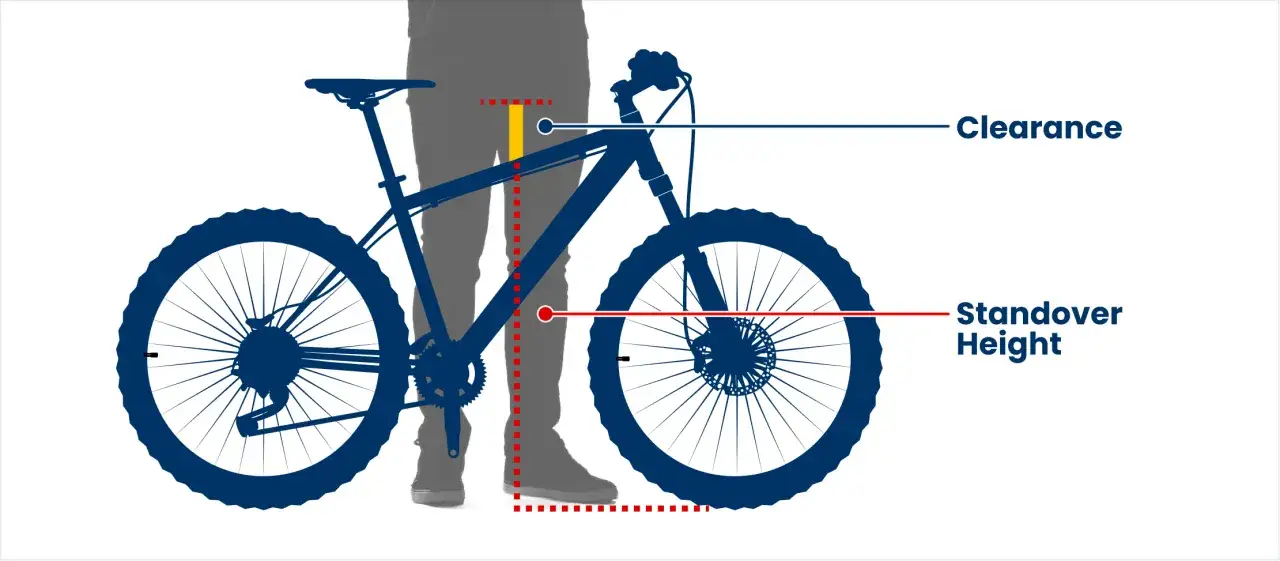
Height gets you close. Inseam tells you whether the frame can clear your body safely. I want enough standover clearance to stand over the top tube with shoes on and still have about 1-2 inches (2.5-5 cm) to spare.
- Stand barefoot with your back against a wall.
- Place a hardcover book between your legs and press it firmly upward.
- Mark the top of the book on the wall or measure from the floor to that point.
- Subtract 1-2 inches if you want a safe road-bike standover target.
- Compare that number with the bike's geometry chart, not just the size sticker.
This step matters because two riders of the same height can have very different leg lengths. A long-leg, short-torso rider may land on a different frame than a rider with the opposite proportions, even when both stand the same height. With the body-clearance piece sorted, the cockpit numbers start to tell a much more useful story.
Why reach and stack decide comfort on real rides
Reach is the horizontal distance that affects how far you stretch to the bars. Stack is the vertical measurement that tells you how high the front end sits. Those two numbers explain most of the "this bike feels big" or "this one feels compact" feedback I hear in practice.
A long reach can overload the hands, shoulders, and neck, especially on endurance rides where you stay on the hoods for hours. A low stack forces a more aggressive torso angle, which is fine for some racers but miserable for riders who want all-day comfort. This is why the same nominal size can feel completely different from one brand to the next, and why the geometry chart is often more useful than the frame label alone.
If you are between sizes, I usually lean smaller for a race bike and larger for an endurance bike, but only when the rest of the geometry is close. From here, the real question becomes not just "What size am I?" but "What kind of road bike am I actually buying?"
Match the bike to the way you actually ride
The right size does not exist in a vacuum. A fast race frame, a relaxed endurance bike, and a long-distance all-road model can share a similar number on the sticker and still fit differently under a real rider.
Race bikes
Race bikes usually have a lower front end and a longer reach. They reward a compact, efficient position, but they also punish lazy sizing. If you sit between two sizes and want sharper handling plus a lower torso angle, the smaller frame often makes more sense.
Endurance bikes
Endurance bikes usually raise the stack and shorten the effective reach a bit. That makes them easier on the back, neck, and hands during long rides. I often see newer riders choose this category because it gives them more comfort margin without making the bike feel dull.
Read Also: Weird Bikes That Work - Find Your Perfect Ride
Long weekend rides and mixed terrain
If your rides include rough pavement, broken shoulders, or all-day century attempts, comfort becomes a performance metric. A slightly more upright position can keep you fresher at hour three than a "perfectly" aggressive fit that looks fast on paper. This is also where a professional bike fit can be worth far more than chasing one extra centimeter on the frame size.
Even with the right style, a few common mistakes can still push you into the wrong frame, which is why I always look for them before I buy.
The mistakes that create a bad fit even when the size is close
- Choosing by height alone and ignoring inseam, torso length, and arm length.
- Assuming men's or women's labels solve the fit problem. The frame has to match your body and position, not the marketing badge.
- Buying the biggest size because it feels more stable in the showroom. Too-big bikes are harder to correct later.
- Thinking a longer stem will fix a frame that is fundamentally too long. It usually just changes the problem instead of solving it.
- Skipping the test ride and assuming the chart is enough.
- Forgetting that pedals, shoes, and saddle height all change how the bike fits under load.
The biggest miss I see is people treating fit like a single number. It is really a stack of small decisions, and the wrong frame size makes every later adjustment less effective. Once you avoid those traps, the final checkout step becomes much more reliable.
The last checks I make before I call a road bike the right size
Before I buy, I sit on the bike with my hands on the hoods, then in the drops, and ask three blunt questions: can I reach without locking my elbows, can I breathe naturally, and does the bike feel calm when I steer with one hand? If the answer is yes, the size is probably in the right neighborhood.
I also check whether there is still room to fine-tune the saddle height, saddle setback, and stem length. That adjustment window matters because the best size is not the frame that needs the fewest changes; it is the frame that gives you the most usable adjustment without pushing the geometry into a compromise. If the bike feels close, controlled, and easy to live with for more than an hour, I trust the fit. That is the standard I would use for my own road bike, and it is the one that usually saves riders from expensive mistakes.