The smartest part of buying a moutain bike is treating it like a terrain decision, not a spec-sheet contest. The right choice depends on where you ride, how rough the ground gets, and how much maintenance you want to live with after the sale.
In this guide, I break down the choices that actually matter in the U.S. market: hardtail versus full suspension, fit and geometry, the parts worth paying for, and the budget traps that catch a lot of first-time buyers. By the end, you should know which bikes deserve a test ride and which ones are only impressive on paper.
The fastest way to narrow the choice
- Start with the trails you actually ride; terrain should decide the category first.
- For most beginners, a well-fitted hardtail is the best value unless your local trails are rough and technical.
- Fit beats spec: reach, standover, and riding position matter more than one extra gear or a flashy paint job.
- Hydraulic disc brakes, tubeless-ready tires, and a dropper post are the features I would prioritize first.
- Leave room in the budget for pedals, a helmet, and a first service, not just the bike itself.
Match the bike to the trails you ride
I always start here because it prevents the most expensive mistake: buying a bike that is too much for mellow trails or too little for the terrain you actually ride. If your weekends are mostly green-and-blue flow trails, fire roads, and packed dirt, you do not need the same machine as someone riding rocky singletrack, steep descents, and bike-park features.
| Riding situation | Best starting point | Why it fits | What to avoid |
|---|---|---|---|
| Smooth dirt, fire roads, fitness laps | Cross-country hardtail | Lighter, efficient, and simple to maintain | Overbuilt enduro bikes with too much travel |
| Mixed singletrack with roots and small rocks | Trail hardtail or short-travel full suspension | Good balance of control, speed, and comfort | Race-focused XC bikes if comfort matters more than speed |
| Steep, rough, technical descents | Full-suspension trail or enduro bike | More traction, more control, less fatigue | Cheap long-travel bikes with weak suspension and brakes |
| Jump lines, bike parks, aggressive descents | Progressive trail or enduro bike | Stability and confidence at speed | Lightweight XC bikes that feel nervous under load |
The point is not to buy the toughest bike you can afford. It is to match the bike to the way you really ride, because that choice affects comfort, confidence, and how long the bike stays fun. Once the terrain is clear, the next big decision is suspension.
Hardtail or full suspension
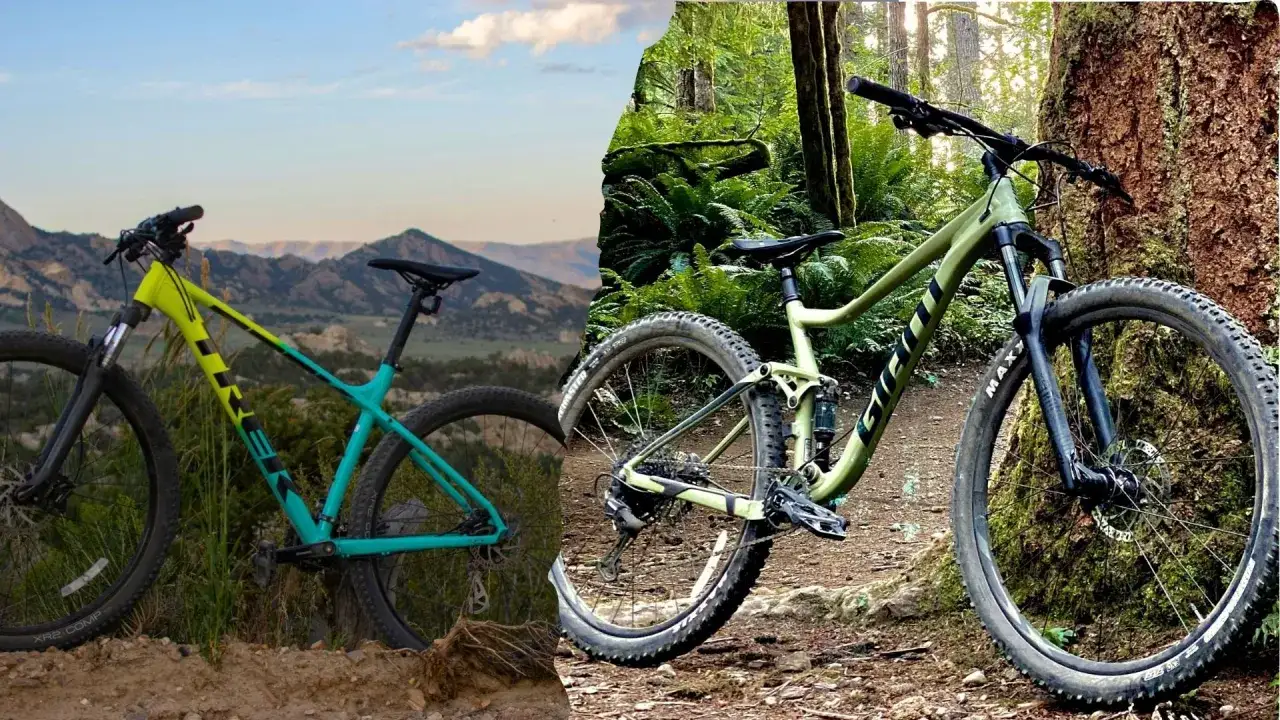
REI’s current buying guidance still frames this as the first major fork in the road: a hardtail has a suspension fork up front, while a full-suspension bike adds a rear shock. In plain English, that means the hardtail is simpler and usually cheaper, while the full-suspension bike gives you more traction and comfort when the trail gets rough.
| Bike type | Best for | Strengths | Tradeoffs | Typical U.S. price range |
|---|---|---|---|---|
| Hardtail | Beginners, smoother trails, fitness riding, lighter maintenance | Lower cost, lighter weight, simpler service, easier to pedal efficiently | Less rear-wheel traction and comfort on rough terrain | $700 to $1,800 for a solid trail-worthy build |
| Full suspension | Technical trails, roots, rocks, steep descents, longer rides | Better control, more grip, less fatigue, more confidence downhill | Higher price, more weight, more maintenance, more parts to service | $2,000 to $5,500+ for a serious trail bike |
If your budget is under about $1,500, I usually think a good hardtail gives you more bike for the money. If you already know your local trails are rough and you will ride them often, a full-suspension bike is not a luxury; it changes the ride in a meaningful way. The key is not to “upgrade” into suspension you do not need.
The next filter is fit, because even the right category feels wrong if the frame size and geometry are off.
Get the fit right before you compare components
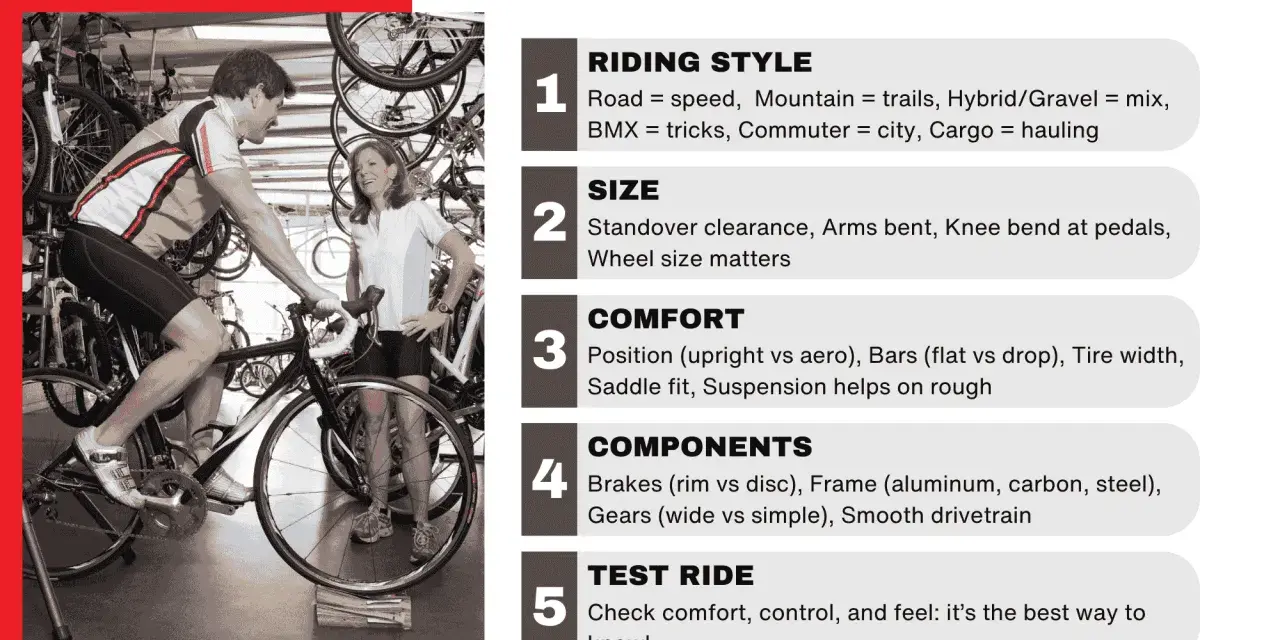
I care more about fit than almost any component because an expensive bike that feels stretched out or cramped will still ride badly. Modern mountain bikes have moved beyond simple size labels, so I always pay attention to reach, standover, and how the bike feels when I am standing and moving around on the trail.
REI’s sizing advice is a useful reality check here: compare standover height to inseam, and if your inseam is 30 inches, around 28 inches of standover is a sensible starting point. That is not the whole fit story, but it tells you fast whether a frame is obviously wrong.- Standover height should leave room to stand over the frame without feeling trapped.
- Reach should let you hold a neutral, relaxed position without locking your elbows or overreaching to the bars.
- Stack affects how upright or aggressive the cockpit feels; it changes comfort more than many riders expect.
- Seat position should let you pedal efficiently without sliding forward on the saddle or rocking your hips.
- Test ride feel matters: you should be able to shift weight, lift the front wheel, and move around the bike without fighting it.
One thing I tell people all the time: if you are between sizes, the smaller frame usually feels a little more playful, while the larger frame feels a little more stable. Neither is automatically right; it depends on whether you value agility or planted handling. Once the frame fits, the parts start to matter in a more honest way.
The parts that matter most on the trail
This is where many buyers spend money in the wrong places. I would rather see a properly sized frame, good brakes, and the right tires than a flashy frame with weak stopping power or a complicated drivetrain that does not match the riding.
Suspension travel should match the job
More travel is not automatically better. For smoother XC-style riding, roughly 80 to 120 mm up front is usually enough, while trail bikes often sit in the 120 to 140 mm range and more aggressive trail or enduro bikes move higher. If your rides are mostly rolling singletrack, extra travel can make the bike heavier and less lively on climbs. If you are hitting rocks and steep descents, more travel earns its keep quickly.
Brakes, tires, and drivetrain make the bike feel expensive or cheap
- Hydraulic disc brakes are the baseline I would want on a modern mountain bike.
- Rotor sizes around 180 mm work well for many trail riders; heavier riders and steeper terrain may benefit from 200 mm rotors.
- Tires in the 2.3 to 2.6 inch range are common for trail use, with tread chosen for your dirt, not the marketing copy.
- A 1x drivetrain is now the practical standard because it simplifies shifting and reduces distraction on rough ground.
- Tubeless-ready wheels are worth prioritizing because they let you run lower pressure with fewer pinch flats and better grip.
Trek’s current wheel-size guide puts it simply: 29-inch wheels roll faster and smooth obstacles better, while 27.5-inch wheels feel more nimble. That is why 29ers dominate a lot of trail and XC riding, while 27.5 still makes sense for riders who want a more playful feel or a bike that turns quickly in tighter terrain.
Read Also: Aero Bike - Is It Worth It? Your Guide to Speed & Efficiency
Dropper posts are not optional on serious trail bikes
A dropper post lets you lower the saddle instantly for descents and technical sections, then raise it again for climbing. On a modern trail bike, I treat it as a standard feature, not a luxury upgrade. If the bike you like does not include one, check whether the frame has internal routing and room for a retrofit before you commit.
When you add up all of these parts, the real goal becomes obvious: buy the bike that feels controlled, not the one with the longest spec sheet. That leads straight into budget planning, because price tiers matter a lot in mountain bikes.
Set a realistic budget in the U.S. market
In the U.S. market in 2026, the price range tells you a lot about what kind of ride to expect. I would not just ask, “How much can I spend?” I would ask, “What kind of riding am I trying to support for the next two or three years?” That changes the answer.
| Budget band | What it usually gets you | Best for |
|---|---|---|
| Under $800 | Basic hardtail, heavier parts, simple fork, limited upgrade path | Casual dirt paths, occasional use, very tight budgets |
| $800 to $1,500 | Much better hardtails, often with hydraulic brakes and more capable geometry | Most new riders who want a bike they will not outgrow immediately |
| $1,500 to $3,000 | Premium hardtails or entry-level full-suspension trail bikes | Riders who know they will ride regularly and want real trail capability |
| $3,000 to $6,000 | Serious trail and enduro bikes with better suspension, wheels, and brakes | Frequent riders on technical terrain |
| $6,000+ | Lightweight premium builds, advanced suspension, and high-end components | Riders chasing performance, weight savings, or race-level equipment |
I usually tell riders to leave some money outside the bike itself. Pedals, a helmet, gloves, a pump, sealant or a tubeless setup, and a first tune-up can easily shift the real cost upward. If a buyer spends everything on the frame and then skips the essentials, the bike is not really ready to ride.
Another practical rule: do not pay extra for features you will not notice on your local trails. A carbon frame, electronic shifting, or exotic suspension can be great, but only if the rest of the bike already fits your riding. From there, the final question is whether you should buy new or used.
New or used and how I would inspect either
New bikes buy you warranty coverage, cleaner service history, and easier help from the shop. Used bikes can be excellent value, but only if you know where the expensive wear lives. The hidden costs on a used mountain bike are usually not cosmetic; they are drivetrain wear, suspension service, bearings, and crash damage.
- Check the chain and cassette for wear; skipping under load usually means money spent soon.
- Inspect fork stanchions and shock shafts for scratches, oil, or uneven travel.
- Spin the wheels and look for dents, flat spots, or wobbles.
- Squeeze the brakes; the lever should feel firm, not spongy.
- Hold the frame and rock the rear triangle to feel for bearing play.
- Ask for service receipts, especially on a full-suspension bike.
- Budget for tires, pads, a chain, or suspension service if the seller cannot document maintenance.
A used hardtail is usually easier to evaluate than a used full-suspension bike because there are fewer moving parts to hide problems. If the seller cannot explain when the fork was last serviced or whether the drivetrain has been replaced, I would be cautious. Once that choice is clear, the last step is deciding what kind of first bike makes the most sense long term.
The first mountain bike I would buy today
If I were helping a friend start from zero, I would aim for a well-fitted trail hardtail with hydraulic disc brakes, a 1x drivetrain, tubeless-ready wheels, and room for a dropper post. That combination gives you a bike that is simple enough to maintain, capable enough to learn on, and good enough to keep riding after your skills improve.If the local trails are consistently rough, steep, and rooty, I would skip the compromise and move straight to a short-travel full-suspension bike. That is where the extra money actually changes the ride instead of just inflating the price tag.
Before you buy, check the size chart, confirm the brake spec, make sure the wheels and tires suit your trails, and ask whether the shop will assemble and tune the bike after delivery. Those small details decide whether the bike feels like a smart purchase on day one or a project you have to fix later.