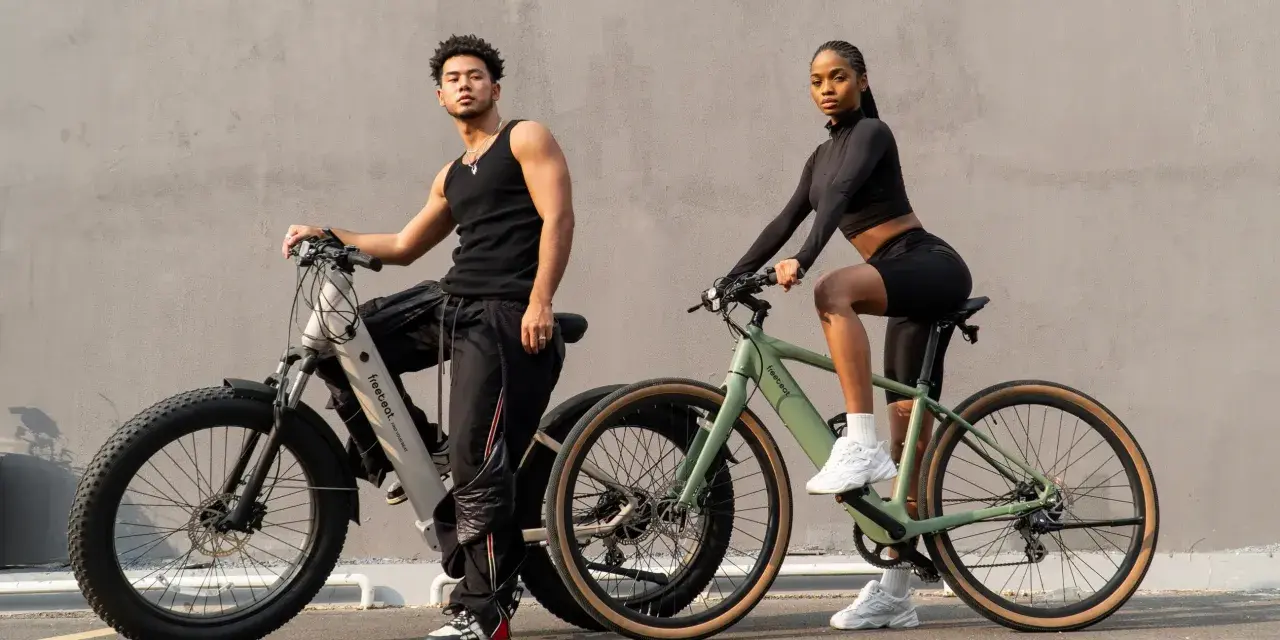
A hybrid bike sits in the sweet spot between road speed and mountain-bike comfort. The practical answer to what is a hybrid bike is a bicycle built to handle commuting, fitness rides, errands, and relaxed weekend miles without forcing you into a stretched racing position or a heavy trail setup. In this guide, I break down how hybrids differ from road and mountain bikes, when they make sense, what features matter most, and how much you should expect to spend in the US market.
The quick version for riders who want one bike that can do more
- Hybrids combine road-bike efficiency with mountain-bike comfort, usually through flat bars, upright geometry, and moderate-width tires.
- They are best for commuting, fitness riding, paved paths, and mixed city streets with the occasional rough patch.
- Most good hybrids use 700c wheels, 32-45 mm tires, and disc brakes; comfort models may add a suspension fork or wider tires.
- They are not the best choice for fast group road rides or technical singletrack.
- In the US, budget hybrids often start around $400-$800, while stronger all-around models usually land around $800-$1,500.
What a hybrid bike really is
At its core, a hybrid bike borrows the efficient rolling feel of a road bike and the stability and forgiveness of a mountain bike. I think of it as a practical middle ground: quick enough for neighborhood streets and bike paths, but relaxed enough that most riders do not feel punished after 30 or 60 minutes in the saddle.
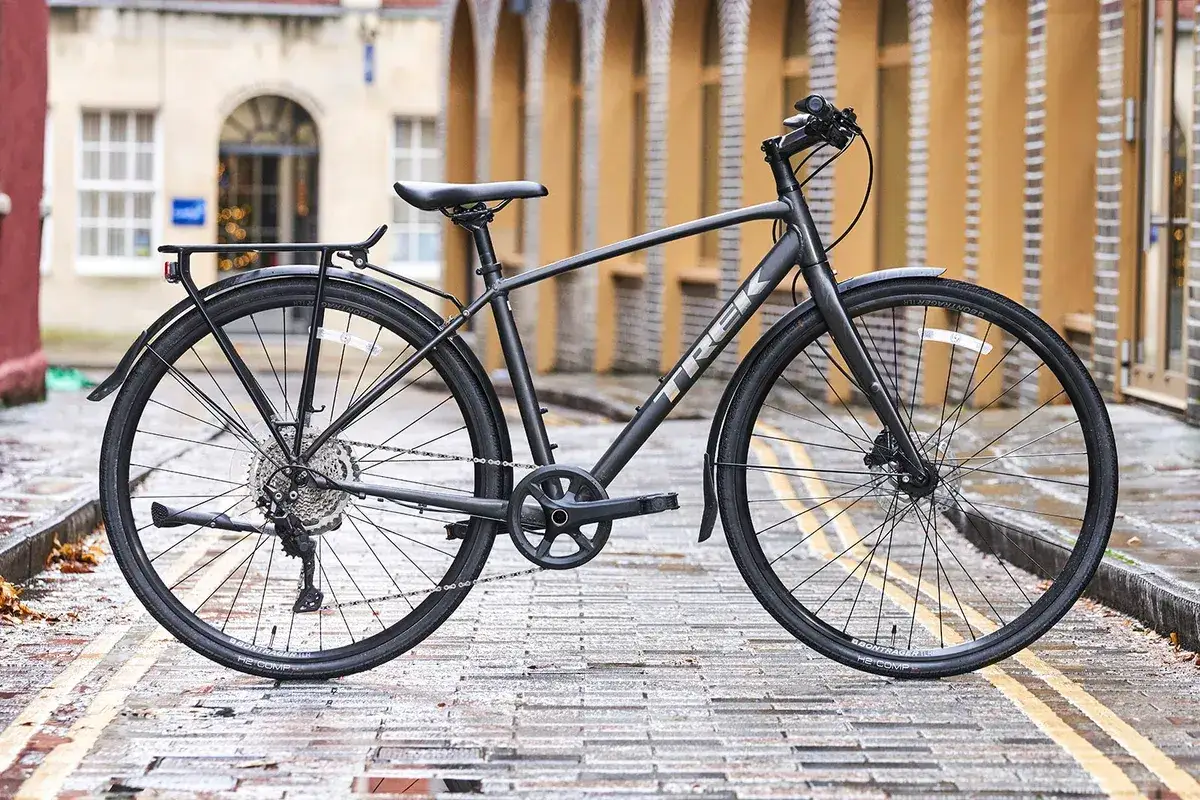
The typical recipe is easy to recognize. You get a flat handlebar for control, a more upright riding position for visibility, tires that are wider than a road bike’s but narrower than a mountain bike’s, and gearing that works well on moderate hills. Many hybrids also add mounting points for racks, fenders, and water bottles, which is exactly why they show up so often in commuting and casual fitness setups.
That blend is the whole point. A hybrid is not trying to be the fastest bike on smooth pavement or the most capable bike on dirt. It is trying to be useful more of the time, with fewer compromises for everyday riders. That trade-off matters, because once you understand it, the rest of the buying decision becomes much simpler.
How it stacks up against road and mountain bikes
| Bike type | Riding position | Main strength | Main trade-off |
|---|---|---|---|
| Road bike | Low and stretched | Speed on smooth pavement | Less comfort and control on rough surfaces |
| Hybrid bike | Upright and relaxed | Versatility for commuting, fitness, and casual rides | Not as fast as a road bike or as capable as a mountain bike |
| Mountain bike | Very upright and stable | Control on rough terrain and trails | Heavier and slower on pavement |
If your rides are mostly pavement with a little roughness mixed in, the hybrid usually makes the most sense. If pure speed matters, a road bike is still the cleaner tool. If trails are the real goal, I would move straight to a mountain bike instead of trying to force a hybrid into a job it was never meant to do.
There is one adjacent category worth knowing about: gravel bikes. They overlap with hybrids in the sense that both handle mixed surfaces, but gravel bikes usually use drop bars and lean more heavily toward longer off-road rides. That difference matters if you are deciding between comfort and a more performance-oriented setup.
When a hybrid bike makes the most sense
A hybrid bike earns its keep when your riding is mixed and practical rather than highly specialized. I see the best fit in a few common scenarios:
- Commuting when you want a stable bike that can take racks, fenders, and lights.
- Fitness riding when you want something faster and less upright than a cruiser, but easier to live with than a race bike.
- Weekend rides on paved paths, neighborhood loops, and rail trails.
- Light gravel or broken pavement where a road bike would feel too harsh.
- New riders who want confidence and comfort first, not an aggressive posture.
That last point is important. Many beginners assume they need a road bike because it looks “serious,” but then they spend most of their time riding slowly, stopping often, or dealing with traffic. In that situation, a hybrid usually makes the experience easier and more enjoyable. The bike is doing the job you actually asked of it.
The limitation is just as important. If you regularly ride fast group rides, attack steep climbs, or want to spend time on technical singletrack, a hybrid starts to feel like a compromise in the wrong direction. It can handle a lot, but it is not the best answer for everything.
How to choose the right one for your riding
When I help someone choose a hybrid, I start with the route, not the frame badge. The details below usually make the biggest difference in how the bike feels day to day.
Fit and riding position
Hybrid bikes should feel stable and easy to steer. A slightly upright position is a feature, not a flaw, because it improves visibility and reduces strain on your back and neck. If you are between sizes, test both; a bike that is a little too small is often easier to make comfortable than one that is too large.
Tires and wheels
Most hybrids use 700c wheels, and that is a good default for riders who split time between pavement and smoother paths. Tire width is where the ride changes most. For faster fitness riding, 32-38 mm tires usually feel lively. For rougher streets, potholes, or occasional packed gravel, 40-45 mm tires add comfort and grip without turning the bike into a tank.
Gearing
Modern hybrids often use a 1x drivetrain, which means one front chainring and a simpler setup. That is easy to live with and keeps shifting straightforward. Budget models may still use 2x or 3x gearing, which can work well, but the system is usually less elegant. If you live in a hilly area, pay attention to the easiest gear, not just the number of speeds on the spec sheet.
Read Also: Hybrid Bike - Is It Right For You? Find Out Now!
Brakes and mounts
Disc brakes are the standard I would look for now, especially if you ride in wet weather or want more consistent stopping power. Hydraulic discs cost more but usually feel smoother and need less hand effort than mechanical systems. I also pay attention to mounts for racks and fenders; those tiny threaded holes decide whether the bike can become a real commuter or just a fair-weather toy.
One upgrade I often see oversold is front suspension. It can help on genuinely rough pavement, but on many hybrids it adds weight, maintenance, and energy loss without much payoff. If your routes are mostly roads and paths, a rigid fork is often the smarter choice. Once those features are sorted, price becomes much easier to judge.
What you should expect to pay in the US
Hybrid pricing is broad because the category covers everything from simple city bikes to premium fitness models and electric assist versions. The trick is matching the build quality to your riding, not just buying the cheapest frame that says “hybrid” on it.
| Price range | What you usually get | Best for |
|---|---|---|
| $400-$800 | Basic aluminum frame, simpler drivetrain, mechanical brakes, functional but heavier parts | Occasional riding, short commutes, first-time buyers |
| $800-$1,500 | Better wheels, wider gear range, disc brakes, lower weight, cleaner ride feel | Regular commuting and fitness riding |
| $1,500-$3,000 | Lighter frame, better drivetrains, hydraulic brakes, improved comfort and efficiency | Frequent riders who want one bike to do almost everything well |
| $2,000-$4,500+ | Electric assist, larger batteries, more power, higher-spec components | Longer commutes, hills, cargo, or riders who want help on demand |
In my experience, the best value is usually not the cheapest bike in the store. It is the one that spends money on the parts you feel every ride: wheels, brakes, tires, and fit. A bargain hybrid can look fine on paper and still feel sluggish if the components are too heavy or the size is wrong. If you want a bike that you will use often, that matters more than a small sticker price difference.
Common mistakes that leave riders disappointed
Hybrid bikes are forgiving, but buyers still make predictable mistakes. The most common one is choosing for looks instead of use. A sleek paint job does nothing if the bike has no rack mounts, the gearing is wrong for your hills, or the size is off by a full step.
- Buying a bike that is too aggressive for commuting comfort.
- Choosing suspension because it sounds advanced, then carrying extra weight you never needed.
- Ignoring tire width and ending up with a harsh ride on bad pavement.
- Expecting a hybrid to replace a road bike on fast group rides.
- Expecting it to replace a mountain bike on technical trails.
- Overlooking maintenance access, especially if you plan to ride in rain or winter conditions.
A good hybrid should feel easy to live with. If it feels slow, awkward, or high-maintenance right away, that is usually a sign that the bike is solving the wrong problem. The best purchases in this category are the ones that fade into the background and simply make more rides happen.
What I’d check first before buying one
If I were choosing a hybrid today, I would start with three questions: do I need rack and fender mounts, do I want a faster fitness feel or a more upright comfort feel, and will I ride enough rough pavement to justify wider tires or a suspension fork? Answer those honestly and the shortlist gets much smaller, much faster.
The best hybrid is the one that makes weekday rides easy enough that you actually use it. For most riders in the United States, that means a well-fitted bike with a flat bar, 32-45 mm tires, disc brakes, and the simplest drivetrain that still handles your hills.