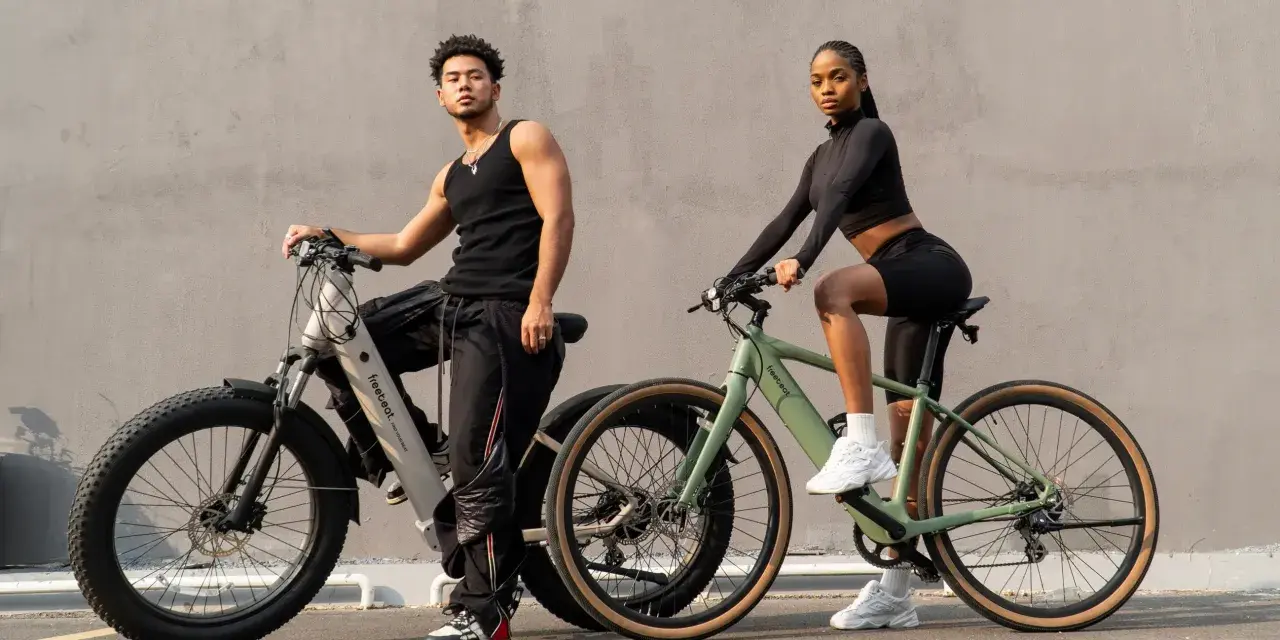
Hybrid bikes are built for comfortable, flexible riding on roads, paths, and light mixed surfaces
- Best fit: commuting, casual fitness, errands, and recreational rides on pavement.
- Real strength: upright comfort without feeling sluggish the way many comfort bikes do.
- Useful range: city streets, bike paths, rail trails, and light gravel or packed dirt.
- Big trade-off: they are not as fast as road bikes and not as capable on rough trails as mountain bikes.
- Buying priority: fit, tire width, brakes, and accessory mounts matter more than flashy specs.
Hybrid bikes are built for practical everyday riding
I think of a hybrid as the bike that lives between categories without feeling confused about its job. It usually borrows the upright position and confidence of a mountain bike, then trims away enough weight and bulk to feel efficient on pavement. Flat handlebars, moderate tire width, and a frame that plays nicely with racks or fenders make it easy to use on a normal Tuesday, not just on a weekend ride.
That is the real value. A hybrid is not trying to win a race or survive a rock garden. It is trying to make regular riding simpler, more comfortable, and less fussy. Once you understand that, the rest of the decision becomes much easier, because the best use cases are pretty clear.
Next, I want to get specific about the rides where a hybrid actually earns its place.
The riding situations where it earns its keep
When I recommend a hybrid, I am usually thinking about one of these scenarios. They are the places where versatility matters more than specialization, and where a bike that behaves well in ordinary conditions is worth more than one that is brilliant in only one narrow lane.
- Daily commuting - A hybrid is one of the easiest choices for riding to work because it is comfortable in street clothes, stable in traffic, and usually easy to set up with lights, fenders, and a rear rack.
- Fitness rides - For steady rides in the 5 to 25 mile range, a hybrid gives you enough efficiency to work up a sweat without the aggressive position of a road bike.
- Errands and short trips - If you want to grab groceries, ride to a coffee shop, or handle a few local stops, the upright position and accessory mounts make the bike feel genuinely useful.
- Bike paths and rail trails - Smooth pavement, crushed limestone, and well-kept multi-use paths are exactly where hybrid geometry feels natural.
- Mixed-surface riding - On rough city pavement, patched roads, and hard-packed dirt, a hybrid stays calmer than a road bike and less bulky than a mountain bike.
- First-bike or one-bike ownership - If you do not want to manage a stable full of specialized bikes, a hybrid is often the least complicated way to cover most casual riding needs.
I like hybrids because they reduce friction. You do not have to overthink the route, the clothing, or the weather nearly as much as you would with a more specialized bike. That flexibility is also why it is important to know where the limits start, because a hybrid is useful precisely until the terrain or pace demand more than it was designed to give.
Where a hybrid is the wrong tool
A good hybrid can do a lot, but I would not pretend it is the answer for every ride. The biggest mistake I see is expecting one bike to behave like three different categories at once. That usually leads to disappointment, and sometimes to a bike that feels mediocre everywhere instead of good where it matters.
- Technical mountain trails - Steep, loose, rooty, or rocky singletrack calls for a real mountain bike with more suspension, more traction, and more control.
- Fast road group rides - If your goal is higher speed over longer paved distances, a road bike is usually lighter and more efficient.
- Extended gravel riding - A hybrid can handle light gravel, but longer or rougher gravel routes are usually better on a gravel bike with more tire clearance and a more stable geometry.
- Heavy cargo duty - A hybrid can carry groceries or a light pannier load, but if you regularly haul kids, big deliveries, or serious work gear, a cargo bike or dedicated commuter setup makes more sense.
- Very rough streets on a budget - Cheap suspension forks often add weight without adding much real comfort, so a badly chosen hybrid can feel slower and less sharp than it should.
In other words, a hybrid is excellent when your rides are mixed but not extreme. Once the route gets rougher, faster, or heavier, the trade-offs become more obvious, which is exactly why the next step is choosing the right configuration instead of just the right category.
How to choose the right hybrid for your roads and routes
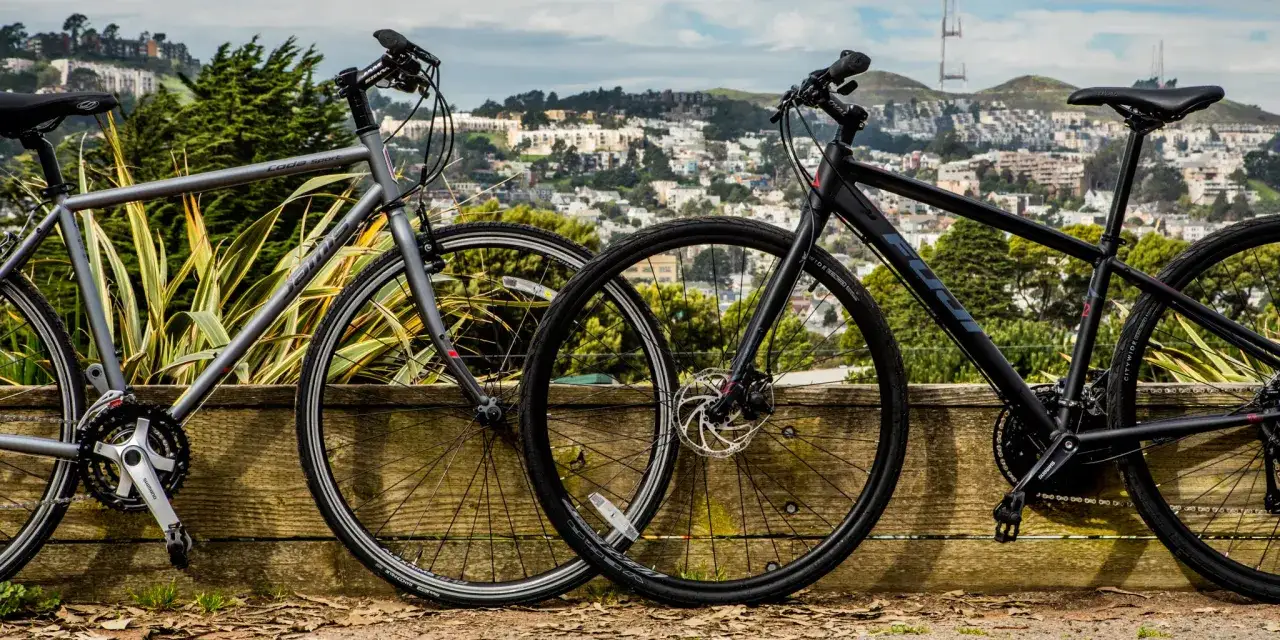
When I help someone choose a hybrid, I ignore the marketing first and look at the actual ride they need to do. The right bike for flat city streets is not always the right bike for pothole-heavy suburbs, and the right bike for a 12-mile commute is not always the right bike for weekend fitness riding. Small spec changes make a big difference here.
| Feature | What I look for | Why it matters |
|---|---|---|
| Tires | About 32 to 38 mm for mostly pavement; roughly 38 to 45 mm if the roads are rougher or you want light gravel ability | Wider tires usually feel more comfortable and confident, while narrower tires roll a bit faster |
| Brakes | Hydraulic disc brakes if you ride in rain, hills, or traffic; mechanical discs if the budget is tighter | Hydraulic discs need less hand force and generally give more consistent stopping power |
| Drivetrain | A 1x setup for simplicity, or a 2x setup if you face steep climbs and want a wider gear range | 1x systems are easy to use and maintain; 2x systems can offer more fine-tuning for terrain changes |
| Fork | Rigid fork for most city and path riding; suspension fork only if your roads are genuinely broken | A rigid fork is lighter and usually more efficient; a suspension fork can add comfort, but also weight and complexity |
| Mounts | Rack and fender eyelets if you commute or ride in wet weather | Accessory mounts make the bike much more practical for real-world use |
Budget matters too. In the U.S. market, I usually think of $500 to $800 as the entry point for a usable hybrid, $800 to $1,500 as the sweet spot for most riders, and $1,500 and up as the range where you start paying more for lighter weight, cleaner shifting, and better finishing kit. I would rather see a rider buy a well-fitted midrange hybrid than chase a cheaper bike with a harsh ride and weak components.
The rule I use is simple: buy the bike that matches the roads you actually ride, not the roads you wish you rode. That makes the comparison with other bike types much more honest, which is where the decision usually clears up fast.
How it compares with road, mountain, and gravel bikes
Most people are not choosing a hybrid in a vacuum. They are deciding between a hybrid and one of the three obvious alternatives, and each one changes the experience in a meaningful way.
| Bike type | Best for | Strengths | Trade-offs |
|---|---|---|---|
| Hybrid | Commuting, casual fitness, errands, bike paths, light mixed surfaces | Comfortable, versatile, easy to live with, often easy to equip | Not the fastest, not the most capable off-road, not the lightest |
| Road bike | Speed, endurance rides, paved roads, group rides | Light, efficient, quick handling, very good on smooth pavement | More aggressive position, less forgiving on rough streets, less practical for casual errands |
| Mountain bike | Technical trails, rough terrain, loose surfaces, descending control | Traction, durability, stability, confidence on rough ground | Heavier, slower on pavement, more bike than most urban riders need |
| Gravel bike | Long mixed-surface rides, rough roads, serious gravel, light touring | Stable, capable, fast enough on pavement, better off-road range than a hybrid | Usually costs more and may feel less upright or casual than a hybrid |
Once you frame it that way, the final question is less about category and more about fit, setup, and honesty about how you ride.
The easiest way to decide if a hybrid fits your life
I usually narrow the decision down to three questions. Do you ride mostly on pavement? Do you want comfort and convenience more than pure speed? Will you use accessories like a rack, fenders, or lights? If the answer to those is yes, a hybrid is probably the most practical bike in the room.
What I would not do is buy one just because it seems like the safe option. I would test it in the shoes I actually wear, on the kind of street surface I actually ride, and with the accessories I expect to use. That is where a hybrid either proves itself or exposes a bad match. When the frame fit feels natural, the tires suit the surface, and the bike makes daily riding easier, the category stops being a compromise and starts being the right tool for the job.
That is why I reach for a hybrid when I want one bike to handle most of a normal week without asking for constant attention.