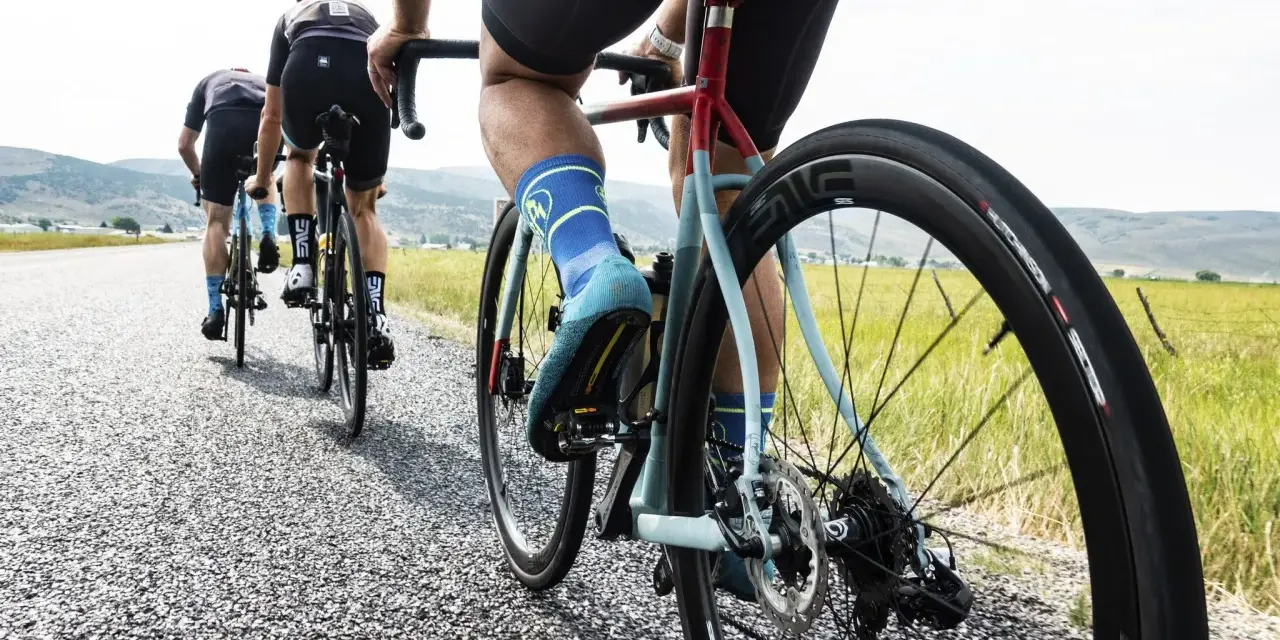
The differences that matter most
- Endurance bikes are the safer pick for long rides, rough roads, and all-day comfort.
- Race-oriented road bikes feel quicker and more responsive, especially on smooth pavement.
- Tyre clearance is a major clue: many endurance bikes fit 32 to 38 mm tires, while race bikes often stay around 28 to 32 mm.
- The more aggressive bike is only faster if you can hold the position without losing comfort or power.
- For most recreational riders in the U.S., a fast endurance bike is the most practical single-bike choice.
What each bike type is really built for
In this article, I use “road bike” to mean the racier end of the category, because the endurance model is still technically a road bike. The real difference is intent. An endurance bike is built to make long rides easier to sustain, while a race road bike is built to feel lower, faster, and more responsive when the pace is high.That matters because a bike should match the ride you actually repeat. If your local roads are patched, windy, or full of chip seal, comfort is not a luxury feature. It is part of performance.
| Factor | Endurance bike | Race road bike |
|---|---|---|
| Primary goal | Comfort over hours | Speed and sharp handling |
| Riding position | More upright | Lower and longer |
| Handling | Stable and forgiving | Quicker and more direct |
| Tyre clearance | Usually wider, often 32 to 38 mm | Usually tighter, often 28 to 32 mm |
| Best for | Centuries, gran fondos, rough roads, commuting | Fast group rides, racing, smooth roads |
| Trade-off | Slight aero penalty | Less forgiving on long rides |
The key thing I want readers to remember is this: endurance is not a “slower” category by definition. It is a more forgiving one. That distinction becomes clearer once you look at the geometry.
How geometry changes the way the bike feels
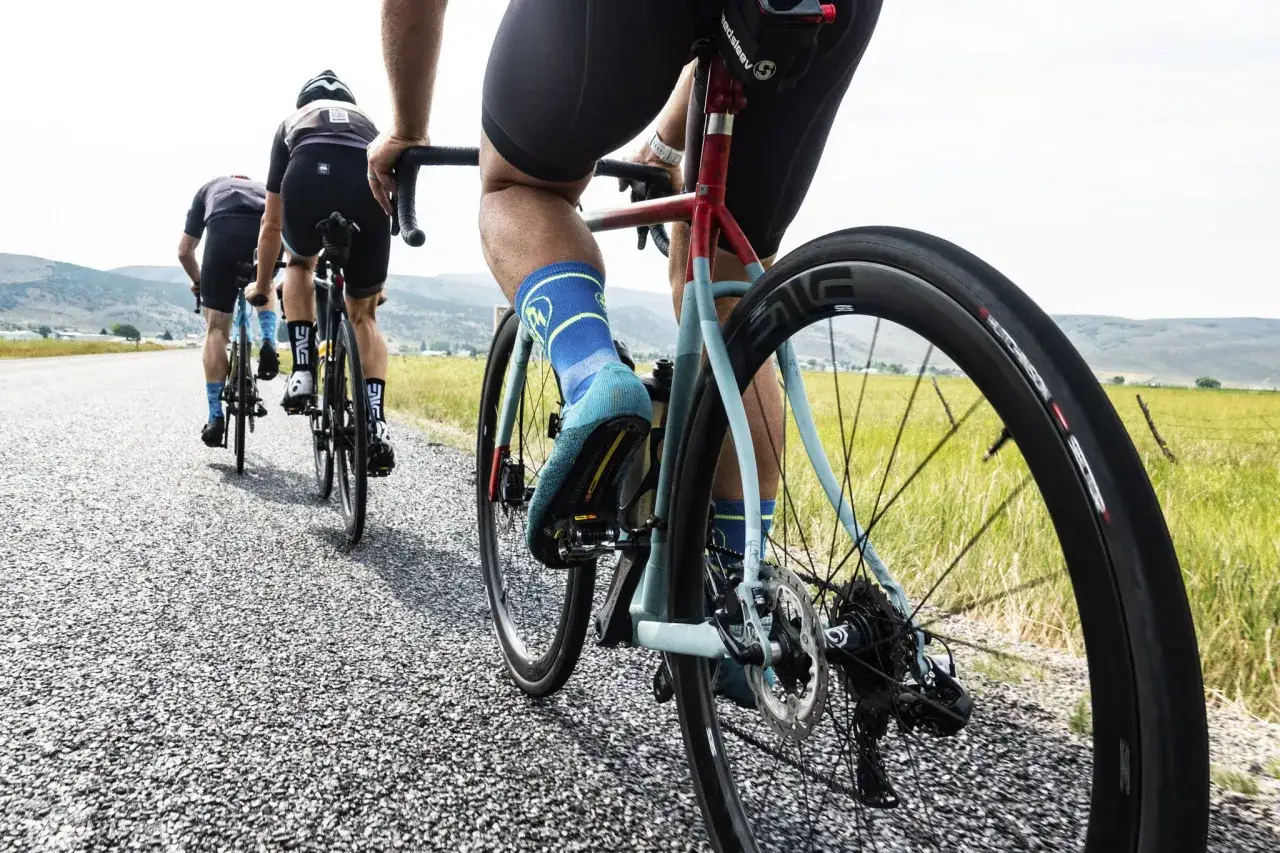
Geometry is where the difference becomes obvious. Endurance frames usually have a higher stack, a shorter reach, and a longer wheelbase, which puts the bars a bit higher and calms the steering down. A race bike goes the other way: lower front end, longer stretch, and quicker inputs that feel fantastic when you are attacking a climb or riding hard in a group.
Endurance geometry
Higher stack reduces strain on your back, neck, shoulders, and hands. A shorter reach helps you avoid feeling stretched out, and a longer wheelbase adds stability on descents and broken pavement. That is why endurance bikes feel less twitchy when you are tired.
Read Also: Orbea Orca Review - Is This Lightweight Race Bike For You?
Race geometry
A lower front end helps aerodynamics and body position, and the more aggressive setup makes the bike feel eager. The downside is simple: if the position is too low or too long for your body, it becomes annoying after a couple of hours, and that discomfort can undo some of the speed advantage.
- Stack is the vertical measurement that influences handlebar height.
- Reach is how far you stretch to the bars.
- Wheelbase affects stability and tracking.
- Tyre clearance determines how much comfort and grip you can add with wider tires.
Those numbers matter more than marketing labels. I would rather see a rider on the “slower” bike with the correct fit than on the “faster” bike with a position they secretly hate.
Speed, comfort, and fatigue are a package deal
On paper, a race road bike is the faster machine. A lower position is more aerodynamic, and lighter, narrower setups can feel snappier under acceleration. On real roads, the story is messier. If the position forces you to sit up every few minutes, shift around on the saddle, or lose form late in a ride, the speed advantage gets diluted quickly.
I think the industry sometimes oversells the idea that “more aggressive” automatically means “better.” For most riders, the ability to stay relaxed and pedal cleanly for four hours matters more than shaving a few watts off a position they cannot comfortably hold.
- Race bike advantage on smooth pavement, short hard efforts, crits, and fast group rides.
- Endurance advantage on rough chip seal, headwinds, centuries, and back-to-back riding days.
- Wide tires can matter more than frame weight when the road surface is imperfect.
- A 32 mm tubeless tire often does more for real-world speed and comfort than a small upgrade in frame stiffness.
The practical takeaway is easy: if you ride hard but only for an hour, race geometry can make sense. If you ride long enough to feel the bike in your shoulders and lower back, comfort starts to look like speed.
Who should choose which bike
I use a simple filter when I help riders choose. If your average ride is under two hours, your roads are smooth, and you like a low, sporty position, a race bike is worth serious consideration. If you ride centuries, fondos, long solo loops, or rough suburban and rural roads, endurance geometry is usually the smarter call. If you have any history of back, neck, or hand discomfort, I would lean endurance first and let fit decide the final setup.
- Choose endurance if comfort, confidence, and all-day usability matter most.
- Choose race if you care about speed on smooth roads and enjoy an aggressive position.
- Choose endurance or all-road if you want one bike for imperfect pavement, light gravel connectors, and winter riding.
- Choose race if you already know you will lower the bars, run fast wheels, and ride hard often enough to justify the trade-offs.
The mistake I see most often is buying the bike that looks fastest rather than the one that fits the rider’s routine. A machine that feels heroic for ten minutes but punishing for three hours is a bad purchase, even if it wins the showroom comparison.
What I would buy in 2026 at different budgets
In the U.S. market, a usable endurance bike usually starts around $1,000 to $1,800 for a solid alloy build, while a strong carbon or high-end alloy bike often lands in the $2,500 to $4,500 range. Once you move past $5,000, you are paying for lighter frames, better wheels, electronic shifting, cleaner integration, and sometimes a more refined ride, but fit and tire choice still matter more than the badge.
| Budget | What I expect to see | Where it makes sense |
|---|---|---|
| $1,000 to $1,800 | Aluminum frame, carbon fork, hydraulic disc brakes, dependable mechanical shifting, 30 to 32 mm tires | Best value for new riders and winter trainers |
| $2,000 to $4,500 | Better carbon or premium alloy, 105-class or equivalent parts, tubeless-ready wheels, 32 to 35 mm clearance | The sweet spot for most serious recreational riders |
| $5,000+ | Premium carbon, electronic shifting, lighter wheels, aero details, cleaner integration | For riders who already know they use those advantages |
If I were spending my own money, I would prioritize fit, tire clearance, gearing, and wheel quality before chasing the lightest frame. A bike that accepts wider tires and lets you stay comfortable for hours is usually a better purchase than a marginally lighter bike that leaves you cramped.
The bike I’d choose if I had to keep one
If I had to make one recommendation for most riders, I would lean toward a fast endurance bike. It gives you the comfort to ride longer, the tire clearance to handle imperfect roads, and enough speed that you are not giving up much unless you are racing or chasing very fast group rides. I would only choose a race bike first if I already knew I wanted a low, aggressive position and I was willing to trade a little comfort for sharper handling.
The simplest filter is this: buy the bike that matches the ride you repeat most often, not the one that looks best in a showroom. On the roads most people actually ride in the United States, that usually means endurance geometry, good tires, and a fit you can live with for hours.