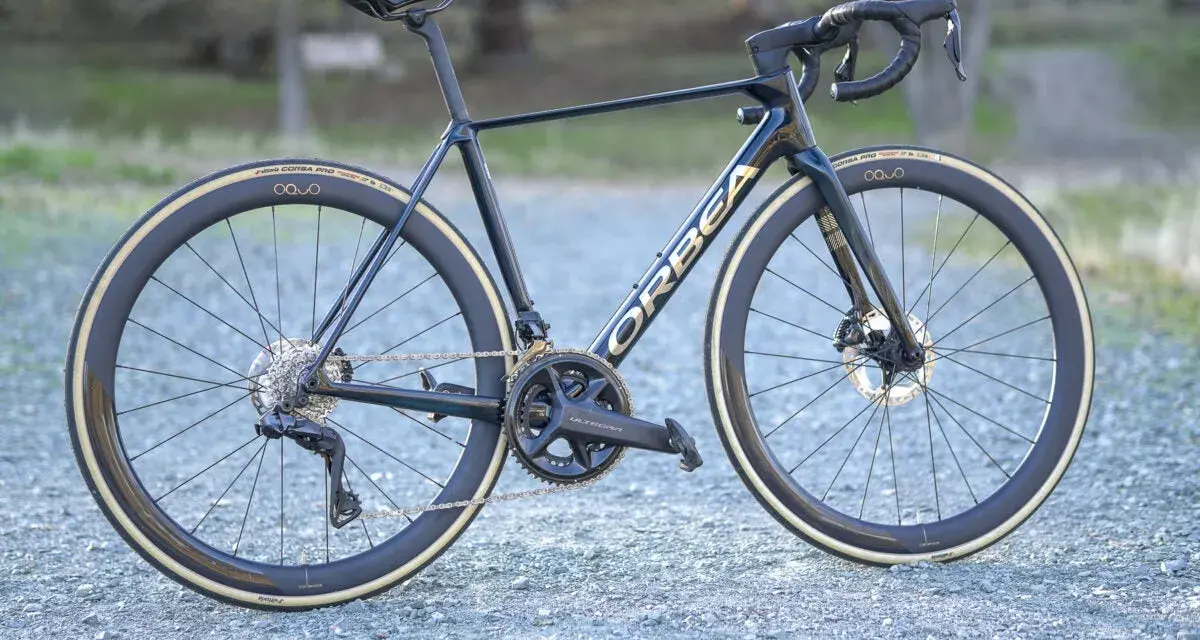
The Orca is one of the clearest modern examples of a bike that knows exactly what it wants to be: a lightweight race machine with enough real-world polish to stay useful outside a lab test. This Orbea Orca review focuses on how it climbs, how it handles rough U.S. roads, which build makes sense at each price point, and where the bike’s tradeoffs are easy to miss at first glance. If you are deciding between a pure climber, an aero race bike, or a more relaxed endurance frame, the details here matter.
What matters most before you choose the Orca
- The current Orca is a lightweight carbon race bike, not an aero-first speed machine.
- Orbea’s two carbon tiers are OMX at 745 g and OMR at 1,030 g, which keeps the platform focused on climbing and acceleration.
- 32 mm tire clearance makes the bike more practical on mixed pavement than older pure climbers.
- In the U.S. catalog, complete-bike pricing starts at $2,866 for the M30 and reaches $6,614 for the M21eTEAM.
- The Orca fits riders who want quick handling, a sharp front end, and a bike that rewards repeated surges.
What the Orca is built to do
The current Orca is not trying to win the aero arms race. It is built around a simple idea: if a bike is light, stiff where it matters, and responsive under power, it can feel fast without relying on deep tube shapes and oversized surfaces. Orbea says the OMX carbon frame weighs 745 g and the OMR frame 1,030 g, and that weight difference matters more than many riders think once the road tilts up or the pace changes repeatedly.
What I like about that approach is that it is honest. The Orca is a climbing-focused race bike first, but it is not a nostalgic throwback. Size-tuned stiffness helps keep the ride feel consistent across the range, and the frame geometry is set up to stay composed rather than nervous. In practice, that means the bike is meant to feel the same across sizes instead of becoming floppy in larger frames or overbuilt in smaller ones.
It also helps that the Orca acknowledges how people actually ride now. A dedicated race bike with room for bigger tires, cleaner routing, and a modern carbon layup is more relevant than a fragile superlight bike with outdated compromises. That ride philosophy is easiest to judge once you get on the road, which is where the character really shows up.
How the Orca feels on real roads
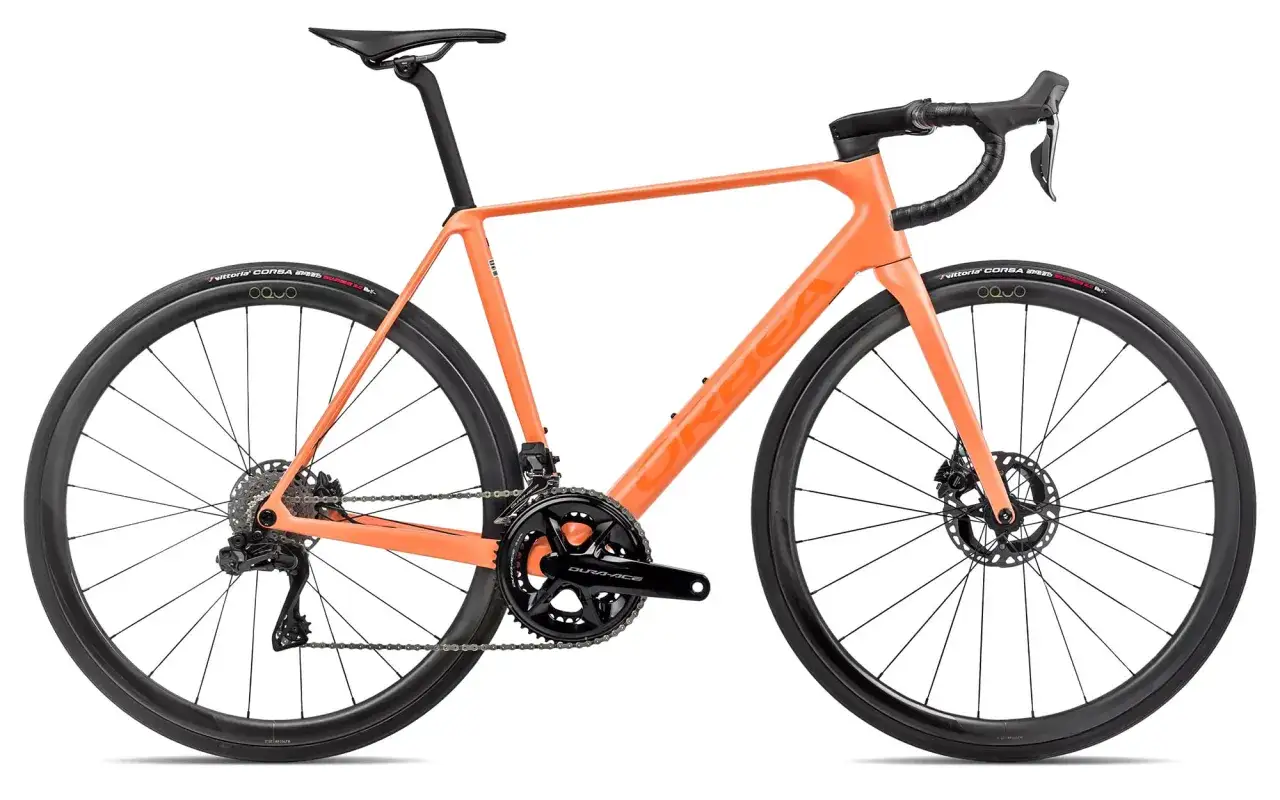
The Orca’s strongest trait is the way it responds when you ask it to accelerate. Out of the saddle, it feels eager and direct, which is exactly what you want from a lightweight road bike. BikeRadar’s first-ride impressions lined up with that same personality: light, stiff, efficient, and a little sharp at the front when the rider gets aggressive. That is not a flaw if you want a race bike; it is a sign that the bike is tuned for reaction, not for casual cruising.
On climbs, that snap becomes the main reason to buy the bike. The Orca rewards steady pressure and short bursts alike, so it feels especially good on rolling terrain, mountain passes, and fast club rides where you keep changing rhythm. The front end is lively enough to make cornering and standing sprints feel immediate, but not so twitchy that it becomes hard to trust once you settle into the bike.
Comfort is better than the old-school climber stereotype suggests. The round frame profiles add compliance, which is a simple term for the frame taking some edge off vibration instead of sending every ripple straight through your hands and saddle. Paired with modern tire room, that gives the Orca a broader real-world window than a narrow-tire race bike from a few years ago. I would still choose 30 to 32 mm tires for rough pavement, because that is where the bike starts to feel fast and civil at the same time.That ride feel makes the next question obvious: which build is worth paying for, and where does the money actually go?
Which build offers the best value
The U.S. Orca range spans a wide price ladder, and that matters because the frame story is not the whole story. The base complete bike already gives you a legitimate lightweight race platform, but the higher builds buy you better shifting, lighter parts, and a more finished feel right away.
| Model | Listed U.S. price | Best for |
|---|---|---|
| M30 | $2,866 | Entry point for riders who want the frame first and upgrades later |
| M30i | $3,748 | Best value if you want electronic shifting without a huge jump in cost |
| M35i | $4,630 | Strong middle ground for hard training and local racing |
| M20i TEAM | $5,512 | Serious amateur racing and buyers who want fewer immediate upgrades |
| M21eTEAM | $6,614 | Top-end buyers who want the most complete factory build |
If I were choosing for myself, I would start with the M30i. The M30 is the raw-value option, and it already gives you Shimano 105 R7100 2x12 with the current 32 mm tire clearance, but the jump to electronic shifting is the one upgrade most riders feel immediately. Above that, the M35i and M20i TEAM begin to make sense when you know you will keep the bike in race trim and you do not want to spend the first season replacing half the spec.
The M30 is still worth a serious look if you like building a bike gradually. It gives you the Orca’s core behavior without pushing the budget into territory where you start comparing it to fully loaded aero bikes. That comparison is exactly where the Orca needs context, so it is worth putting it beside the other two main road-bike directions.
Where it beats an aero bike and where it does not
| Bike type | What it does best | Main compromise | Best for |
|---|---|---|---|
| Orca | Lightweight feel, quick acceleration, climbing, and responsive handling | Less free speed on flat solo roads | Hilly terrain, fast group rides, racing, riders who like a lively front end |
| Orca Aero | Higher efficiency at speed on flat and rolling terrain | Usually heavier and less lively uphill | Crits, windy roads, fast flat routes |
| Endurance road bike | Comfort, relaxed position, long-day usability | Less sharp race response | Century rides, rough roads, newer riders, all-day comfort |
The Orca wins when repeated accelerations matter more than holding one very high cruising speed. That is why it makes so much sense for climbing-heavy terrain, punchy routes, and races where the road is always changing. A more aerodynamic bike still has the advantage on open, fast roads where you spend a lot of time sitting in the wind and holding speed, but that does not make the Orca a lesser bike. It just means it serves a different kind of rider.
If your local riding is mostly flat, an aero frame will probably be the more efficient choice. If your riding mixes climbs, rough pavement, and fast changes of pace, the Orca starts to look like the smarter tool. Fit and setup then become the last pieces of the decision, and they matter more on a race bike than many buyers expect.
Fit, sizing, and setup details that matter
The Orca is available in sizes from 47 to 60, and Orbea uses size-specific stiffness and fork trail to keep the handling coherent as the frame grows. That is a better solution than simply stretching one geometry across the whole range, because it helps the bike feel composed whether you are on a smaller frame or a taller one.
There are also some practical details worth knowing before you buy. The frame uses internal cable routing, which keeps the front end clean but makes service a little more involved than on a simple external-cable bike. The BB386 bottom bracket standard is power meter compatible and gives the bike a wide, race-oriented chassis, but it also means home mechanics should expect the usual press-fit tradeoffs. In plain English: the bike is easier to live with on the road than it is on the workstand.
- Choose your size by reach and riding position first, not by the number on the chart alone.
- Leave room in the setup for 30 to 32 mm tires if your roads are rough or patched.
- Get a proper fit if you plan to race, because a light bike can feel perfect or awkward based on cockpit length alone.
- Pick a higher-spec build if you value the factory finish; pick the M30 if you want the frame and are happy to upgrade over time.
That combination of fit sensitivity, tire room, and race-bike geometry is what makes the Orca either a great purchase or a slightly frustrating one, depending on how honestly you match it to your riding.
My call on the Orca for 2026
I would buy the Orca if I wanted a road bike that feels alive on climbs, reacts quickly in fast corners, and still leaves room for real tires. It is strongest for riders who spend time in hills, fast group rides, gran fondos, and amateur racing, because it turns changes in pace into part of the fun. It is less convincing if your riding is mostly flat, solo, and centered on maximum aerodynamic efficiency.
- Buy it if you want a race bike with a clear lightweight personality.
- Skip it if you want the calmest long-distance position.
- Consider the Orca Aero if flat-road speed is your main target.
- Choose the M30i or above if you want the build to feel finished from the start.
For the right rider, the Orca is one of the more convincing lightweight race bikes available in 2026 because it does exactly what its shape suggests and does not pretend to be something else. That clarity is what makes it easy to recommend, provided you are buying for speed, response, and climbing feel rather than maximum comfort.