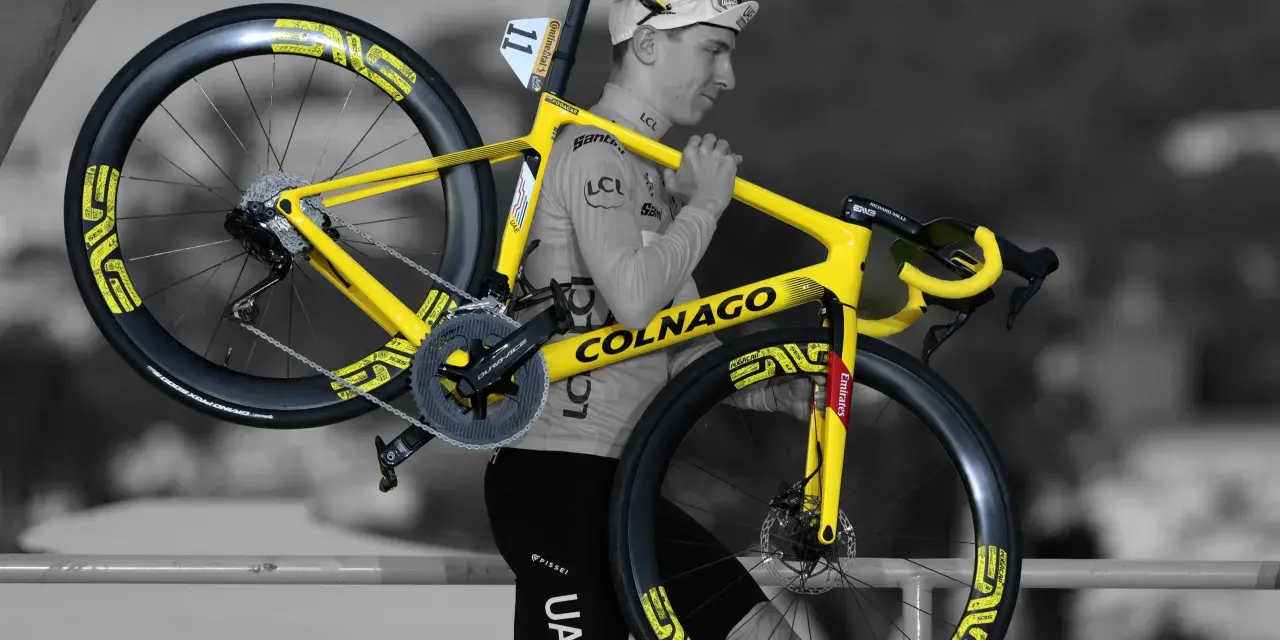
Preparing for a Tour-level block is less about buying the lightest frame and more about choosing a bike that stays fast, stable, and easy to live with for long weeks on the road. The best Tour de France training bikes are usually race bikes or near-race endurance bikes with sensible tire clearance, reliable gearing, and a fit that lets you stack up hours without feeling punished by the setup. That matters whether you are training seriously or just trying to understand what the pros actually ride when the cameras are off.
The smartest training bike is the one that keeps your riding consistent
- Most pros train on race-based road bikes, not a completely separate comfort bike.
- For most riders, endurance geometry beats ultra-aggressive positioning on big training weeks.
- 30 to 32 mm tires are the sweet spot for comfort, grip, and real-world durability.
- A serious outdoor setup in the U.S. usually makes the most sense in the $3,000 to $6,000 range.
- Indoor training matters too, because Tour prep is built on repeatable sessions, not perfect weather.
- Fit, gearing, and tire choice usually matter more than chasing the lightest frame.
What pro riders usually ride when the goal is training
Most pro riders do not use a radically different machine for training. They usually spend their time on the same platform they race, or a close sibling, because body position, handling, and power transfer need to stay familiar. Cyclingnews notes that most Tour riders have two bikes available on a typical day, and key riders often have more; in practice, that usually means a climbing bike, an aero bike, and a time trial bike rather than a soft, comfort-first road bike.
That is the part casual buyers often miss. A pro training bike is not defined by luxury. It is defined by repeatability. The bike has to hold its fit, survive bad roads, and let the rider do base miles, tempo work, and hard intervals without changing the way the bike feels from one week to the next.
- Base miles usually happen on the main road bike, often with durable tires and a second wheelset if the roads are rough.
- Climbing work benefits from a bike that feels light and balanced rather than overly stiff or twitchy.
- Threshold and VO2 sessions are often done indoors because the power targets are easier to control there.
- Bad-weather rides usually call for tougher tires, more conservative wheels, and a setup that is easier to maintain.
So when I talk about a training bike for Tour prep, I am really talking about a road bike that can handle real mileage without becoming a compromise machine. That leads directly to the bigger selection question: which category actually fits the job best?
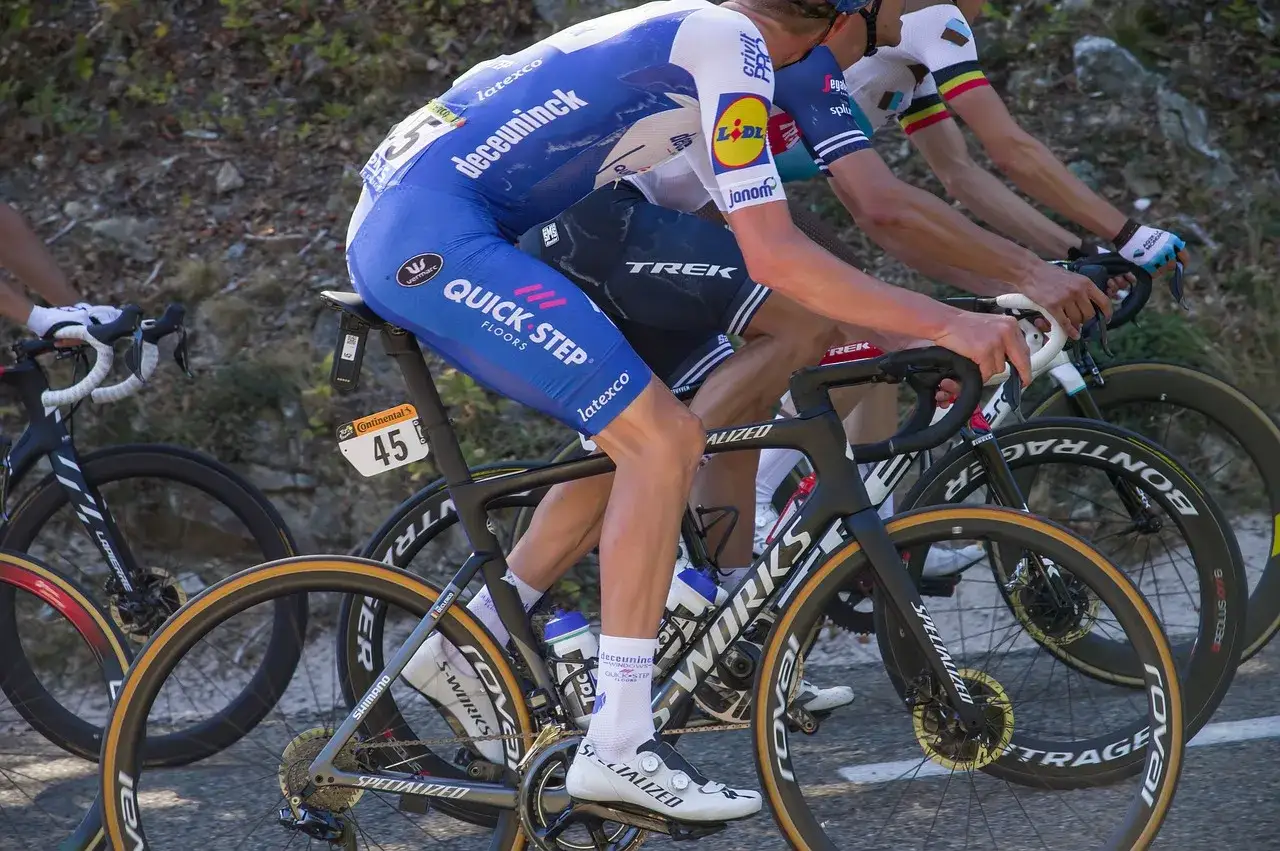
Which bike type fits the job best
| Bike type | Best for | Why it works | Main tradeoff | Typical U.S. price range in 2026 |
|---|---|---|---|---|
| Race bike | Fast group rides, climbing, race-specific preparation | Sharp handling, efficient power transfer, direct carryover to racing | Less forgiving on rough roads and long days | $4,500 to $12,000+ |
| Endurance bike | Long training blocks, mixed pavement, winter and shoulder-season riding | More stable geometry, wider tire clearance, easier all-day comfort | Not quite as aggressive or snappy in every sprint | $2,500 to $8,000 |
| All-road bike | Rough chipseal, light gravel, wet weather, mixed-surface routes | Big tire clearance and the widest range of usable terrain | Heavier and a little less race-specific | $2,000 to $7,000 |
| Smart trainer or smart bike | Intervals, winter training, time-crunched riders | Controlled resistance, repeatable workouts, no traffic or weather variables | It does not fully replace outdoor handling and pacing | $300 to $4,000+ |
If I were choosing one outdoor bike for serious Tour-style training, I would usually lean toward an endurance-leaning race bike rather than a pure aero missile. It gives you enough speed for hard riding, but the fit window and tire room are more useful when the training load is high and the roads are not perfect.
That is why the category lines have blurred so much. BikeExchange describes competition bikes as speed-first and endurance bikes as more upright, smoother, and easier to live with, and that is still the cleanest way to think about the decision. Once you know the category, the next step is getting the details right.
The features that matter most on the road
I would not buy a training bike by looking at the frame weight alone. The features below affect how the bike feels after hour three, not just how it looks on paper.
| Feature | What I look for | Why it matters |
|---|---|---|
| Fit | A position you can hold for 3 to 6 hours without numb hands, neck strain, or hip rocking | If the fit is wrong, every session costs more than it should |
| Tire clearance | At least 30 mm, ideally 32 mm or more for most riders | Wider tires improve comfort, grip, and control on imperfect roads |
| Gearing | Compact or semi-compact gearing with a sensible climbing cassette | Tour prep includes long climbs, tired legs, and repeat efforts, not just flat-speed ego |
| Wheelset | Durable training wheels with good tires, not only deep aero rims | It is smarter to save expensive race wheels for key days |
| Maintenance | Easy-to-service parts, standard bearings, and a cockpit that can be adjusted without drama | Less downtime means more training continuity |
I also put a lot of weight on tire casing and puncture resistance. A rider can spend thousands on a frame and still lose more training quality to poor tires than to any aero penalty. On real roads, the fastest setup is often the one that stays rolling.
That is especially true in the U.S., where a single week can include fresh asphalt, broken shoulders, hot pavement, and weather that changes by the hour. Once the fit and contact points are sorted, the budget becomes the next filter.
What to spend in the U.S. in 2026
In 2026, I think the strongest value zone for a serious outdoor training bike is still surprisingly sensible. That lines up with Bicycling's current price guidance, which puts carbon frames, high-end components, and better finishing kit in the $4,000 to $6,000 band. That is not an accident. It is the point where the bike starts to feel genuinely fast without forcing you into unnecessary super-bike territory.
| Budget | What I would buy | Why it makes sense |
|---|---|---|
| Under $1,500 | Used alloy endurance bike or a basic new alloy road bike, plus good tires | Fit, reliability, and consistency matter more than carbon here |
| $1,500 to $3,000 | High-quality alloy or entry-level carbon endurance bike | Best value for most riders who want one bike for everything |
| $3,000 to $6,000 | Serious carbon endurance or all-round race bike, ideally with good wheels | The sweet spot for most ambitious training plans |
| $6,000 to $10,000+ | Near-pro build with premium wheels and electronic shifting | Excellent, but the gains are smaller unless your fit and training are already dialed in |
| Indoor add-on | Smart trainer or smart bike | Often the best performance-per-dollar upgrade for structured work |
If your budget is tight, I would rather see you spend on a proper fit, good tires, and a reliable indoor option than chase a marginally lighter frame. The bike only helps if you can train on it consistently. That is where people often overcomplicate the decision.
The mistakes that quietly waste money
When riders try to copy a pro setup without copying a pro’s context, the bike usually gets worse, not better. I see the same mistakes over and over.
- Buying for looks instead of position and ending up with a bike that is too aggressive for long training weeks.
- Choosing the narrowest possible tires because they seem fast, even when the roads are rough enough to punish them.
- Spending heavily on aero wheels before solving fit, gearing, and recovery logistics.
- Building one setup for every session instead of accepting that winter miles, climbing blocks, and race prep all ask for slightly different compromises.
- Ignoring indoor training even though it is often the cleanest way to execute repeatable intervals.
There is also a mental trap here. Pros can ride very aggressive bikes because they are fit, monitored, and supported at a level that most amateurs do not have. I would rather have a bike that feels almost boring but lets me finish a five-hour ride in good form than a super-light setup that leaves me cooked by noon. The next step is deciding what the smartest real-world setup looks like.
The setup I would choose for most riders chasing Tour-style fitness
If I were putting together a practical setup for a serious amateur or Masters racer in the U.S., I would keep it simple:
- A carbon or high-end alloy endurance bike with race-bike handling, not a relaxed cruiser.
- 30 to 32 mm tubeless tires for most outdoor mileage.
- A compact or semi-compact drivetrain with gearing that makes long climbs realistic when fatigue rises.
- A second wheelset for rough roads or bad-weather weeks.
- A smart trainer for structured weekday work, especially when daylight or weather is limited.
If you already race often, keep the race bike and make the setup more durable. If you mostly train, prioritize comfort and reliability first. The fastest bike is the one you can ride hard on Tuesday, recover from on Wednesday, and still trust on a six-hour Saturday. That is the real logic behind Tour-level preparation, and it is the reason I rarely recommend chasing a pure pro replica unless the rider’s fit, volume, and recovery are already close to pro standards.