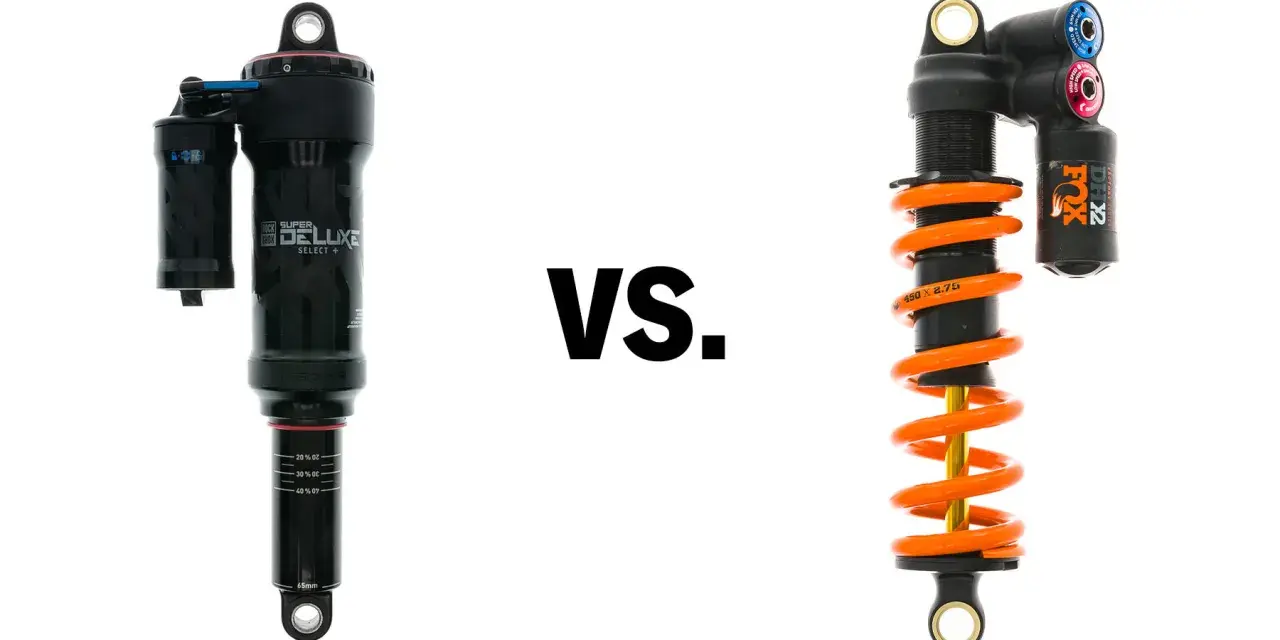
The coil vs air shock debate is really about how you want the rear wheel to behave when the trail gets ugly. I break down the ride feel, setup, maintenance, and frame-matching details that actually decide whether a shock helps or hurts the bike. If you ride mountain bikes in the U.S., this choice matters because the same shock can feel brilliant on one frame and awkward on another.
The short version for mountain bikers
- Coil usually feels smoother, calmer, and more planted on rough descents.
- Air is usually lighter, easier to tune, and better for mixed climbing and descending.
- Frame design matters almost as much as shock type; a too-linear rear end can make coil feel wrong.
- Sag and spring rate matter more than brand loyalty or internet hype.
- If the bike needs to do everything, air is usually the safer default.
How the two springs behave differently
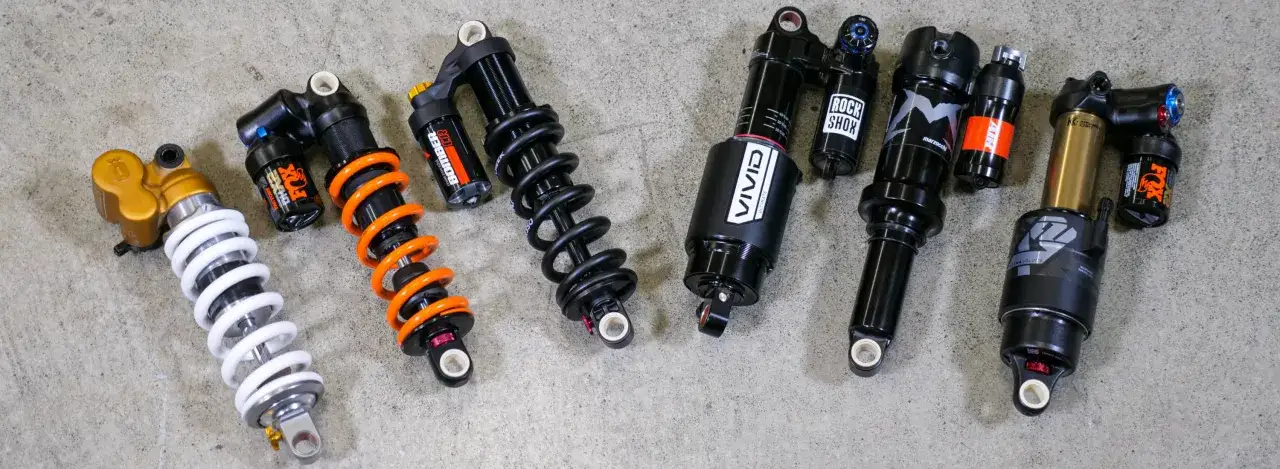
A coil spring is linear, which means the resistance rises in a pretty even way as the shock compresses. An air spring is progressive, so it gets firmer deeper into the stroke. In plain English, coil usually feels more supple at the top of the travel, while air gives you more built-in support and more resistance to bottoming out.
| Trait | Coil spring | Air spring |
|---|---|---|
| Initial feel | Very smooth, with less seal friction in the first part of the stroke | Still smooth on modern shocks, but usually a little firmer off the top |
| Mid-stroke support | Consistent and predictable | Easier to build in extra support with pressure and volume spacers |
| Bottom-out resistance | Depends more on spring rate, damping, and frame progression | Easier to tune with air pressure and ramp-up changes |
| Setup path | Pick the right spring first, then fine-tune damping | Set pressure first, then refine with spacers and damping |
A useful shorthand: spring rate is how hard the shock resists compression, while progression describes how that resistance changes deeper in travel. The bike frame matters here because some rear ends add progression on their own, while others stay relatively linear. That is why a shock that feels perfect on one bike can feel wrong on another. Once that feel difference is clear, the real question is where each one belongs on the trail.
Where coil earns its place on a mountain bike
I reach for coil when the ride is fast, rough, and one-way enough that descending composure matters more than shaving weight. On steep enduro stages, bike-park laps, and long alpine descents, the rear wheel tracking the ground cleanly is often worth more than a lighter package.
- Braking bumps and repeated hits are where coil usually shines. The rear end tends to feel quieter and less busy.
- Steep, rough descents reward the calm, planted character of a coil spring, especially when traction is fading.
- Long descents with little climbing make weight less important, so the plushness becomes easier to appreciate.
- Heavier or more aggressive riders sometimes find coil easier to match because the spring rate is chosen directly instead of pushed through very high air pressure.
- Frames with enough progression are the best coil candidates. If the frame is too linear, the shock can blow through travel too easily and feel vague.
That last point is the one people miss. Coil is not automatically better just because it is more plush. It needs a frame that supports it, otherwise the bike can feel too deep in the travel and too eager to bottom out. If your riding looks more like this list, coil starts to make a lot of sense.
Where air still makes the most sense
Air still wins for a lot of real riders, especially when the bike has to pedal well, climb often, and adapt to different terrain over the course of a season. I think of air as the more flexible choice, not because it is always better, but because it is easier to move around within a setup window.
- Mixed trail riding favors air because you can tune it for climbing, descending, and everything between without changing hardware.
- Weight-conscious builds usually lean air. That matters on long climbs, carry-heavy routes, and lighter trail bikes.
- Riders who keep changing trails benefit from air because pressure and volume spacers make it easier to shift the feel quickly.
- Frames built around less progression often behave better with air, because the spring itself adds the ramp-up the chassis does not have.
- Newer riders often do better with air because it is easier to understand, easier to adjust, and less dependent on spring swaps.
A modern air shock can be tuned with pressure, rebound, compression, and sometimes volume spacers or a firm mode for climbing. A pedal platform is just extra resistance to bob under pedaling; it helps on smooth climbs, but it is not a substitute for proper setup. That wide adjustment range is why I usually recommend air first when the rider is unsure or the bike will see a lot of different terrain. That setup difference is where most people either get the benefit or ruin the shock, so I slow down there.
How to tune each one without wasting rides
Getting the spring type right is only half the job. Sag is the amount the shock compresses when you sit on the bike in full riding gear, and I use it as the first checkpoint before touching anything else. For trail and enduro bikes, I usually start around 25-30% sag; for downhill bikes, I often move closer to 30-35% if the frame supports it.
| Adjustment | Air shock | Coil shock | My rule |
|---|---|---|---|
| Primary spring setting | Air pressure | Spring rate | Change these before you start chasing damping clicks |
| Bottom-out control | Volume spacers or a bottom-out circuit | Spring rate, frame progression, or bottom-out control if the shock has it | Do not use compression damping to hide the wrong spring |
| When it feels too soft | Add a little pressure first, then spacers if needed | Go up one spring rate | Do not lean on preload to fake support |
| When it feels too harsh | Reduce pressure slightly or remove a spacer | Check whether the spring is too stiff | Harshness is often a spring mismatch, not a damper problem |
How I set up an air shock
I tune air shocks in small steps. A few psi can change the ride a lot, and volume spacers are the clean way to add ramp-up if the shock dives too deep near the end of travel. If the bike feels good off the top but wallows in the middle, I look at compression damping only after I know the pressure is close. That keeps me from masking the real issue with the wrong adjuster.
Read Also: Mullet Bike - Is a Mixed-Wheel MTB Right For You?
How I set up a coil shock
Coil setup is simpler but less forgiving. Pick the right spring rate, set minimal preload, and use rebound and compression to refine the ride. If you need a lot of preload just to get sag in range, the spring is wrong. Preload is the initial squeeze on the coil before you sit on the bike; it should trim fit, not solve fit.
There is one non-negotiable here: a shock cannot rescue a frame with the wrong rear-end progression. A very linear bike may blow through travel with coil, while a more progressive frame can make coil feel beautifully controlled. That is why I always check the frame’s intended shock style before I get attached to a spring type.
The ownership tradeoffs you feel after the first month
Once the first test ride is over, the choice becomes less about feel and more about how much maintenance, weight, and cash you want to carry. I think that is where a lot of riders make their real decision, because a shock lives with you long after the parking-lot demo is over.
| Factor | Coil shock | Air shock | Why it matters |
|---|---|---|---|
| Weight | Heavier because of the steel spring | Usually lighter | It shows up on long climbs and bikes that get carried a lot |
| Initial cost | Shock body plus a separate spring | Usually just the shock body | Coil often costs more to get running even if the shock itself is similar |
| Maintenance rhythm | Less pressure checking, but damper service still matters | Air-can service and pressure checks matter more | Air asks for more routine attention |
| Consistency on long descents | Very stable spring feel | Still strong, but more dependent on setup and heat | Coil can feel calmer when the run gets long and rough |
| Tuning range | Narrower, but straightforward | Wider and faster to change | Air is friendlier if you share a bike or change terrain often |
Coil setups also require you to choose the spring separately, which is useful because it lets you match rider weight and frame leverage more precisely. The flip side is obvious: one wrong spring means buying another part before the bike feels right. Air avoids that extra step, which is one reason it stays the default on so many trail bikes. Once those tradeoffs are clear, the choice becomes much simpler.
The simplest way I decide between them on a real bike
When I am choosing for an actual build, I start with three questions: how rough is the terrain, how much climbing does the rider do, and how progressive is the frame? If I cannot answer those cleanly, I default to air because it is easier to tune out of the box and easier to recover from a slightly imperfect setup.
| Rider or trail profile | What I would start with | Why |
|---|---|---|
| Trail rider with mixed climbs and descents | Air | Lighter, easier to tune, and more forgiving if you change trails often |
| Enduro rider on steep, rough descents | Coil if the frame is progressive enough | Better grip and a calmer feel when the trail gets abusive |
| Bike park or shuttle bike | Coil | Descending performance matters more than weight |
| XC or downcountry bike | Air | Pedaling efficiency and weight are the bigger priorities |
| New rider who wants one setup for everything | Air | Simpler to live with and easier to understand |
On e-MTBs, coil can make a lot of sense because the bike is already heavier, but I still check frame progression first. My shortest rule is this: pick the shock that matches the frame first, then the terrain, then the amount of setup work you actually want to do. If you want the rear end to feel calmer and more planted on rough descents, coil is often the answer; if you want lighter weight, simpler tuning, and more flexibility, air is usually the safer bet. That keeps the bike working with you instead of asking you to fight the suspension every time the trail changes.