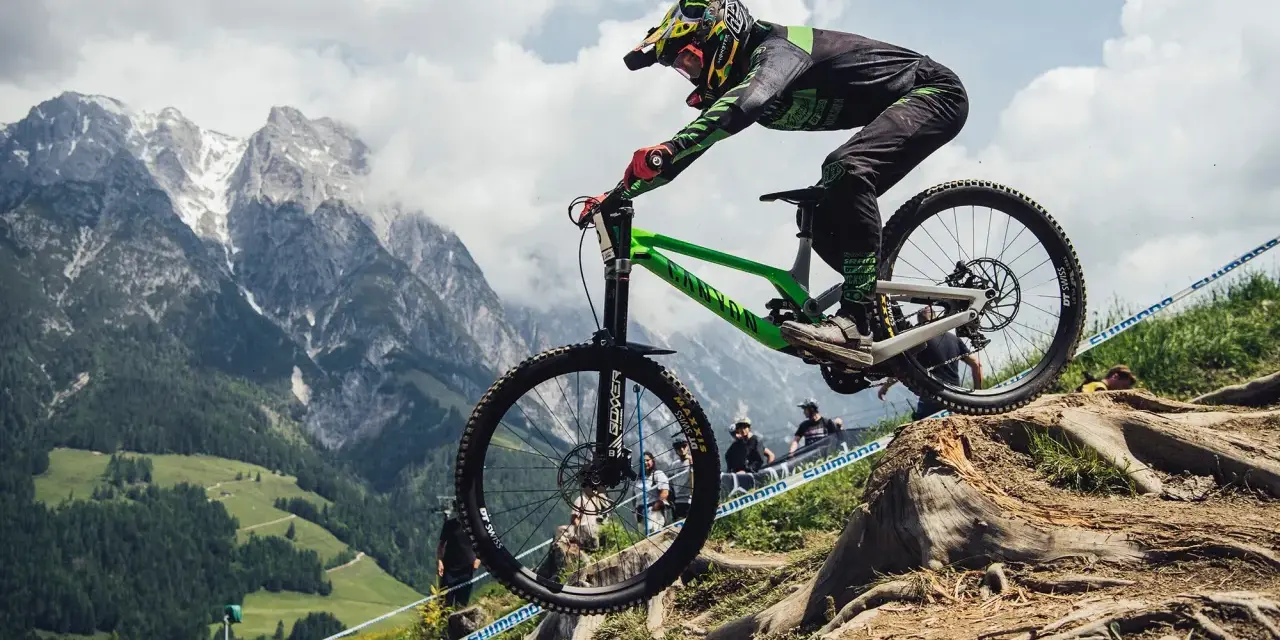
Troy Brosnan is one of the clearest examples of how modern downhill speed is built: precise line choice, controlled aggression, and a setup that lets the bike stay calm when the track turns ugly. In this article I break down who he is, why his style works, and what serious riders can borrow from his approach on real trails and race tracks. I’ll also connect the profile to gear and training choices, because in downhill those details are usually what separate a clean run from a wasted one.
Key points worth knowing before you go deeper
- Brosnan is still an active elite downhill racer in the 2026 Canyon DH Racing lineup.
- His biggest strength is repeatable speed, not just one standout run.
- His riding is built around staying light, precise, and relaxed on technical terrain.
- Bike setup matters a lot in his case: support, traction, and predictability all have to work together.
- Riders can copy the underlying habits even if they never race a World Cup.
What Troy Brosnan represents in modern downhill
I read Brosnan less as a flashy specialist and more as a benchmark rider. He came through the junior ranks quickly, collected two Junior World Championship titles, and then turned that speed into a long elite career rather than a brief spike. As of 2026, he is still racing for Canyon DH Racing, which matters because downhill rewards riders who can keep adapting as tracks get steeper, rougher, and less forgiving.
What stands out to me is that his value to the sport is bigger than a medal count. He is one of those riders who keeps appearing in the conversation whenever the course is technical, the weather is messy, or the margin between first and fifth is tiny. That profile is useful to understand because it tells you what kinds of skills hold up over time in elite downhill. From there, the next question is simple: what does that actually look like on the bike?
Why his riding looks fast even when it is not frantic
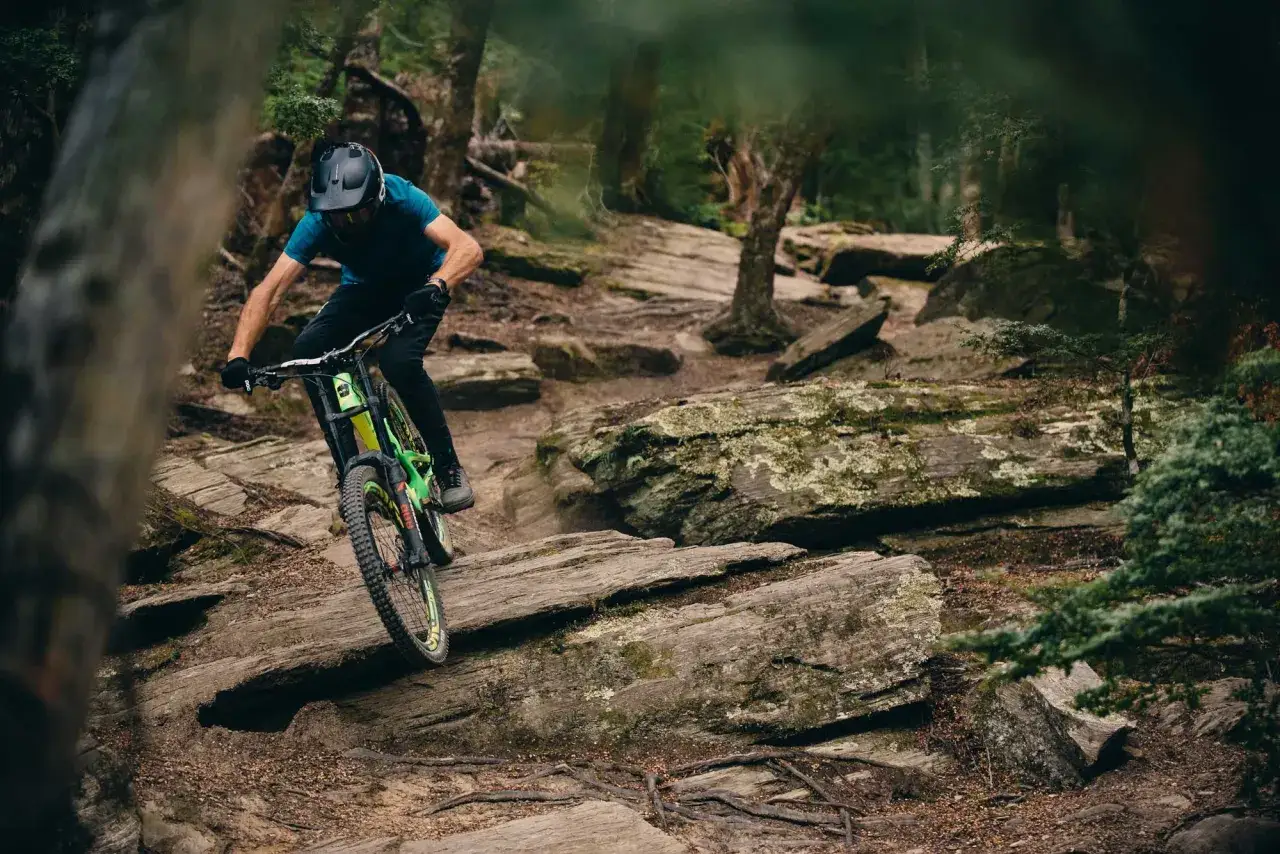
Brosnan’s style has always looked controlled rather than chaotic. He rides with a light touch, changes direction quickly, and keeps the bike active underneath him instead of muscling it through every section. That matters because downhill speed is often hidden in the transitions: between braking and turning, between compressions and take-offs, and between rough ground and the next clean line.
The technical side of that style is straightforward. A rider who stays light can let the suspension do its job without getting buried in the travel. A rider who is comfortable hopping, unweighting, and re-centering the bike can also correct small mistakes before they become large losses. In practice, that means less waste, fewer panic inputs, and a smoother overall run.
- He values precision over drama. Clean inputs usually beat frantic corrections.
- He manages terrain instead of fighting it. That keeps speed alive through rough sections.
- He uses the bike as a tool, not a crutch. Good body position lets the machine stay composed.
That blend of movement and control is exactly why his results have held up for so long, and it leads directly into the question every rider asks next: what has he actually achieved at the top level?
The results that explain his reputation
Results matter in downhill because style only counts if it produces time on the clock. Brosnan has built his reputation on repeated proof that he belongs near the front, not on one isolated breakthrough. The easiest way to understand that is to look at the kind of milestones that keep repeating around his name.
| Milestone | Why it matters |
|---|---|
| Two Junior World Championship titles | Showed top-end speed early and confirmed his talent against the best riders in his age group. |
| Multiple Elite World Cup podiums | Shows that he can repeat fast runs across different tracks instead of peaking only once. |
| 2024 Mont-Sainte-Anne World Cup win and second overall | Proved he could turn speed into a season-long result, not just a one-day highlight. |
| 2025 Hardline Tasmania podium | Shows that he is still relevant on the most brutal modern downhill courses. |
That mix of junior promise and elite consistency is what separates a respected pro from a passing name. It also explains why teams and race fans keep paying attention, because the pattern is clear: when the course rewards technical calm under pressure, he tends to show up. The next layer is the one gear nerds usually care about most, and it is where his bike setup becomes genuinely useful.
What his bike setup teaches serious riders
The interesting thing about Brosnan’s equipment is not that it is exotic. It is that the setup is tuned around a very specific riding style. A bike with the wrong balance of support and sensitivity will make a rider like him look ordinary. A bike with the right tune helps his light, reactive style become a real advantage.
Downhill bikes at this level are usually built around strong chassis support, predictable braking, and suspension that stays composed under repeated hits. That is especially important for a rider who likes to preload the bike, pop off features, and stay active through rough terrain. Too much softness and the bike wallows. Too much stiffness and the bike loses grip. The sweet spot is narrow.
- Mid-stroke support matters. That is the part of the travel where the bike sits when it is loaded in corners and compressions.
- Brake control must be clean. Steep tracks punish vague lever feel and inconsistent setup.
- Grip and support need to coexist. A setup that only does one of those jobs will feel fast for half a run and weak for the rest.
- Fit changes the whole system. If the cockpit or suspension tune forces the rider into a defensive position, speed disappears quickly.
For most riders, the main lesson is not to copy a pro’s exact parts list. It is to build a bike that matches the way you actually ride. If you are smooth and passive, one tune may work. If you are active and pop the bike a lot, you need more support. That same logic carries straight into training, which is where most riders leave free speed on the table.
What riders can borrow from his training approach
I would not copy a World Cup program line by line unless I had a coach, a physio, and a lot more recovery time. What I do copy is the structure: short high-quality efforts, repeatable technical practice, and enough rest to keep execution sharp. Downhill fitness is not about endless endurance volume. It is about being able to produce precision while the heart rate is high and the forearms are getting punished.
If you want a practical version of that idea, the following works far better than random mileage:
- Do 3 to 5 timed runs on the same technical descent so you can compare choices instead of guessing.
- Practice braking release, corner exits, and body position more than raw pedaling power.
- Use short sprint intervals and upper-body strength work to handle repeated hits and accelerations.
- Stop the session before form gets sloppy, because bad repetitions teach the wrong habits.
A realistic amateur version is one skills-heavy ride, one strength session, and one short interval block each week. That is enough to build usable downhill speed without turning every ride into a fatigue test. Once that structure is in place, the final question is not just how fast you go, but what your riding says about the kind of racer you want to become.
Why his approach still matters in 2026
What keeps Brosnan relevant is not a single signature trick. It is the combination of habits that make speed repeatable: early line reading, calm bike handling, and a willingness to keep the machine tuned around the rider rather than the other way around. That is why he still makes sense as a reference point in 2026, especially for riders who care about clean runs, not just heroic ones.
If I had to reduce the lesson to one sentence, it would be this: downhill speed is usually the result of disciplined control, not constant aggression. The Australian racer has built a career around that idea, and it remains one of the most practical things any mountain biker can learn from watching elite downhill closely.