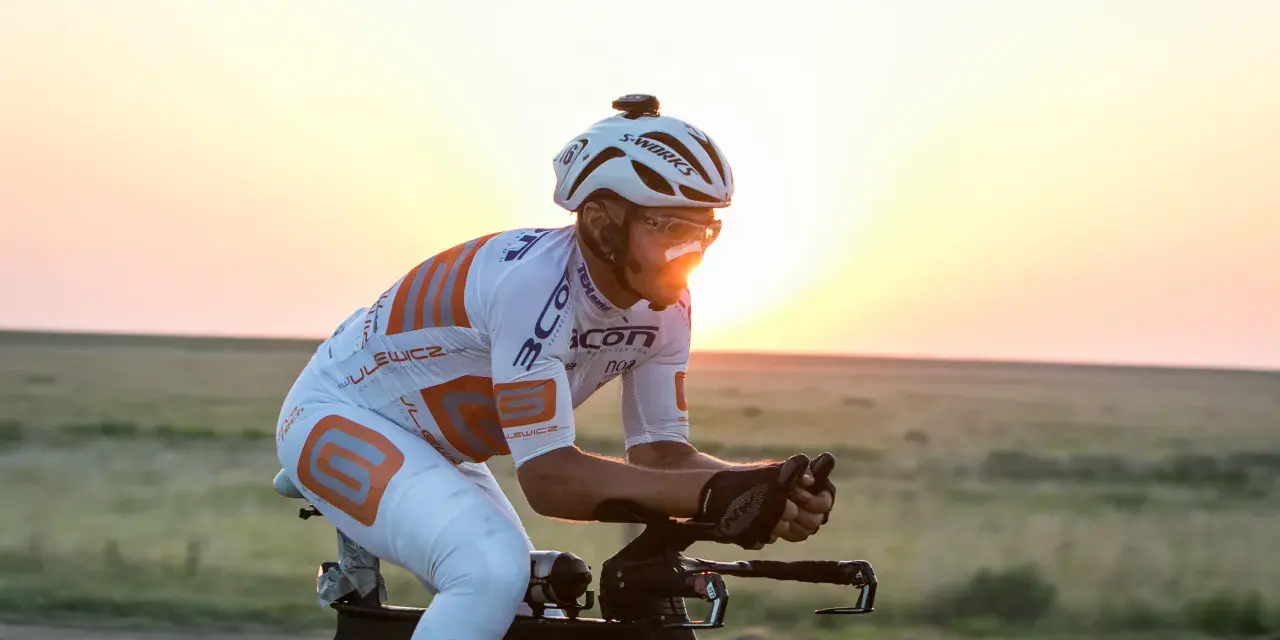
A bike race across America is not a normal road race. It is a transcontinental endurance test where the rider, the support crew, the pacing plan, and the bike itself all have to hold together for days. In this guide I break down what the event actually is, what the current route demands, how I would train for it, and where riders usually underestimate the risk.
What matters before the start line
- The race is a single-stage ultra-endurance event, not a stage race with daily resets.
- Current listings show a west-to-east route from Oceanside, California, to Atlantic City, New Jersey.
- Solo riders work against a 12-day cutoff; teams have 9 days.
- The course is roughly 3,000+ miles with about 175,000 feet of climbing and 13 states.
- Success depends as much on sleep, pacing, and crew discipline as on raw fitness.
- The biggest mistake is treating it like a normal long-distance road event.
What the race is and how it is won
The cleanest way to think about this event is as a single-stage ultra-distance road race. There are no daily stages to reset the clock, no hiding in a bunch for long, and no margin for a sloppy hour. The rider who keeps moving most efficiently, while making the fewest avoidable mistakes, usually has the best outcome.
Current listings show the race starting in Oceanside, California, and finishing in Atlantic City, New Jersey. Visit Oceanside notes that the course is 3,000+ miles, crosses 13 states, and climbs about 175,000 feet. That is a huge ask even before you account for heat, wind, traffic, and sleep deprivation.
The event includes solo and team divisions, and the format matters. A solo rider needs to manage every physical and mental dip personally. A team can share the load, but only if handoffs, sleep, and vehicle logistics are disciplined. In practical terms, this is not about "who can ride hard for a day"; it is about who can keep the system stable for days.
| Division | What it suits | Main advantage | Main downside |
|---|---|---|---|
| Solo | Riders who want the purest endurance test | Simple decision-making on the road | Maximum physical and mental load |
| 2-person team | Strong riders who can share work and sleep | More recovery time between turns | Handoffs and pacing have to be precise |
| 4- or 8-person team | Groups that want speed with more rotation | Less burden on each rider | More moving parts, more room for chaos |
Published race materials indicate that solo and tandem riders must qualify, while teams do not. Drafting is not part of the game. I would treat that combination as the core identity of the race: self-contained endurance, not pack racing. Once you understand that structure, the route itself starts to make more sense, because it is designed to expose every weakness in the system.
Why the course punishes fitness alone
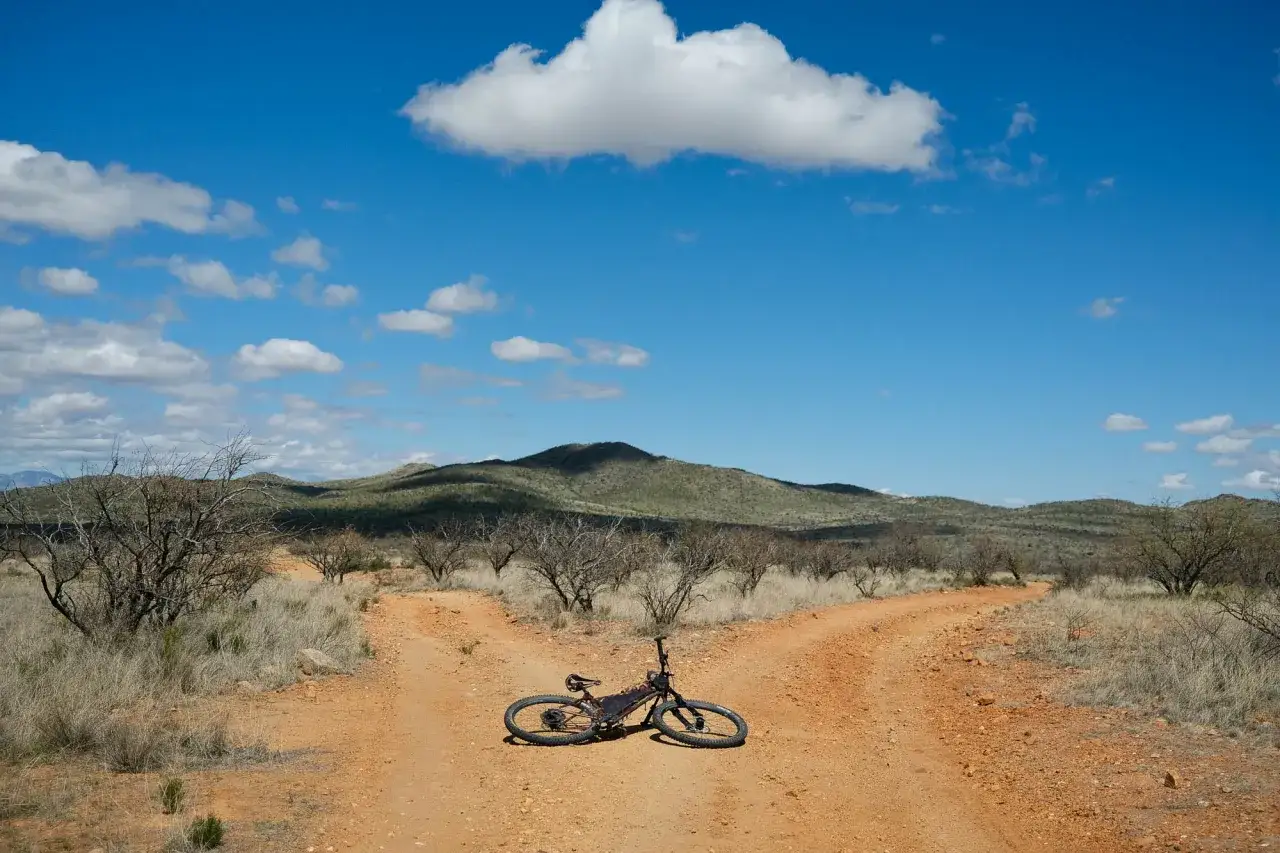
The route is hard because it keeps changing the problem. You can be riding through desert heat in one block, fighting headwinds in the plains the next, then climbing again when your legs are already flat. The exact route can shift a bit from year to year, but the west-to-east pressure stays the same: long days, long nights, and very little room to hide.
A solo finisher has to average roughly 250 miles per day to stay under the 12-day cutoff, and that average hides all the bad weather, stops, and mechanical delays. Teams need even more speed to fit inside their shorter window. That is why the race is not won by the rider with the biggest one-hour power number; it is won by the rider who can repeat good decisions when they are tired, cold, hot, hungry, and short on sleep.
The hardest kilometers often come after midnight, when traffic is lighter but judgment is worse. That is where many riders discover that power numbers do not keep them safe. Sleep deprivation blunts reaction time, makes bad food choices more tempting, and turns small bike-fit problems into real pain.
Trackleaders' live map updates rider positions in roughly 2.5- to 10-minute intervals, which is useful for crews and spectators, but it does not remove the need for calm roadside decisions. In a race like this, the tracker is a tool, not a substitute for judgment.
That is why I never start training with intervals first; I start with the skills that survive fatigue. From there, the next step is turning fitness into repeatable race power.
How I would train for it
If I were building for this event, I would think in months, not weeks. A rider coming from normal road racing needs a long, boring block of aerobic work before any hero sessions matter. Ultra cycling rewards durability, not just sharpness.
Build the aerobic base
The foundation should be mostly easy endurance riding, with occasional steady tempo work. Zone 2, in plain language, means a pace you can hold while speaking in short sentences. That is the work that teaches the body to burn fuel efficiently and keep going after the novelty wears off.
- Plan for 6-12 months of specific prep if you are coming from standard road racing.
- Stack long rides, but keep most of them controlled rather than heroic.
- Use recovery weeks on purpose instead of waiting for fatigue to force them.
Practice riding under fatigue
Back-to-back long rides matter more than one monster ride every few weeks. I would use repeated blocks of 5-8 hour days, then occasionally add a night ride so the body learns to function when the brain wants to quit. That is not glamorous training, but it is directly relevant.
- Do back-to-back endurance days every 2-3 weeks.
- Include some starts when you are not fully fresh.
- Test your pacing plan when you are already tired, because that is what race week will feel like.
Train the fueling system
Your gut is part of the engine. I would not wait for race week to discover whether 90 grams of carbohydrates per hour works for you. Start lower if needed, then build toward a range your stomach can actually tolerate. The target is not just calories; it is repeatable intake without distress.
- Start testing at 60 g of carbohydrates per hour and build from there if tolerated.
- Practice with the same drinks, gels, bars, and real food you expect to use on the road.
- Match sodium and fluid intake to conditions instead of copying a generic plan.
Read Also: Tour de France Distance Per Day - It's Not Just Miles
Learn to ride in the dark and in the heat
Night riding and heat acclimation are skills, not side notes. One weekly session in the dark teaches more than ten fresh-morning rides about lighting, focus, and pacing. Heat work matters just as much if you want to stay functional through the early western miles and the hot stretches that can appear in any long coast-to-coast attempt.
- Do at least a few long rides at night before race week.
- Use controlled heat exposure, but keep safety and hydration tight.
- Do not assume that daytime fitness automatically converts to midnight efficiency.
Once the engine is reliable, the next question is whether the bike and crew can support it without breaking the plan.
Gear and crew choices that matter most
This is the section where people overspend on the wrong thing. For an event like this, I would choose reliability over novelty every time. Saving a few grams means very little if the rider has numb hands, a dead light, or a crew that cannot keep bottles moving.
| Area | What I would prioritize | Common mistake |
|---|---|---|
| Bike fit | Contact points that work for all-day comfort | Choosing a position that only feels good for two hours |
| Lighting | Redundant front and rear systems with spare batteries | Relying on one light and one charging strategy |
| Wheels and tires | Durability, serviceability, and consistent handling | Using ultra-light parts that are hard to replace mid-race |
| Clothing | Layering, dry backups, and a plan for heat and cold | Assuming the whole route feels like one climate |
| Navigation | Route sheets plus a backup device | Depending on one screen when the rider is sleep-deprived |
| Crew process | Clear handoff rules and a repeated stop sequence | Improvising every stop like it is a casual club ride |
The best crews I have seen are almost boring. They do the same bottle handoff the same way every time, they keep food simple, and they avoid mid-race debates. If a crew wants to win style points, it usually means the rider is paying for it later.
I also like live tracking for family and crew visibility, but I would still build the plan around old-fashioned communication: route sheets, time checks, and a simple call protocol. That way, the rider is supported even when the tracker is delayed or the road gets messy. Once the equipment is stable, money and logistics become the next filter, because this race rewards preparation long before the starting gun.
What the budget and calendar really look like
People often ask how much an attempt like this costs, and the honest answer is that the number depends on how polished you want the operation to be. These are rough planning estimates, not official fees, but they are realistic enough to help a rider think clearly.
| Cost area | Practical planning range | What drives it |
|---|---|---|
| Race entry and admin | $1,000-$3,000 | Division, paperwork, and race services |
| Travel to the start and finish | $1,000-$5,000 | Flights, bike shipping, baggage, and ground transport |
| Support vehicle and fuel | $2,000-$8,000 | Rental, maintenance, fuel, tolls, and insurance |
| Crew lodging and food | $2,000-$10,000+ | How many people travel, and for how long |
| Nutrition and hydration | $500-$2,000 | Gels, drinks, real food, ice, and replacements |
| Spare parts and lighting | $800-$3,000 | Tires, tubes, chains, batteries, chargers, and backups |
| Total solo campaign | $8,000-$25,000+ | Can rise quickly if the crew travels and sleeps on the road |
| Total team campaign | $12,000-$40,000+ | More people help the effort, but they also add logistics |
The real cost is not just money. It is time spent qualifying, rehearsing, building the crew, and learning how to keep the bike moving when everyone is tired. Published race materials indicate that solo and tandem riders must qualify, while teams do not, and I think that matters because qualifying is not only a gate; it is also a training signal. It forces the rider to prove durability before the event ever begins.
Even with the budget and paperwork solved, riders still lose this event through small errors that look harmless in a normal road race.
The mistakes that cost riders the finish
- Starting too hard on day one. A fast first six hours can become a very expensive mistake when the sleep debt arrives.
- Ignoring sleep until it becomes a crisis. Sleep is part of performance, not a reward after performance.
- Testing nutrition for the first time on race week. The gut should be trained just like the legs.
- Using a bike fit that only works when fresh. Comfort problems scale brutally over multi-day riding.
- Letting the crew improvise every stop. Repetition saves time, energy, and stress.
- Underestimating weather range. Desert heat, mountain cold, and overnight chill can all show up in the same attempt.
The pattern is always the same: the rider is strong enough, but the system is fragile. The fix is not more suffering; it is a simpler, more repeatable plan. That is the mindset I would use if I were targeting the finish in 2026.
What a realistic finish plan looks like in 2026
If I were targeting the finish this year, I would build the attempt around three rules: keep the early pace conservative, rehearse every crew handoff before the race, and use the same fueling pattern during training that I plan to use on the road. I would also expect the route to expose weak links that no spreadsheet can hide, so I would favor reliability over novelty at every decision point.
- Choose a bike setup you can sit on for hours without adjusting it constantly.
- Plan the crew schedule before the race, not after the first exhausted night.
- Pack backups for lights, charging, tires, and small drivetrain parts.
- Respect sleep as part of performance, not as a bonus when the day is done.
That is the version of this challenge that I trust most: not a fantasy of heroic suffering, but a carefully managed endurance effort. When the plan is simple enough to survive fatigue, the rider has a real chance to finish well instead of merely surviving the distance.