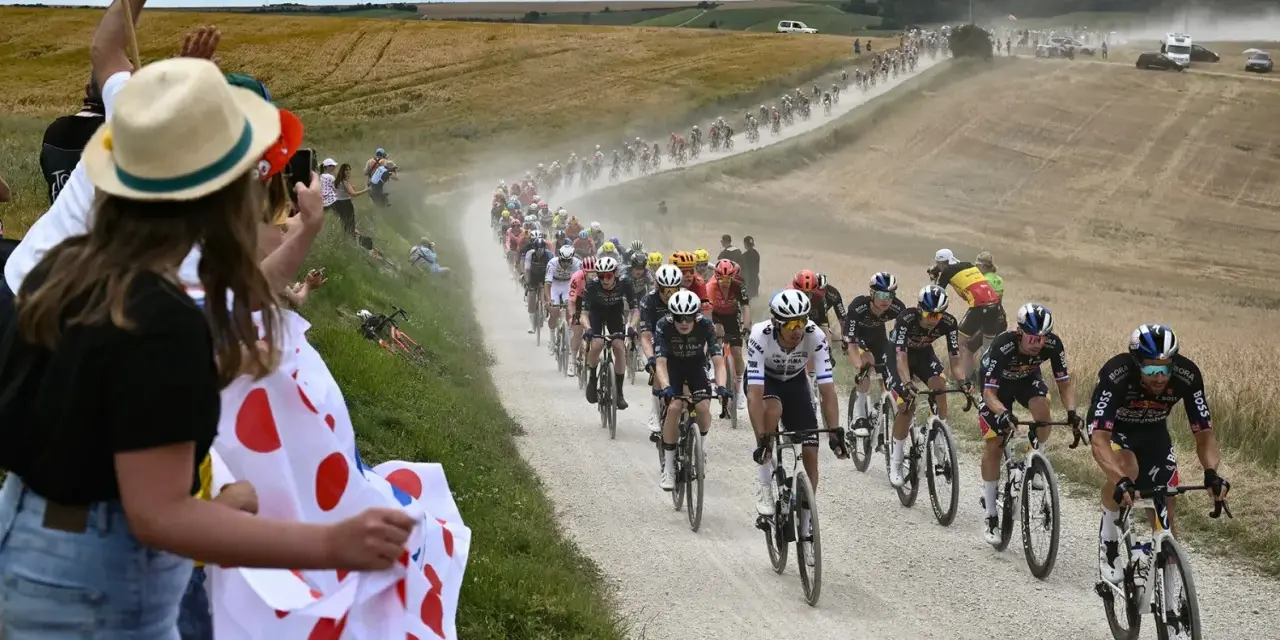
Watching the Tour de France from the United States is easy enough now, but getting the most out of it still takes a little planning. The key decisions are simple: which platform to use, when the stages start in your time zone, and which parts of a stage are worth your attention if you care about road cycling rather than just the final result. This guide gives you the practical version, with the live options, replay strategy, and a few habits that make the race much easier to follow.
Key things to know before the first stage
- Peacock is the default platform for U.S. viewers because it carries every stage live from start to finish.
- NBC only simulcasts select stages, so linear TV is a bonus rather than the main plan.
- Most starts are early morning in the U.S., with many stages landing between 5:30 and 7:00 a.m. ET.
- Replay is often the smarter choice if you cannot wake up that early, especially on flatter transition stages.
- Road-cycling drama usually builds late, so the last 60 km matter far more than the opening hour.
Where to watch the Tour de France in the United States
For U.S. viewers, I would treat Peacock as the primary home of the race. NBC Sports lists Peacock for every stage of the 2026 Tour de France, while NBC network TV is reserved for only a few simulcasts. In practice, that means Peacock is where you go if you want the full event, and NBC is a nice extra if a given stage lines up with your schedule.
According to NBC Sports, Peacock includes live start-to-finish coverage, plus replays, highlights, stage recaps, rider interviews, and pre- and post-race studio shows. That matters because the Tour is not a one-hour sport; the extra context is what helps you understand why a stage unfolded the way it did.
| Platform | Best use | What you get | My take |
|---|---|---|---|
| Peacock | Full live coverage | Every stage live from start to finish, plus replays, highlights, recaps, and interviews | The default choice if you want the race without gaps |
| NBC | Casual linear-TV viewing | Select live simulcasts on certain stages | Useful when it lines up, but not the backbone of your plan |
| Official race tools | Live context and race data | Stage details, rankings, and real-time coverage | Best companion to the stream, not a replacement for it |
If you are traveling, I would still start with Peacock in the U.S. and then check the local situation only if you cross a border. That is the cleanest way to avoid confusion, and it keeps the race easy to follow even when your schedule is not.
Once the platform choice is clear, the next question is timing, because the Tour is very much an early-morning habit for American viewers.
How the 2026 schedule fits U.S. time zones
The 2026 race runs from July 4 to July 26, and the U.S. start times are built around European mornings. NBC Sports’ schedule shows most stages beginning between 5:30 and 7:00 a.m. ET, with the opening stage later at 10:00 a.m. ET and the final stage at 9:30 a.m. ET. That is why the Tour feels like a breakfast event in New York and a pre-dawn event on the West Coast.
| Time zone | Typical live start window | What that feels like in real life |
|---|---|---|
| Eastern | 5:30 to 10:00 a.m. | Early, but manageable before work |
| Central | 4:30 to 9:00 a.m. | Breakfast viewing with a strong coffee habit |
| Mountain | 3:30 to 8:00 a.m. | Very early unless you are catching a replay |
| Pacific | 2:30 to 7:00 a.m. | Mostly a replay-first experience unless it is a big stage |
I would not try to memorize every stage time. I would bookmark the daily schedule and let the platform reminders do the work. Once you know the race is an early-morning habit, the next question is whether to watch live or catch the decisive parts later.
Live, replay, or highlights
You do not need to consume every hour of every stage to follow the Tour well. I usually split the race into three viewing modes: full live stages for the big days, replays for busy mornings, and highlights when I mainly want the storyline and result.
| Format | Best for | Tradeoff | My recommendation |
|---|---|---|---|
| Live | Mountain stages, time trials, finales, and days with tactical tension | Early starts, long runtime, and a bigger time commitment | Use this when the stage profile suggests a real change in the standings or a possible stage win |
| Replay | Weekdays, flatter transition stages, or mornings that are already full | Spoilers are easy to see before you press play | The smartest option if you care about the race but not the alarm clock |
| Highlights | Fast catch-up and daily context | Less tactical detail and less race texture | Better than missing the stage entirely, but not enough for the most important days |
My rule is simple: if the stage profile suggests climbing, wind, or a time trial, I try to watch live. If it is a long transition stage with a likely sprint finish, a replay or a tight highlight package is usually enough. That approach saves time without turning the race into background noise.
Once you choose the right format, the race itself starts to make more sense, especially if you follow road cycling closely rather than only tracking winners and losers.
What to watch for if you follow road cycling closely
The Tour is more interesting when you know what is changing inside the peloton. Three things usually tell the story better than the headline finish: the breakaway, the general classification fight, and the lead-out work before a sprint. Once those make sense, the broadcast stops feeling random and starts looking like a tactical lesson.
The breakaway is often a test, not a sideshow
A breakaway group is the early attack that tries to stay away from the peloton. On some flat stages it is controlled and eventually caught; on the right hilly day, it can become the winning move. I pay attention to who gets into it, because teams rarely waste riders there without a reason.
GC gaps are built in seconds and preserved over hours
GC stands for general classification, the overall time ranking that decides the yellow jersey. Climbs, time trials, and even crosswind sections can open gaps, which is why a stage that looks quiet for two hours can still reshape the race in the final 20 minutes. That is the part of the Tour that new viewers often underestimate.
Read Also: Patrick Lefevere's Legacy - How to Build a Winning Cycling Team
Sprint finishes are choreographed chaos
In a sprint stage, the lead-out train positions the fast finisher for the last 200 to 300 meters. The whole point is to save the sprinter from wind and bad positioning until the last possible moment. If you only watch the final straight, you miss most of the work, but if you know what the train is doing, the last kilometer becomes much easier to read.
That perspective is what turns the Tour from background noise into something you can actually analyze. Once you know what to watch for, the viewing setup becomes more about convenience than comprehension.
A race-week setup that keeps the coverage easy to follow
The best watch plan is the one that survives real life. I would set it up like this:
- Add the stage start time to your calendar in your local time zone.
- Keep Peacock on your main screen and use a phone or tablet for live race context if you want gaps and updates.
- Watch the full stage live only on the days that matter most to the standings or the stage win.
- If you are traveling, confirm the local broadcaster before the stage starts; the Tour’s official broadcaster directory is the cleanest fallback.
- Download or sign in before the morning rush so you are not troubleshooting at 6 a.m.
If you are outside the United States for part of the race, do not assume the same platform works everywhere. I would check the Tour’s broadcaster directory first, then plan around that country’s rights holder instead of scrambling at the last minute.
That routine saves more frustration than any fancy viewing trick. It also fits the way most Americans actually watch sports in the morning, which is the real reason it works.
The easiest way to stay with the race for three weeks
If I were boiling the whole thing down, I would say this: Peacock is the safe default, NBC is the occasional bonus, and the official race tools are what help you understand the race rather than just see it. If you keep an eye on stage profiles and follow the decisive hour, you will get most of the value without trying to watch every second.
- Watch live when the profile suggests a decisive day.
- Use replays when your morning is already spoken for.
- Keep one second screen open for standings and race context.
That balance is usually enough to make three weeks of racing feel manageable and genuinely enjoyable, especially when you are fitting it around work, training, or travel.