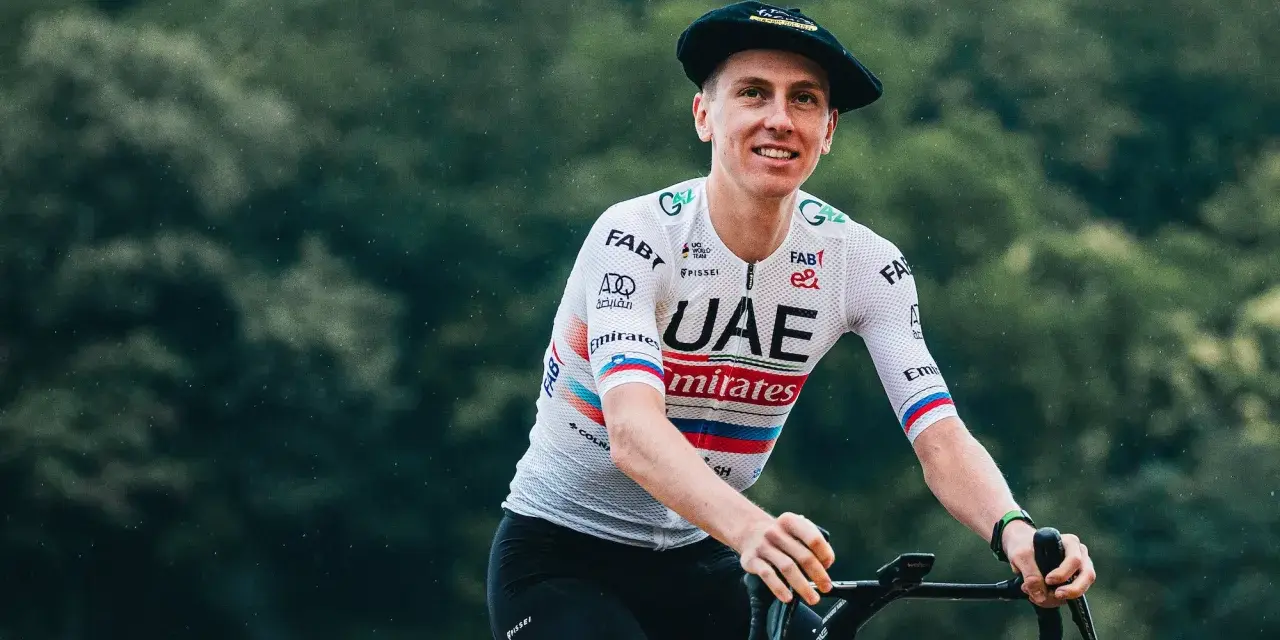
The discussion around Tadej Pogacar VO2 max is really a question about the ceiling of modern road cycling. Recent estimates, race-day power data, and the physics of climbing all point to the same conclusion: he sits in a very small group of riders whose aerobic capacity is close to the edge of what the sport has seen. I would read that number as a clue about performance, not as the whole performance story.
The headline number is huge, but the method behind it matters more
- As of 2026, there is still no publicly released lab test that confirms one official VO2 max number for Pogačar.
- Published estimates range from the high 80s to the mid-90s mL/kg/min.
- A recent race-based analysis in the Journal of Science and Cycling estimated a likely range of 91-96 mL/kg/min.
- That puts him near the top of the public record for endurance athletes, but it is still an estimate, not a direct lab result.
- For cyclists, threshold, efficiency, power-to-weight, and recovery matter as much as VO2 max itself.
- The practical lesson for amateurs is to build a bigger aerobic engine without obsessing over one number.
What the public estimates actually say
As of 2026, the most careful answer is that nobody outside Pogačar’s own testing environment has published a confirmed lab value. Earlier public profiles floated a figure around 89.4 mL/kg/min, while a more recent race-based analysis estimated a range of 91-96 mL/kg/min after looking at six major Tour de France climbs. I would treat that band as the best public estimate we have, and as a reminder that a value in the mid-90s is already near the extreme end of endurance sport.| Published estimate | Context | How I would read it |
|---|---|---|
| About 89.4 mL/kg/min | Earlier published profile estimate | Already exceptional, but likely conservative compared with newer race-based models |
| 91-96 mL/kg/min | Recent analysis based on Tour de France climbing data | The most useful public range for understanding his current ceiling |
| 97.5 mL/kg/min | Highest publicly recorded human lab value often cited for comparison | Useful as an upper reference point, not as a direct comparison |
That spread is not a mistake. It is the natural result of mixing different data sources, different assumptions, and different ways of turning race performance into physiology. That is exactly why the measurement method matters, which brings us to the part most readers miss.
Why those numbers are not all saying the same thing
A lab test measures oxygen uptake directly. A field estimate infers it from power, body mass, bike weight, climb time, and a chain of assumptions about efficiency and sustained effort. Once you do that on a three-week Grand Tour, the uncertainty grows fast because fatigue, heat, altitude, pacing, wind, and drafting all change the picture.
I would break the main sources of variation into five buckets:
- Fatigue from racing hard for multiple days can lower the power you can produce, which means a race-day estimate may actually understate a rider’s fresh capacity.
- Efficiency matters because two riders can produce the same power with different oxygen costs.
- Drafting and wind can quietly distort field models, especially on open climbs and transition sections.
- Body mass and bike weight are small on paper, but they matter a lot when the calculation is expressed per kilogram.
- Sample choice matters because one climb tells you less than a pattern across several hard efforts.
That is why I prefer ranges over single decimals here. In performance sport, false precision is usually less honest than a realistic band, and that is the right lens to use before we talk about what the number actually means on a bike.
What VO2 max actually means in road cycling
VO2 max is the maximum rate at which your body can take in and use oxygen during hard exercise. In cycling, the relative number, measured in mL/kg/min, matters most on climbs because every extra kilogram has to be carried uphill. Absolute VO2 max still has value, but on the road it is the ability to convert that oxygen use into sustained power that separates a very good rider from a race-winning one.
That is why I do not compare a climber, a time trialist, and a stage racer by VO2 max alone. Their strengths overlap, but the demands are different.
| Effort type | What matters most | Where VO2 max fits |
|---|---|---|
| Steep mountain finish | Relative VO2 max, threshold, and power-to-weight | Sets the ceiling for long climbs |
| Flat time trial | Aerodynamics, pacing, and sustained power | Important, but often hidden behind position and drag |
| Three-week stage race | Recovery, fueling, and durability | Only useful if it can be repeated day after day |
That is the key distinction: a huge VO2 max can give you the ceiling, but road cycling rewards the rider who can stay close to that ceiling when the race is already deep into the red.
How Pogačar turns a huge aerobic engine into wins
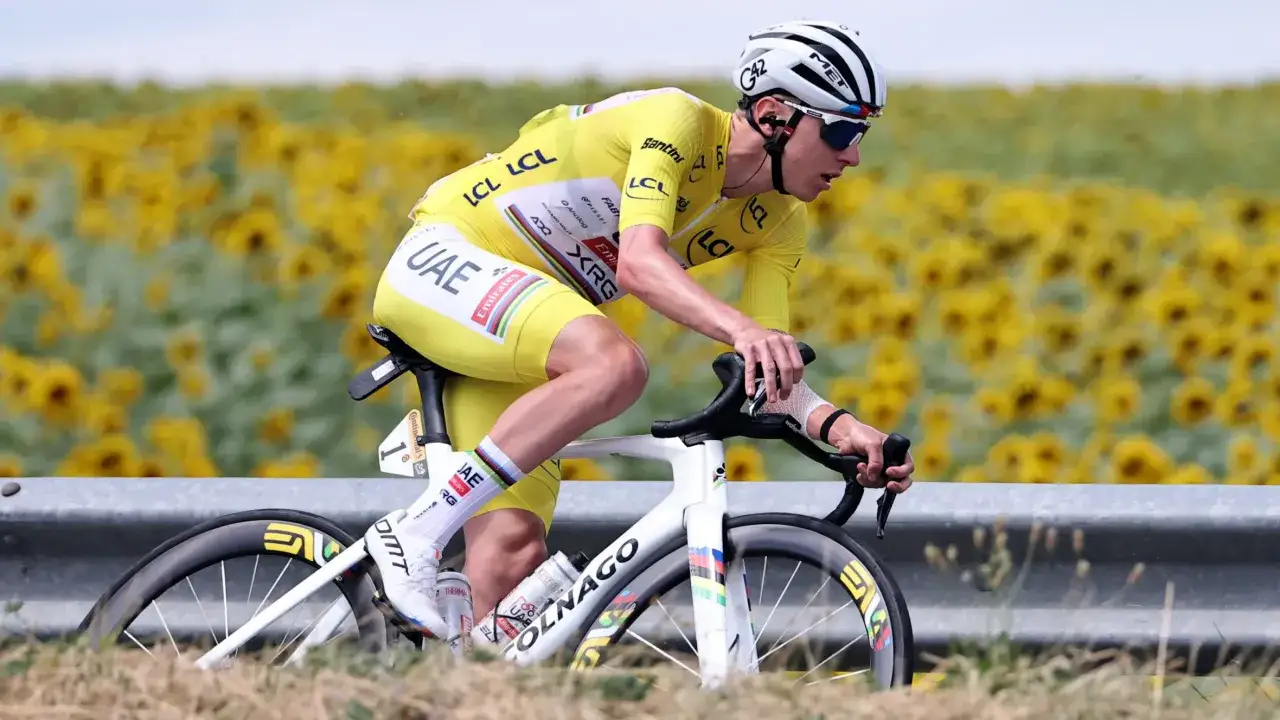
The numbers that really make me pause are the power outputs. Recent analysis put him around 6.4-7.0 W/kg across long Tour climbs, with one mountain time trial estimated at roughly 7 W/kg for just under 18 minutes. That tells me the engine is not only large; it is also usable under fatigue, after repeated accelerations, and in stages where the whole race is trying to break him.
A simplified way to think about critical power is this: it is the highest power a rider can repeat for roughly a 40-minute effort. Pogačar appears to sit very close to that ceiling, then still has the ability to attack, recover, and respond when the stage is messy. That is what turns physiology into results.
Plenty of riders have one exceptional trait. Very few combine a massive oxygen engine, climbing efficiency, race instinct, and repeatable power late in the toughest races. That gap between lab physiology and road performance is where the useful lessons begin.
What serious cyclists should copy and what they should ignore
I would copy the principles, not the genetics. The wrong lesson is, “be born with a monster VO2 max.” The right lesson is that elite results usually come from a stack of small advantages: high aerobic volume, well-timed intensity, lean but adequately fueled body composition, good recovery habits, and the ability to repeat hard efforts when fatigue is already present.
If I were coaching a strong amateur, I would focus on these points first:
- Build a large aerobic base with plenty of easy riding, because that is what lets harder sessions land properly.
- Use VO2 intervals and threshold work as tools, not as a lifestyle. Two hard sessions a week is enough for many riders when the rest of the week supports them.
- Track power-to-weight and 20- to 40-minute climbing power, because those numbers are much closer to real road performance.
- Test under the same conditions if you want to compare progress. A one-off wearable score is directional, not gospel.
- Respect fueling and sleep, because an underfed rider often loses more performance than they gain from squeezing body mass down too far.
The common mistakes are predictable: chasing interval workouts without enough recovery, treating a smartwatch estimate like a lab result, and trying to copy a pro’s workload without a pro’s recovery infrastructure. That is how people end up tired, flat, and slower than they were before they started chasing the number.
The metric stack I would track before obsessing over one score
If I were building a climbing block for a serious road cyclist, I would rank the useful numbers in this order: threshold power, climbing power over 20 to 40 minutes, repeatability across hard days, body mass you can sustain, and recovery between sessions. Those five tell you far more about racing potential than a single oxygen value ever will.
The practical takeaway from Pogačar is not that everyone should try to become a mid-90s VO2 max outlier. It is that the best riders usually combine a very high aerobic ceiling with enough durability to express it again and again when the race gets ugly. That is the real standard to copy.
If you want a better benchmark for your own riding, use your current threshold, climbing power, and recovery over a 6- to 8-week block, then treat VO2 max as one supporting signal rather than the scoreboard. That approach is far more useful than chasing a single number that was never meant to explain the whole rider.