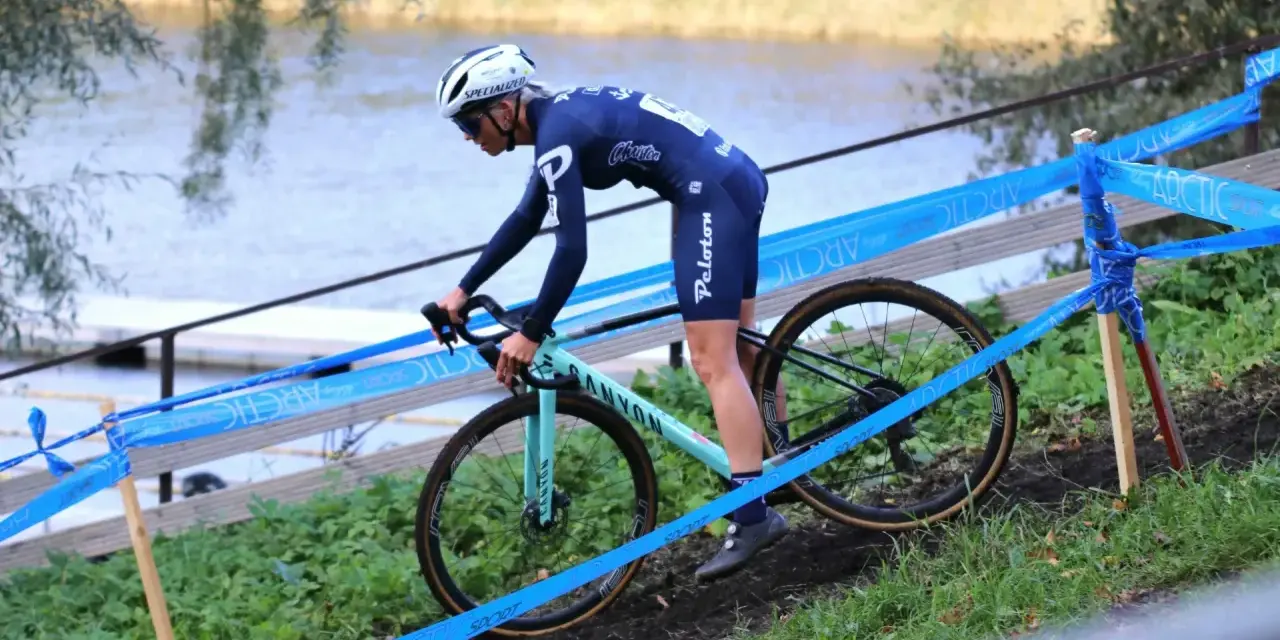
Cyclocross sits right where road fitness meets off-road problem solving. The pace is short, the corners are slippery, and the race rewards riders who can sprint, brake, shoulder a bike, and recover fast without losing composure. For road cyclists, it is one of the most efficient ways to sharpen handling and repeatable power while keeping the training year interesting.
What matters most before your first race
- Expect a 20-60 minute race on a compact 2.5-3.5 km circuit, not a long steady road event.
- The course usually mixes grass, dirt, pavement, mud, barriers, and short run-ups, so handling matters as much as fitness.
- Bike clearance, reliable braking, and the right tires matter more than saving a few grams.
- Road riders usually need more work on mounts, dismounts, starts, and off-camber cornering than on raw endurance.
- The fastest gains come from short hard intervals plus one dedicated skills session each week.
What cyclocross is and why road cyclists care
USA Cycling describes cyclocross as a blend of road cycling, mountain biking, and steeplechase, and that description is accurate in the best possible way. The sport is built around a closed course in parks and open spaces, usually with lap times that keep you in a constant loop of effort, technique, and reset. I like it because it exposes the weak links road riding can hide: bad cornering, sloppy starts, timid braking, and poor pacing after a mistake.
Unlike a road race, you rarely settle into one rhythm for very long. One lap may feel smooth; the next may force a shoulder carry, a remount, and a full-power acceleration out of a muddy turn. That constant change is exactly why it transfers so well to road riding, especially if you want better control in group racing, criteriums, or wet-weather rides. Once you understand that, the next step is seeing how the race actually unfolds.
How a race actually unfolds
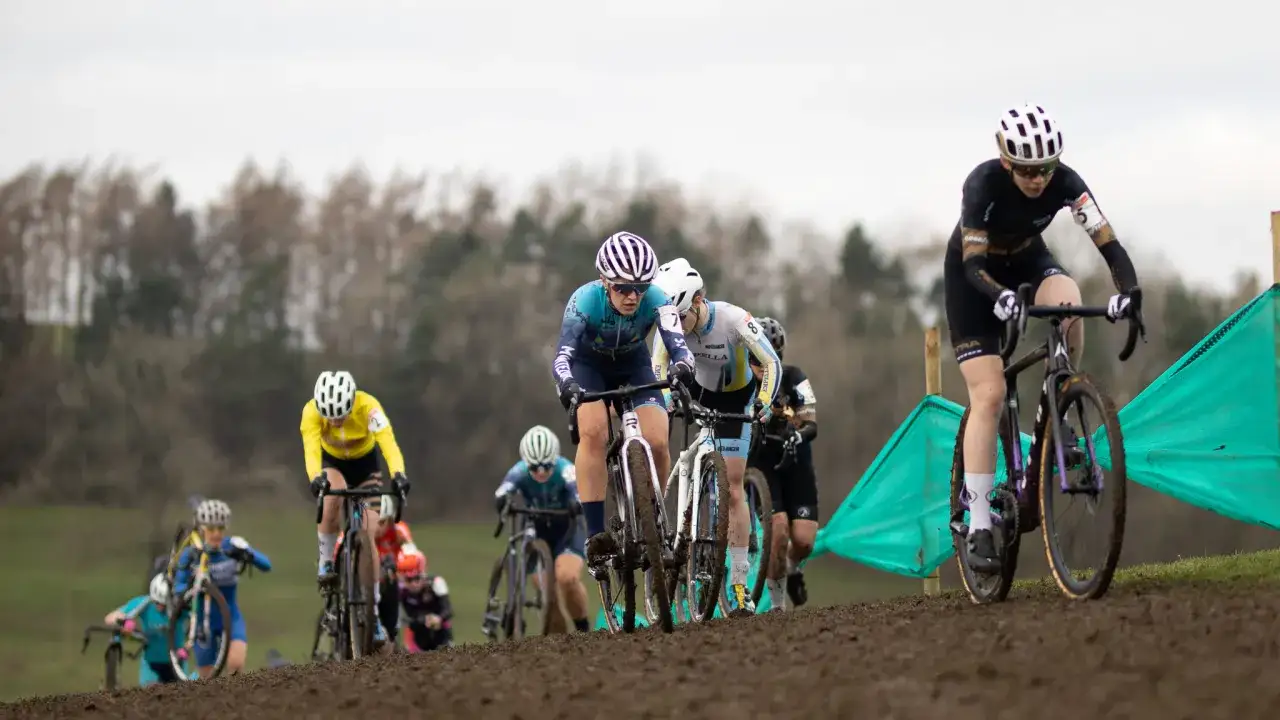
The first minute matters more than most road cyclists expect. Starts are hard, positions change quickly, and the first technical section can punish anyone who treats the opening lap like a normal endurance ride. After that, the race becomes a sequence of surges: accelerate, brake, corner, carry, remount, repeat.
- Start and first corner - If you launch too hard, you can blow up before the course even settles. If you start too softly, you spend the entire race chasing.
- Technical sections - Off-camber corners, which simply mean sidehill turns where the bike wants to slide downhill, punish hesitation and reward clean line choice.
- Barriers and run-ups - These create short but brutal interruptions in rhythm. Good riders lose less time because they remount smoothly, not because they run faster.
- Final laps - Fatigue makes every mistake larger. The rider who stays calm usually gains more than the rider who attacks every corner like a hero.
The sport feels messy from the outside, but internally it is very structured: manage effort, stay relaxed, and lose as little time as possible at each obstacle. That leads directly to the part most road riders underestimate, which is the bike setup.
The bike setup that matters most
I care less about exotic parts here than I do about traction, clearance, and predictable control. A dedicated cross bike is nice, but a sensible setup on the right frame will beat an expensive mismatch almost every time.
| Priority | What to look for | Why it matters |
|---|---|---|
| Tires | Tread that matches the course, enough volume for comfort, and a casing you trust | Traction and puncture resistance decide how confidently you can corner and accelerate |
| Brakes | Strong, consistent braking in wet or muddy conditions | Late braking without drama keeps you from giving away positions |
| Gearing | Low enough gearing for repeated accelerations and short climbs | Cross racing is full of stop-start effort, so overly tall gears waste energy |
| Pedals and shoes | Fast engagement and a sole that works when you have to run | You save seconds every lap when remounts are clean |
| Clearance | Room for mud, not just a tire that fits on a dry day | Clearance is what keeps the bike usable when the course gets ugly |
For tires, I start with the course rather than the brand marketing. Mud wants open tread, dry grass can reward a faster file tread, and mixed conditions live somewhere in the middle. Pressure is a balance: enough support to hold the tire in corners, but not so much that it bounces off the ground. There is no universal number that works for every rider, which is why the best setup is the one you can trust when the course changes under you.
If you are coming from road cycling, that is the biggest mental shift. In cyclocross, the bike is not just a tool for speed; it is a tool for staying upright, efficient, and calm while the surface fights back. With that in place, training becomes much more specific.
Training that transfers from road cycling
Road fitness helps, but straight endurance is only part of the equation. The riders who adapt fastest are the ones who can produce repeated hard efforts, recover quickly, and keep their technique together when their legs start burning. When I build a cross-focused week, I usually keep one longer aerobic ride and spend the rest of the work on bursts and skills.
Build repeatable power
Short intervals matter more than long threshold blocks. Think in terms of starts, 30-second surges, and 2- to 5-minute efforts that force you to recover while moving. A simple session might be 6 to 8 hard repetitions with equal recovery, or a set of short starts out of corners if you have access to a safe loop.
Practice the bike handling
Mounts, dismounts, cornering on loose ground, and shoulder carries are not cosmetic skills. They save time and lower stress. Even 20 minutes of focused drills can expose habits that never show up on a smooth road ride, like overbraking before turns or freezing up during remounts.
Read Also: Tour de France White Jersey - Why It Predicts Future Stars
Keep one endurance ride
I would not drop aerobic work completely. A steady 60- to 120-minute ride keeps your base intact and makes the hard sessions repeatable. That said, if you only ride long and never practice accelerations or bike handling, the race will feel harder than it should.
The point is not to become a specialist overnight. It is to turn your road fitness into race-specific power without losing the engine that got you here. That is easier to see when you compare the discipline side by side with road and gravel riding.
How it differs from road cycling and gravel
These three disciplines overlap, but they ask for different skills. When road riders confuse them, they usually train the wrong thing or buy the wrong bike. A quick comparison keeps the priorities straight.
| Discipline | Terrain | Typical effort | What wins | Transfer to road riding |
|---|---|---|---|---|
| Road cycling | Pavement, predictable surfaces | Longer, steadier efforts | Pacing, aerodynamics, positioning | Efficient power and group awareness |
| Cyclocross | Grass, dirt, mud, sand, pavement, obstacles | Short races, often 20-60 minutes | Acceleration, handling, recovery under stress | Cornering, starts, and composure under fatigue |
| Gravel | Mixed-surface roads and trails | Longer endurance events | Comfort, pacing, fueling, line choice | Stability and patience on rough ground |
For a road rider, cyclocross is the most technical of the three and usually the most intense minute to minute. Gravel is more about sustained discomfort; road is more about sustained efficiency. Cross sits in the middle only on paper, because in practice it asks you to keep making decisions while your heart rate is already high. That is also why beginners often make the same handful of mistakes.
The mistakes road riders make in their first races
The good news is that most first-race errors are predictable. The bad news is that they can cost a lot of time even when your fitness is solid.
- Starting like a road crit - The first lap is important, but the race is not won by one huge effort. Save a little for the technical parts.
- Running too much pressure - Overinflated tires feel safe on the road and vague on grass or mud. You lose grip exactly when you need it most.
- Ignoring remount practice - A sloppy dismount or remount can erase the gap you created with good fitness.
- Overthinking gear - A perfect wheelset will not fix poor line choice. Skills beat upgrades at the beginner level.
- Racing every corner - You do not need to attack every turn. Smooth is usually faster than dramatic.
Once you stop making those errors, the sport gets much more approachable. That is why I usually tell road cyclists to begin with one simple, realistic entry plan instead of trying to build a full specialist setup immediately.
How to start without overbuying gear
You do not need a garage full of parts to get into the sport. I would rather see a rider on a well-fitting bike with decent clearance than on a flashy machine that never feels stable in mud. In the U.S., USA Cycling uses Novice-to-Elite categories across road, track, and cyclocross, so beginners can usually enter at the right level instead of being thrown into the deep end.
- Use the bike you already trust if it clears the tires you want to run.
- Choose a course-appropriate tire before you buy anything cosmetic.
- Spend one practice session on mounts, dismounts, cornering, and braking.
- Enter a beginner field and treat the race as a skills test, not a verdict on your fitness.
- Upgrade only after you know what the course and conditions actually demand.
That approach keeps the cost of entry reasonable and prevents the common mistake of buying a bike for the idea of cyclocross rather than the reality of how you will race it. Once you start this way, the discipline becomes useful long before it becomes expensive.
The quickest way to make cyclocross pay off on the road
For road cyclists, the real value is not just the novelty of muddy racing. It is the way the sport improves your ability to accelerate, hold a line, and recover after being forced off your rhythm. I think of it as a concentrated lesson in calm aggression: push hard, but keep enough control to solve the next corner.
- You get better at accelerating out of slow corners.
- You become more confident riding in wet or crowded conditions.
- You learn to reset quickly after a mistake instead of compounding it.
- You build handling skills that carry straight into criteriums, group rides, and bad-weather road races.
If you treat the discipline as a technical workout with a race attached, it will sharpen your road season without stealing it. That is the real appeal: not just surviving the mud, but coming back to the pavement with better instincts, better balance, and a stronger sense of how to spend effort when the race stops being predictable.