The race most people mean when they say le grand tour de france is the Tour de France, and the useful way to understand it is as a three-week tactical puzzle, not just a long bike race. In road cycling, the route, the stage mix, the weather, and the time gaps matter as much as raw climbing ability. I’ll break down what the race is, how the classification system works, why route design changes the outcome, and how to follow it sensibly from the United States.
Key facts to keep in mind before the peloton rolls out
- The Tour de France is the biggest annual stage race in road cycling and usually rewards the rider who manages effort best across 21 stages.
- Not every stage is meant for the same kind of rider: flat days favor sprinters, mountain days shape the general classification, and time trials can create major time gaps.
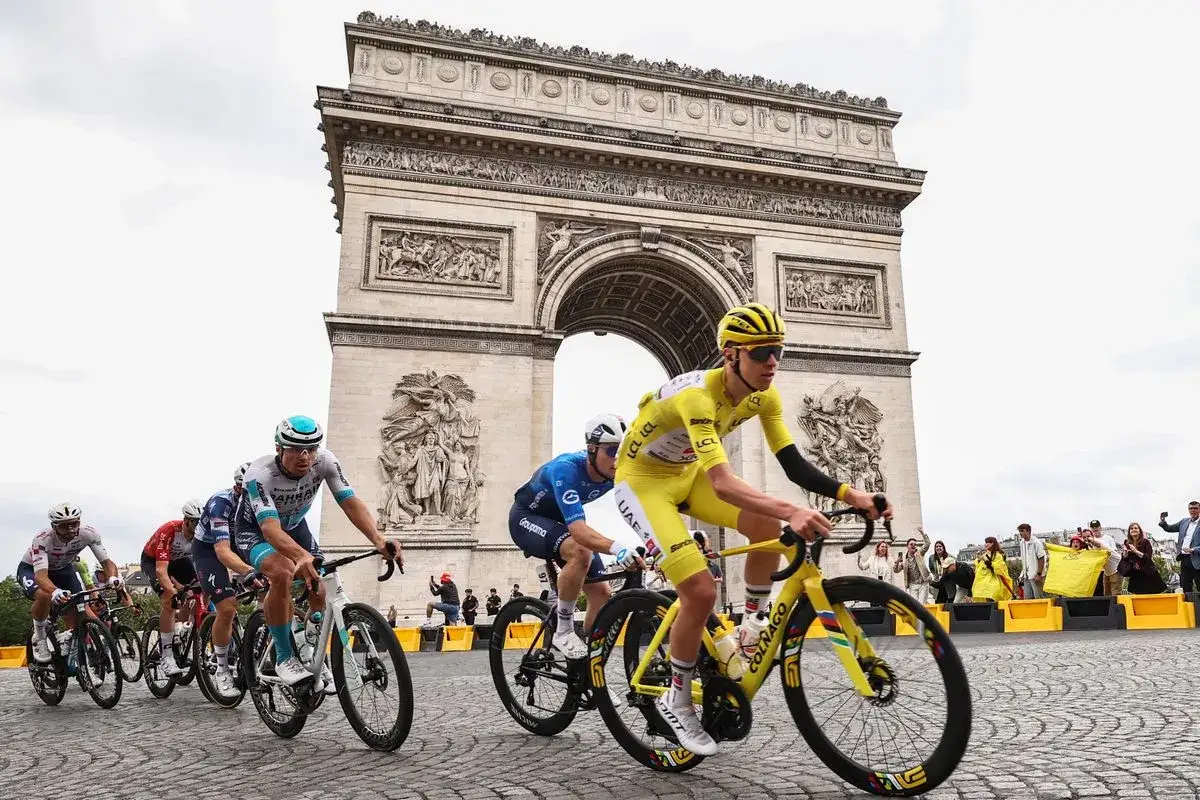
- The iconic jerseys are yellow for the overall lead, green for points, polka-dot for climbing, and white for the best young rider.
- The 2026 edition runs from July 4 to July 26, starts in Barcelona, and finishes in Paris.
- For U.S. viewers, Peacock is the most practical live option, with selected coverage also appearing on NBC.
What the Tour de France really is
The Tour is the highest-profile men’s road stage race on the calendar, and its prestige comes from the combination of history, difficulty, and constant tactical pressure. Unlike a one-day Monument or a simple points race, the Tour asks riders to manage sleep, recovery, weather, nutrition, crashes, and team support for almost a month.
I think that is why people who only glance at the final standings miss the real story. A rider can look ordinary for ten days, then win the race by producing one strong mountain block or one disciplined time trial. The event rewards consistency, but it also punishes panic, so the smartest riders rarely waste energy trying to win every battle at once. Once you see it that way, the stage-by-stage structure starts to make much more sense.
How the race is built from day to day
Each stage is timed individually, then added to the rider’s overall race time. That means the general classification, or GC, is not about who wins the most stages; it is about who loses the least time over all 21 days.
| Stage type | What it usually decides | Who tends to benefit |
|---|---|---|
| Flat stage | Bunch sprints, breakaway survival, positioning through crosswinds | Pure sprinters and strong lead-out trains |
| Hilly stage | Late attacks, reduced-group finishes, time losses for tired riders | Puncheurs, opportunists, aggressive breakaways |
| Mountain stage | GC gaps, summit finishes, sudden isolation of weak teams | Climbers and all-round GC contenders |
| Time trial | Individual pacing against the clock | Specialists and strong engine riders |
The key detail is that the same stage type can play differently depending on wind, road width, and where the climbs sit. A flat stage with a hard crosswind section can become more selective than a so-called hard hilly day, which is why I never judge the Tour only by the route label. Those stage types only matter because the jersey battles turn them into a larger story.
The jerseys that actually matter
The jersey battle gives the race its visible structure. Even if you are not tracking every rider, the jerseys tell you what kind of race is unfolding and which teams are controlling the tempo.
| Jersey | What it means | Why it matters |
|---|---|---|
| Yellow | Overall race leader | The rider with the lowest cumulative time wears it |
| Green | Points classification | Usually favors sprint finishes and repeat top placings |
| Polka-dot | King of the mountains | Rewards climbing points on categorized ascents |
| White | Best young rider | Spotlights the strongest younger GC prospect |
There is also a team classification, but it matters more to insiders than to casual viewers. For most fans, the real value lies in reading the tension between yellow and green: one is about endurance and survival, the other about speed, positioning, and timing. That race logic is why route design matters so much from one year to the next.
Why route design decides more than people think
A Tour route is not just scenery; it is a set of constraints that shapes who can win. When the route includes a long time trial, strong all-rounders gain an opening. When the race stacks mountain stages close together, fatigue becomes a bigger weapon than raw talent. When crosswinds, narrow roads, or technical descents appear at the wrong moment, the strongest climber can still lose time through bad positioning.
The 2026 route, as outlined on the official Tour de France page, is a good example of that balance. It starts in Barcelona, returns to France, and finishes in Paris after 21 stages: 7 flat, 4 hilly, 8 mountain, one team time trial, and one individual time trial. It also builds in two rest days, and the terrain runs through the Pyrenees, the Massif Central, the Vosges, the Jura, and the Alps. In other words, it is built to create time gaps in more than one way, not just on one famous climb.
That matters because GC contenders do not all win the same kind of race. A rider who thrives on long steady efforts may prefer the time trials, while a pure climber wants repeated mountain pressure and a short leash on recovery. If you understand that, the Tour becomes much easier to read. The next question is how to follow all of that from the U.S. without turning it into a second job.
How to follow it from the United States without burning out
For U.S. viewers, the practical problem is timing. Many stages begin early in the morning Eastern Time, so watching every live kilometer is unrealistic unless you are extremely committed or have very flexible hours. NBC Sports currently lists Peacock as the exclusive U.S. home for live coverage, with select stages also shown on NBC, which is exactly the setup I would expect for a race with so much daytime overlap and replay value.
| If you want to... | Best approach | Why it works |
|---|---|---|
| Follow the whole race live | Use Peacock and pick key stages each week | You get the full rhythm of the race without forcing yourself to watch every hour |
| Catch the decisive moments | Watch mountain finishes, time trials, and the last 45 minutes of sprint stages | That is where most of the real time gaps appear |
| Fit the Tour around work | Use replays, recaps, and finish-only viewing | The race is built for replay because the tactical turning points are concentrated late |
I would also keep the official site or app open during the day if I wanted stage results, standings, and route notes in one place. That is especially useful when a stage looks simple on paper but turns chaotic because of crashes, wind, or an unexpected breakaway. Once you know when and how to watch, the race becomes much easier to enjoy.
What serious road cyclists can learn from the best riders
The Tour is entertaining, but it is also one of the clearest classroom examples in road cycling. If I were studying it as a rider rather than as a fan, I would pay attention to three things first: pacing, fueling, and positioning.
- Pacing matters because even elite riders are not trying to be maximal all day. The difference between a disciplined effort and a heroic effort often shows up on the third climb, not the first.
- Fueling matters because three-week racing is a rolling energy problem. The riders who can ingest enough carbohydrates without upsetting their stomach usually recover better and race harder on successive days.
- Positioning matters because the Tour punishes hesitation. Being 20 wheels too far back before a climb or a crosswind section can cost far more than the effort needed to move up.
Equipment also matters, but not in the simplistic way marketing copy suggests. Aerodynamics help on flat and rolling stages, lighter setups matter more in the mountains, and tire choice, pressure, and handling confidence can be just as important as weight savings. When you watch the race with that in mind, the bikes stop being props and start looking like tools matched to specific terrain. With that lens in mind, it is easier to decide which stages deserve your attention.
The five stage types I would never skip
When I follow a Grand Tour, I do not try to watch everything equally. I prioritize the stages that are most likely to change the race.
- The opening time trial or team time trial, because it sets the tone and shows which teams are already sharp.
- The first summit finish, because it reveals which GC riders can actually absorb pressure in the mountains.
- A windy flat stage, because crosswinds can split the race and expose weak positioning.
- The late individual time trial, because that is often where a close yellow-jersey battle is settled.
- The hardest mountain day near the end, because accumulated fatigue makes errors and limits more visible.
If I were planning a trip around the race, I would favor a summit finish or a technical time trial city over a generic sprint finish, simply because the decisive moments are easier to see and the atmosphere stays concentrated longer. That is the practical truth behind the Tour: the more specific the terrain, the clearer the racing.