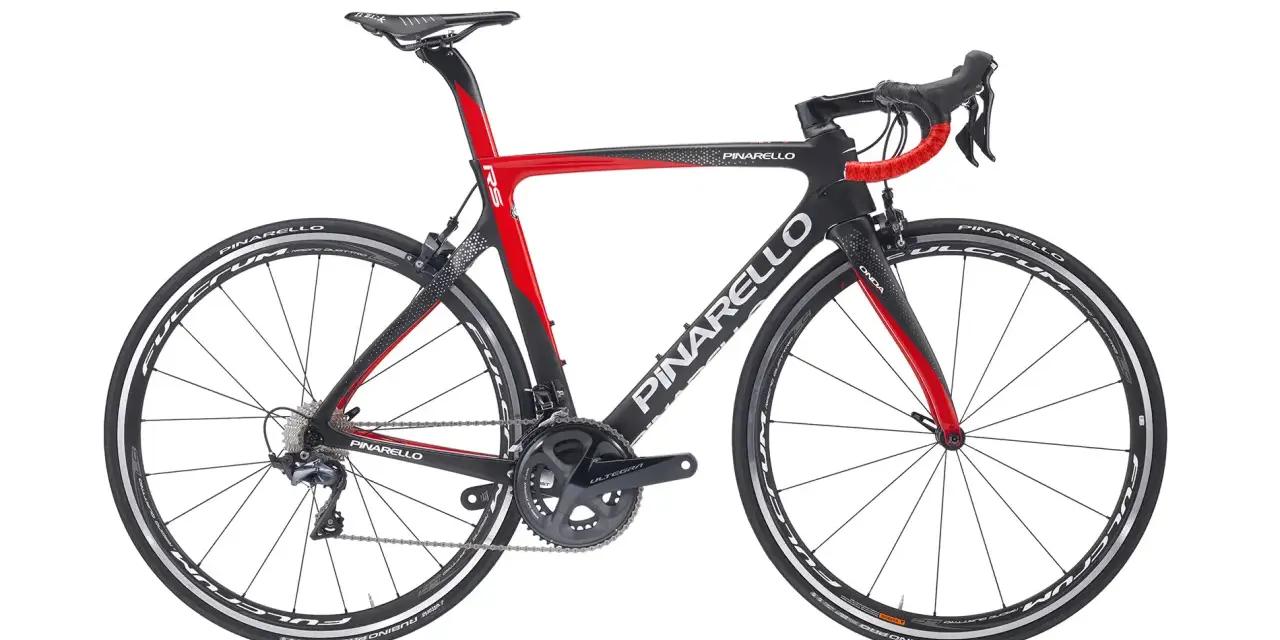
The Pinarello Gan RS sits in a useful middle ground: fast enough to feel special, but not so extreme that it becomes a chore on real roads. In this guide I break down what it is, how it rides, what to check on a used example, and when it makes more sense than a newer Pinarello road bike. If you are choosing a bike for fast group rides, fitness miles, or a race-ready used buy, that decision matters more than the badge on the downtube.
The short version for buyers
- It is a race-leaning road bike with classic Pinarello handling and a more forgiving feel than the brand’s top flagship race bikes.
- Used value is the big argument; a clean complete build can make far more sense than paying full retail for a current bike.
- Tire clearance is the main limitation; this is not the bike I would choose if 30 to 35 mm rubber is the priority.
- Fit matters a lot; the riding position is lower and quicker than on modern endurance models.
- It suits fast road riding best, especially smooth pavement, group rides, and climbing-focused fitness work.
- Current Pinarello X or F bikes are better matches if you want more comfort, wider tires, or a newer platform.
What the Gan RS actually gives you
The RS version was the top of the Gan family, and that matters because it was built to deliver more of the brand’s race-bike personality without forcing you all the way into flagship pricing. In practical terms, you get a stiff, responsive road frame with aero shaping, a refined front end, and a build that was often specced with high-level Shimano or Campagnolo parts depending on year and seller. The original complete-bike price sat around the $5,000 mark, so even though it is no longer a new-bike purchase, it still carries a premium feel in the used market.
What I like about this model class is that it was never trying to be everything at once. It was meant to feel quick, look sharp, and reward a committed position. That is also where its limits start to appear, because the same focus that makes it feel lively also makes it less forgiving than newer all-road or endurance bikes. That tradeoff is the real story here, and it becomes much clearer once you think about how the bike behaves on the road.
How it rides on real pavement
This is a bike for riders who notice steering response. The front end is direct, the bike reacts quickly when you put power through it, and it has the kind of planted road feel that makes fast group rides more fun than stressful. It is not vague, and it is not sleepy. If you like a bike that darts into corners and snaps forward when you stand up, the Gan RS delivers that feeling well.
At the same time, I would not describe it as harsh in the simplistic sense. A good build can still take the edge off road noise and smaller imperfections, but the bike’s character stays firm and purposeful. That is why it suits riders who want race-bike feedback without needing the absolute sharpest, most uncompromising chassis in the lineup. Put differently, it feels like a serious road bike first and a comfort bike second, which is exactly why some riders love it and others pass on it immediately.
If your weekly riding is mostly smooth pavement, fast club miles, and climbs where you want the bike to feel eager, the ride quality makes sense. If your roads are rough, patched up, or full of long chip-seal stretches, the limitations show up fast. That leads directly to the next buying question: whether the fit and tire room match your body and your roads.
Fit and tire clearance decide whether it is the right bike
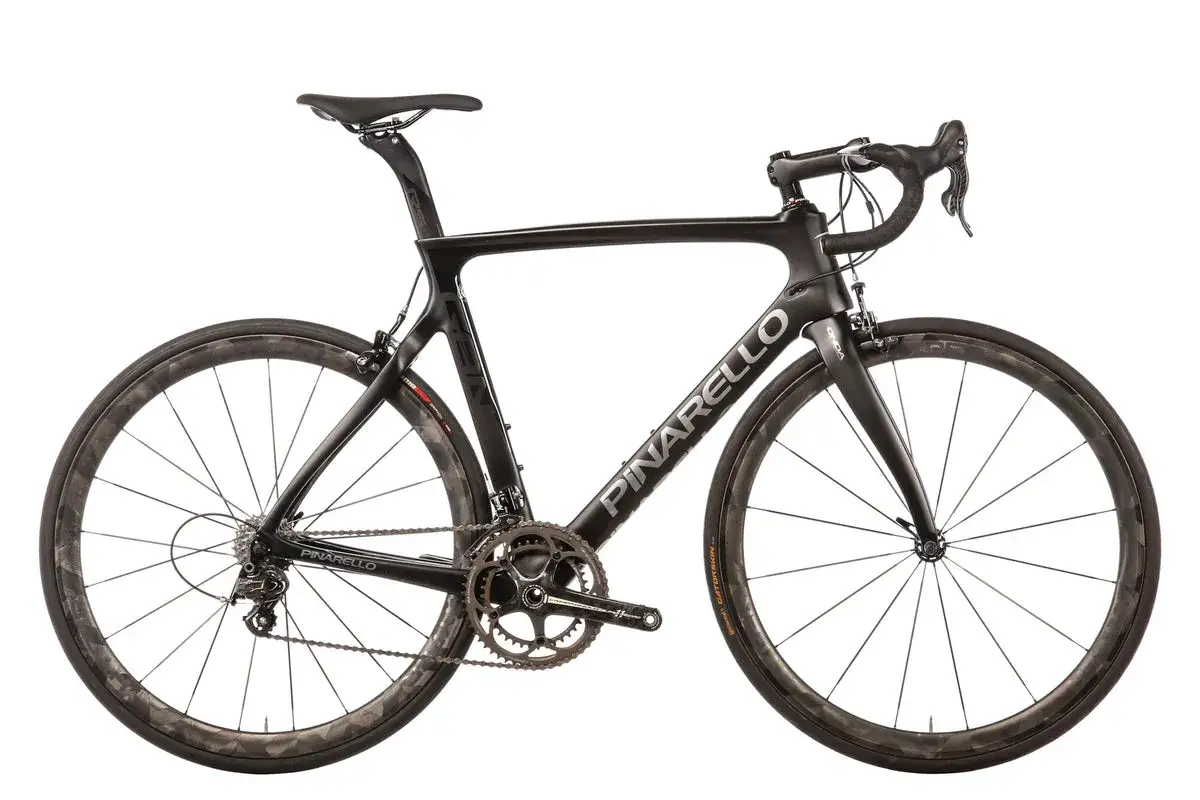
This is where I would slow down and be precise. The Gan RS-era platform is a race-oriented road bike, so it generally asks for a lower, longer position than modern endurance frames. If you are already comfortable on an aggressive road setup, that is a feature. If you want a more upright position with room to move around, it can become a problem very quickly.
The second constraint is tire width. Many builds from this family were happiest on 25 mm tires, and that is the practical reference point I would keep in mind. In 2026, that is a real compromise. Wider tires are not a fashion statement anymore; they are one of the easiest ways to improve comfort, grip, and confidence on imperfect roads. If your normal ride includes rough pavement, colder-weather training, or long centuries, a bike that effectively wants 25 mm rubber feels dated in a hurry.
| Fit factor | What I would expect | Why it matters |
|---|---|---|
| Riding position | Low and race-oriented | You need flexibility and a fit that tolerates a lower front end |
| Tire room | Best treated as a 25 mm-class bike | Limits comfort upgrades and rough-road use |
| Handling | Quick and direct | Great for pace changes, less relaxed on broken roads |
| Build weight | Often around 15.5 to 17 lb depending on parts | Light enough to feel lively, but not a featherweight by current standards |
If you are between sizes, I would not guess. Stack and reach matter more here than the badge or the colorway, and a correct size turns this from a good bike into a genuinely satisfying one. Once the fit works, the next question is whether the used bike in front of you is actually worth the money.
What to inspect before you buy used
A used Gan RS can be a smart buy, but only if you look past the photos. I would inspect the frame, fork, cockpit, and wheels with the assumption that you may be inheriting years of hard riding. Cosmetic scuffs are normal. Structural damage is not. If a seller gets defensive when you ask for close-up photos of the head tube, fork crown, seat cluster, and bottom bracket area, I would treat that as a warning sign rather than a personality quirk.
- Check the frame for cracks around the head tube, bottom bracket, chainstays, and seat cluster.
- Inspect rim-brake track wear if the bike uses rim brakes, because worn braking surfaces can become a hidden replacement cost.
- Verify drivetrain wear; a chain, cassette, and chainrings can add up fast if the bike has not been serviced.
- Look at the fork and dropouts for impact marks or poor repairs.
- Ask for the serial number and proof of purchase, especially on private sales.
- Budget for service; tires, bar tape, pads, and a basic tune-up can easily add another $250 to $500 to the real cost of the bike.
I would also be careful with authenticity on private purchases. Pinarello advises buyers to work through authorized dealers when possible and to verify questionable frames rather than assuming everything with the logo is legitimate. That matters more on a premium Italian frame than people like to admit, because a clean-looking counterfeit can still be expensive trouble later. Once you know the bike is real and mechanically sound, the next step is comparing it with the road bikes Pinarello actually sells now.
How it stacks up against newer Pinarello road bikes
The fairest comparison in 2026 is not against a memory of what the bike used to cost. It is against Pinarello’s current road lineup. That is where the choice becomes much clearer, because the newer bikes solve the exact problems the Gan RS leaves behind.
| Model | Best for | Tire clearance | My read |
|---|---|---|---|
| Gan RS | Used-value race feel and classic Pinarello handling | Think 25 mm-class practicality on many builds | The right call if you want speed and character more than modern versatility |
| Pinarello X | Longer rides, rougher pavement, comfort-first road miles | Up to 35 mm | The better pick if you want one road bike that handles real-world surfaces more gracefully |
| Current Pinarello F | Modern race riding and fast training with newer integration | Up to 32 mm | The cleaner answer if you want a new bike with current race geometry and more breathing room for tires |
The comparison is pretty simple once you strip away brand romance. The Gan RS is the value play, the X is the comfort-forward answer, and the current F is the modern race-bike choice. If you already know you want a lower, quicker position and you do not care about wider tires, the older bike remains attractive. If not, the newer platforms remove a lot of compromise without giving up the Pinarello identity. That leaves the only question that really matters: whether the Gan RS still makes sense for the rider standing in front of a sales listing today.
When I would still buy one in 2026
I would buy a Pinarello Gan RS in 2026 only if three things line up: the fit is right, the frame is clean, and the price reflects its age. A complete bike around $1,800 to $2,500 is where I start to see genuine value, especially if the build is tidy and the wheels and drivetrain are in good shape. I would want an exceptional build or unusually low mileage before paying much more than that.
- Buy it if you want a sharp, classic-feeling Pinarello for fast road riding.
- Buy it if you are comfortable living with narrower tire clearance and an older road-bike standard.
- Skip it if you want 30 mm-plus tires, a more relaxed endurance fit, or a bike you can grow into without compromise.
If the Pinarello Gan RS fits your body and your riding, it still delivers something many newer bikes miss: immediate steering, a clear race-bike personality, and a strong value story in the used market. If it does not fit that brief, the current X or F series is the cleaner answer.